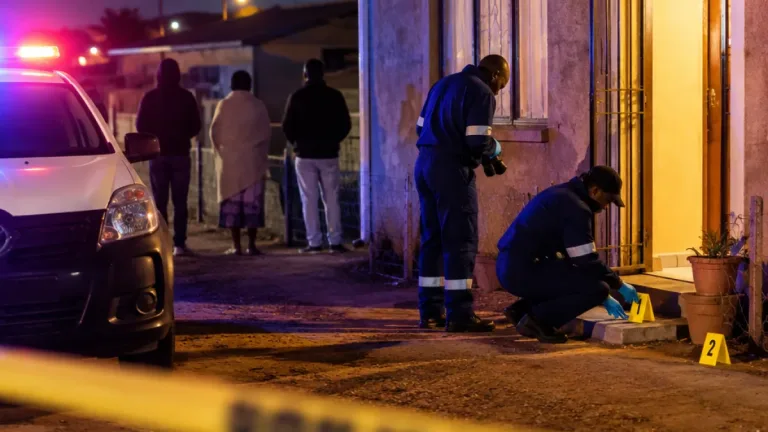
South African Police Service detective services achieved only 40% of their performance targets during the period under review, prompting a parliamentary warning that staff shortages, excessive caseloads and inadequate equipment are undermining criminal investigations.
The concerns were raised when Parliament’s Portfolio Committee on Police considered the SAPS and Civilian Secretariat for Police Service’s first- and second-quarter performance reports on Wednesday. The committee said the deterioration in detective capacity was affecting the preparation of cases for prosecution and limiting victims’ access to justice.
Committee demands measurable improvement
Committee chairperson Ian Cameron said the link between weakened detective services and the police’s ability to combat crime had been raised repeatedly. He criticised police management for making promises about a turnaround plan without producing measurable improvements.
“If the SAPS is unable to investigate cases, make arrests and ensure that solid cases are presented for prosecution, it will continue to fail victims of crime. With only 40% of its performance targets achieved, this is an unacceptable state of affairs,” Cameron said.
The committee’s assessment places the focus on the investigative stage of the criminal justice process. Detectives are responsible for developing case dockets, gathering evidence and preparing matters for prosecutors. Where investigations are delayed or incomplete, the committee warned, victims may face prolonged uncertainty and cases may not reach court in a form that can support prosecution.
| Issue raised | Information presented to the committee |
|---|---|
| Detective performance | 40% of targets achieved |
| Detective caseloads | About 300 case dockets per detective at police stations |
| DNA collection | Targets for buccal samples from arrested offenders were not met |
| Forensic processing | Concern over exhibits taking longer than 90 calendar days |
Heavy workloads and shortages
According to the committee, detectives at police stations were carrying about 300 case dockets each. Staff shortages and a lack of the tools needed to perform their work were identified as additional obstacles to effective investigations.
Cameron said the public had grown tired of repeated assurances that the policing environment would be turned around. The committee’s position was that progress should be demonstrated through action and results rather than further commitments. The reported performance figure indicates the scale of the concern, although the material presented does not provide a breakdown of the individual targets or explain how performance differed between police stations or investigative categories.
DNA and forensic concerns
The committee also questioned SAPS’s failure to meet targets for collecting buccal samples from arrested offenders linked to Schedule 8 offences. The samples are obtained by swabbing the inside of a person’s cheek and provide reference DNA profiles that can assist investigations.
Members said the missed targets were consistent with problems identified during oversight visits to police stations, including shortages of buccal-sampling kits and rape kits. These shortages were raised alongside broader concerns about the forensic environment and the ability to process evidence within prescribed timeframes.
The Forensic Science Laboratory was criticised for failing to reduce the number of case exhibits that take longer than the prescribed 90 calendar days to process. The report available on the committee’s deliberations does not state how many exhibits were affected, but the concern adds to the committee’s warning that weaknesses can arise at several points between the opening of a case and its possible presentation in court.
- SAPS detective services recorded 40% achievement against their performance targets.
- The committee said detectives were carrying about 300 dockets each.
- Shortages of staff, equipment, DNA-sampling kits and rape kits were raised as barriers to investigations.
The committee’s warning does not establish the outcome of any individual criminal case, nor does it amount to a finding against a particular detective or police station. It does, however, signal parliamentary concern about national investigative capacity and the effect that unresolved operational problems may have on victims, arrested suspects and the courts.