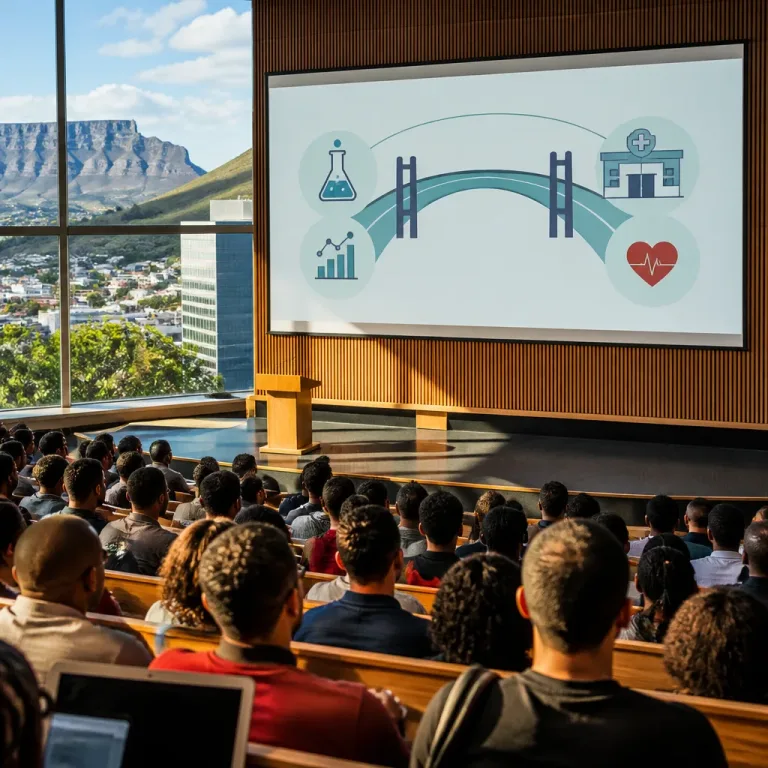
More than 400 polar researchers from Australia and overseas gathered at the University of Tasmania this week for the 2026 Australian Antarctic Research Conference, a meeting organisers say reflects the accelerating environmental change in Antarctica and the Southern Ocean and the need for coordinated science to inform national planning.
Science and policy tightly linked
Conference organisers and presenters emphasised that improved scientific understanding of Antarctic processes is central to predicting global sea-level rise and preparing coastal communities — a priority for Australia and nearby Pacific island states. The meeting drew experts working on sea ice, biodiversity, climate modelling, social sciences and technology, underscoring the multidisciplinary nature of contemporary polar science.
Dr Mark Hoggard with the Australian National University, a geophysicist attached to the Australian Centre for Excellence in Antarctic Science (ACEAS), highlighted the link between Antarctic research and consequences for Australia. He said the conference emphasised the need for science to inform how communities prepare for future sea-level scenarios.
"One of the biggest challenges facing Antarctic science is understanding what changes in Antarctica mean for global sea-level rise, particularly for coastal communities here in Australia and our Pacific island neighbours," said Dr Mark Hoggard.
Decision-making and leadership
Mathematician Professor Michael Bode of Queensland University of Technology, a member of Securing Antarctica's Environmental Future (SAEF), drew attention to Australia's role in shaping international policy on the continent. Using models of decision-making about Antarctica, he said Australia is among a small group of countries leading global action on Antarctic issues.
"Decisions about Antarctica depend heavily on science," Professor Bode said, a point that conference organisers framed as central to meeting objectives set out in the Australian Antarctic Science Decadal Strategy 2025–2035.
Conference scope and sponsors
Delegates presented and discussed research intended to feed into both national and international policy, and to help communities adapt to changing coastal risks. The conference was jointly sponsored and supported by a mix of research partnerships and government agencies.
- Australian Antarctic Program Partnership (AAPP)
- Australian Centre for Excellence in Antarctic Science (ACEAS)
- Securing Antarctica's Environmental Future (SAEF)
- Australian Antarctic Division (AAD)
- Support from the Tasmanian Government
| Organisation | Role |
|---|---|
| AAPP | Research partnership coordination |
| ACEAS | Scientific leadership and hosting |
| SAEF | Policy-oriented research network |
| AAD | Government Antarctic programme support |
Why Antarctic research matters for Australia
Antarctica is distant from Australia's mainland, but the continent and the Southern Ocean influence global climate systems and sea-level trajectories. Melting of Antarctic ice sheets and changes in ocean circulation can contribute to sea-level rise that disproportionately affects low-lying coastal regions. For Australia, this carries implications for urban planning, infrastructure investment, emergency response, indigenous and coastal community resilience, and international engagement with Pacific island states.
Speakers at the conference argued that translating scientific results into decision-ready information requires sustained investment in monitoring, improved climate and ice-sheet models, and stronger links between natural and social sciences so communities and policymakers can make informed choices.
The meeting also served to showcase Australia's scientific capacity in Antarctic research and to strengthen collaborations that the organisers say will be needed to meet the Decadal Strategy's objectives from 2025 to 2035.
While the conference brought together a broad range of disciplines, speakers cautioned that scientific uncertainties remain — particularly in projecting rapid ice-sheet responses — and that continued, coordinated research is essential to narrow those uncertainties and provide robust advice to policymakers.