
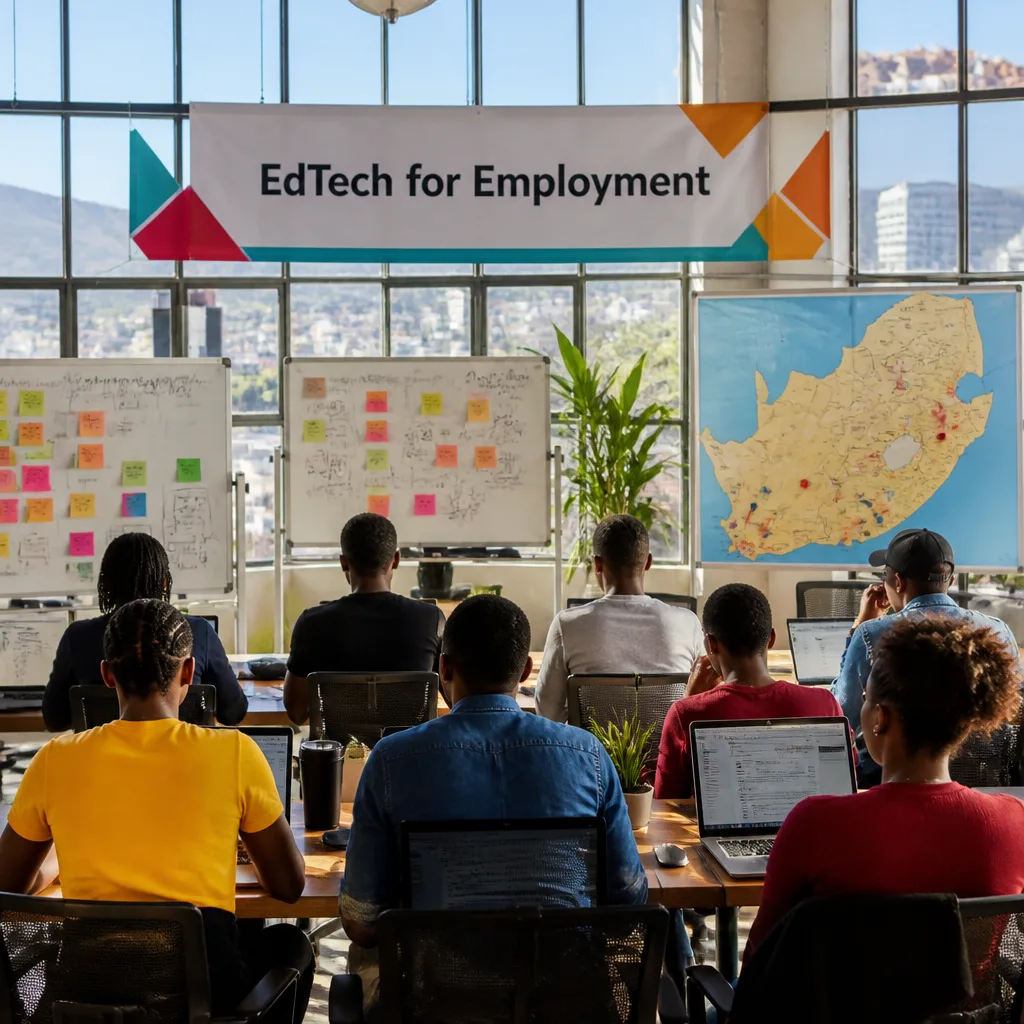
Injini, an EdTech incubator, accelerator and think tank, has started a two-year EdTech for Employment Incubation Programme to support ten early-stage companies whose products focus on connecting young people to work and income opportunities.
Programme aims and structure
The programme will run from October 2026 to September 2028 and is organised into two cohorts of five companies each. Each cohort begins with recruitment and selection followed by a six-month incubation period built around four pillars: product foundations, business sustainability, market access and impact measurement. Selected companies receive hands-on support from Injini’s team and access to specialist consultants matched to their needs.
- Scope: Two cohorts of five EdTech ventures.
- Duration: October 2026–September 2028.
- Support areas: product, business sustainability, market access, impact measurement, and ecosystem networking.
The initiative targets technologies that prepare young people for economic participation, including teacher training platforms, tutoring and mentorship tools, and other work-readiness solutions.
“South Africa’s youth aren’t short on ambition or ability. We see their ambition and drive. What they need are structured pathways into work,” said Krista Davidson, Executive Director at Injini.
Why this matters now
South Africa’s youth unemployment rate was 46.1% in the first quarter of 2026, according to Stats SA. Injini says there is a structural gap between young people's ambition and the available quality vocational and work-readiness pathways that lead into the economy. The incubator’s programme aims to help close that gap by giving early-stage EdTech founders the backing needed to test, validate and scale their solutions.
Injini projects it will reach 20,000 underserved youth over the two-year cycle and support up to 2,000 young people to gain work or income-generating opportunities through the products and partnerships developed by participating companies.
| Metric | Figure |
|---|---|
| Youth unemployment (Q1 2026) | 46.1% |
| Programme duration | October 2026–September 2028 |
| Number of startups | 10 (two cohorts of five) |
| Youth reached (aim) | 20,000 |
| Youth supported into work/income | Up to 2,000 |
Implications for founders and learners
For early-stage EdTech companies, incubation offers structured product development, measured impact evaluation and channels into schools, training providers and employers. Injini highlights that many founders already build usable solutions but lack the evidence, market access and partnerships required to scale.
For young South Africans, the programme could expand the availability of digital tools that teach practical, job-linked skills and support transitions into internships, apprenticeships or other income-earning work. The focus on impact measurement is intended to create the proof points investors, employers and government bodies may require before adopting new EdTech at scale.
The programme also signals continued private‑sector and intermediary engagement with the skills-to-work challenge. While incubation cannot solve structural labour-market problems alone, targeted support for solutions that directly connect learning to employment could be a pragmatic component of broader efforts to reduce the country’s persistently high youth unemployment.
Injini’s announcement underscores a familiar idea: innovators need more than ideas; they need support to convert those ideas into repeatable, measurable impact at scale. The success of the programme will depend on whether participating ventures can prove their models and secure sustained partnerships with employers, training institutions and funders.










