Huaneng Power International’s mid‑year results released on 18 August 2026 have prompted investors to reassess the Hong Kong‑listed utility after the company reported declines in revenue, net income and earnings per share compared with the same period a year earlier. The disclosure coincided with a notable easing in the stock price and fresh discussion about the firm’s fair value.
Market reaction and valuation
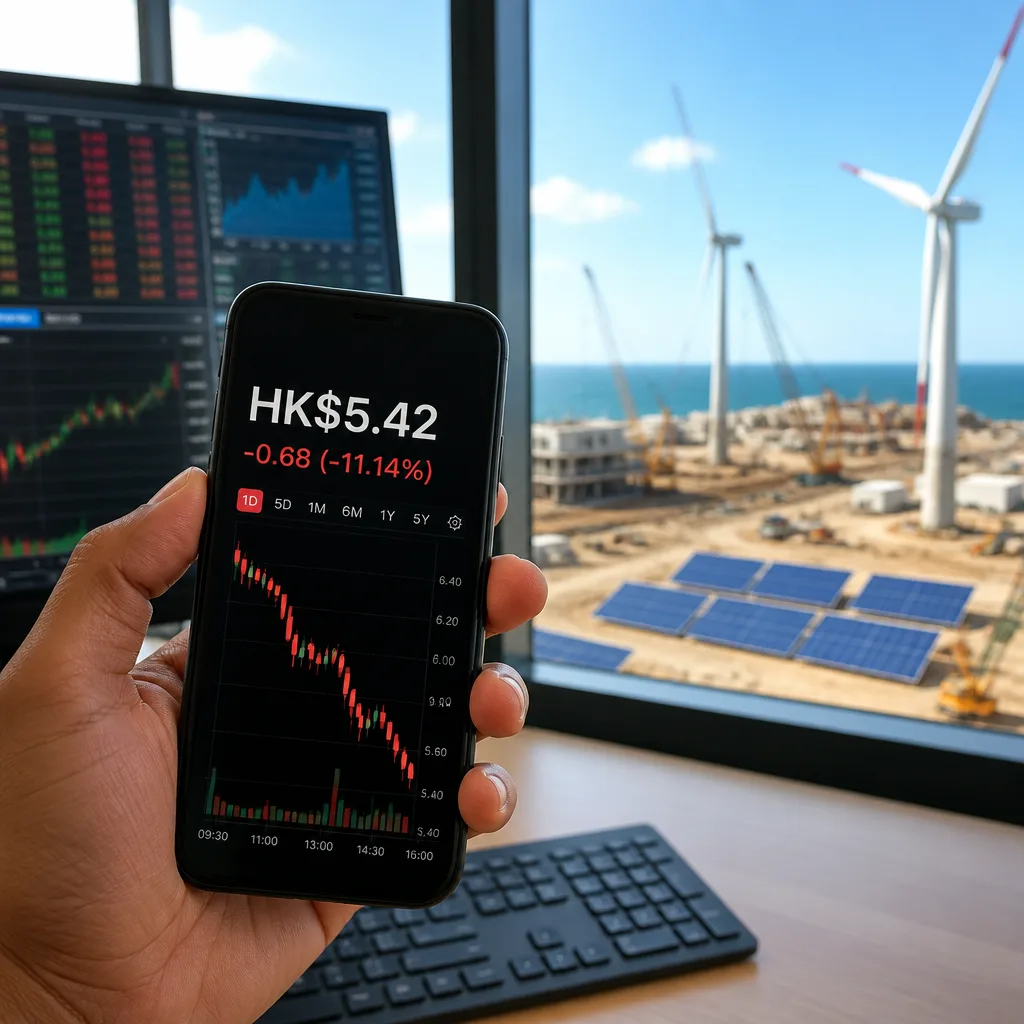
Since the results, Huaneng Power’s share price has softened to HK$5.42. Shorter‑term performance shows a decline of 10.64% over the past 30 days and 17.33% over 90 days. Over a longer horizon, the company still records a positive five‑year total shareholder return of 71.69%, highlighting a markedly stronger performance over the medium term.
Industry valuation models referenced in reporting cluster fair‑value estimates only modestly above the current market price. One commonly cited narrative places a central fair value at HK$5.92, implying a limited gap between market price and modelled intrinsic value based on analysts’ assumptions.
Growth narrative tied to renewables
Huaneng’s corporate strategy emphasises rapid expansion of renewables. In the first half of 2026 the group added 6.26 GW of renewable capacity and has a substantial development pipeline, with 19.13 GW reported as under construction. That scale of investment underpins optimistic longer‑term forecasts for revenue growth if policy support and project execution align.
Valuation narratives cited in the reporting rest on a particular set of assumptions: falling short‑term revenue expectations offset by improvements in profit margins and a higher earnings multiple in later years. One model referenced applies a discount rate of 13.26% to future cash flows to derive present value estimates.
What the numbers mean for investors
For investors weighing Huaneng against other utilities and infrastructure names, the company’s current profile presents both risks and potential rewards. Key considerations include near‑term earnings pressure, execution risk on a large construction programme, and policy support for China’s low‑carbon transition.
- The company’s recent share performance: -10.64% (30 days), -17.33% (90 days), +71.69% (5 years TSR).
- Market price versus model fair value: HK$5.42 versus central estimate HK$5.92.
- Renewables capacity added and under construction: 6.26 GW added H1; 19.13 GW under construction.
| Metric | Value |
|---|---|
| Share price (post‑results) | HK$5.42 |
| Fair value (narrative median) | HK$5.92 |
| 30‑day return | -10.64% |
| 90‑day return | -17.33% |
| 5‑year TSR | +71.69% |
| Renewables added (H1) | 6.26 GW |
| Renewables under construction | 19.13 GW |
| Discount rate (model) | 13.26% |
Implications for South African investors and energy watchers
While Huaneng is a Chinese generator listed in Hong Kong, developments at large Asian utilities matter to South African market participants in several ways. Global capital flows can shift as investors reprice energy assets exposed to evolving policy and commodity cycles. South African institutional and retail investors with emerging‑market allocations may therefore reassess exposure to power and infrastructure names following earnings surprises in major peers.
Separately, the scale and speed of renewable deployment reported by Huaneng are a reminder of how rapidly capacity can be added in jurisdictions with strong policy direction and financing. For South Africa—grappling with an ageing coal fleet and an urgent need for more dispatchable and renewable resources—the international experience underlines the importance of stable regulatory frameworks, financing certainty and project delivery capability.
Investors and analysts will continue to watch upcoming quarterly updates and operational disclosures to judge whether the company’s longer‑term growth assumptions remain realistic and whether current market pricing adequately reflects execution risks.