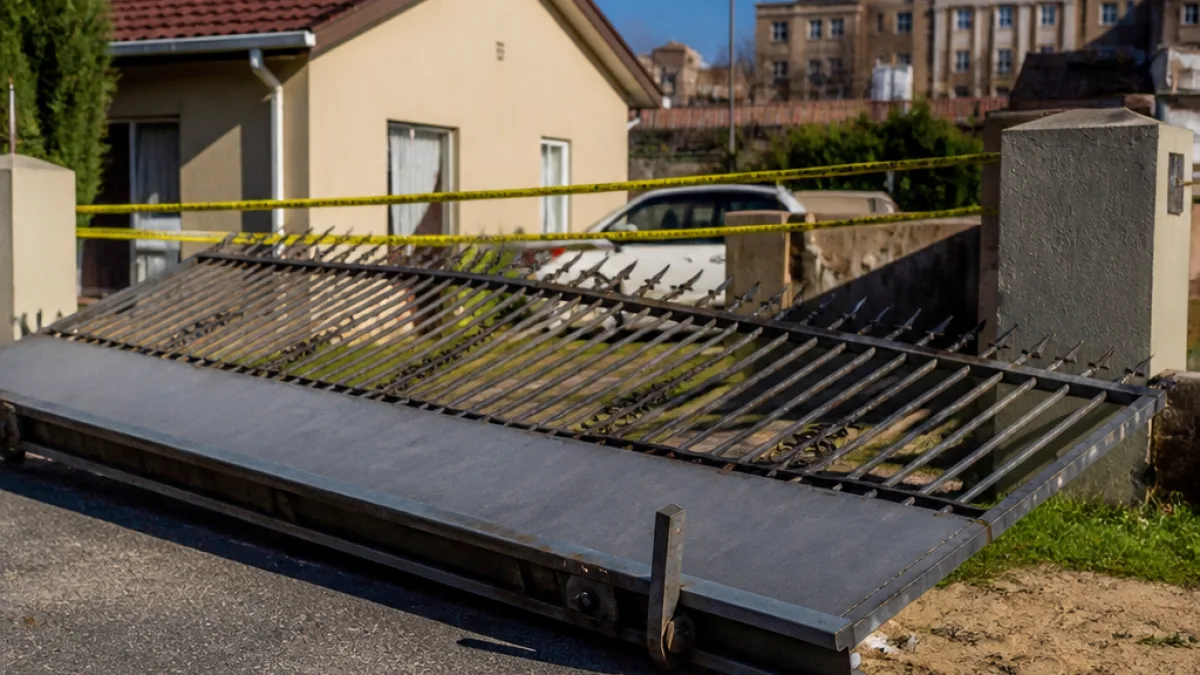
The Western Cape High Court has reinforced the responsibility of property owners to keep their premises safe after a large sliding entrance gate became dislodged and fell on an eight-year-old child in Ruiterwacht, Cape Town.
Liability established; compensation to be quantified
In a judgment delivered on 25 August in the matter of Jones v Chilwan, the court held property owner Moegamat Shadley Chilwan liable for injuries sustained by Reece Jones in September 2017. The finding related to legal liability only; the amount of compensation payable to Reece will be agreed between the parties or determined later by the court.
The court described the incident as the result of the owner’s “wrongful and negligent conduct”. Chilwan was ordered to pay specified legal costs, including further costs and counsel’s costs on Scale C, while the issue of quantum remains outstanding.
How the accident happened
The gate toppled as Reece and his mother were entering the residential property. Medical records presented in court showed Reece suffered a severe head injury with a fracture, a frontal haematoma, a scalp laceration and abrasions, as well as a displaced fracture of his right femur.
Evidence considered by the court indicated the gate was both large and heavy and that the owner had not installed adequate mechanisms to prevent derailment and collapse.
“A bracket is not a stop.”
The court rejected the defendant’s contention that a bracket qualified as a functional stop for the gate, noting that without suitable stops, guide rollers or a stabilising pole the possibility of derailment was foreseeable.
Legal duty and practical safety measures
At the heart of the judgment is the principle that property owners must take reasonable steps to prevent foreseeable harm. The court found that, given the gate’s size and weight, the owner “could and should have done more than he did to ensure that the gate was rendered reasonably safe”.
Legal counsel for the plaintiff included DSC Attorneys. Kirstie Haslam, a partner at DSC Attorneys who represented the child, said the outcome underlines property owners’ obligations to those who visit or live at their premises.
What this means for homeowners and landlords
The judgment is a reminder that everyday fixtures can present significant hazards if not properly installed and maintained. Owners of properties with large mechanical gates should consider the following precautions:
- Fit mechanical stops designed for the gate’s weight and size, not improvised brackets.
- Install guide rollers and stabilising poles to reduce the risk of derailment.
- Arrange regular inspections and maintenance by qualified technicians.
- Ensure repair records and safety certificates are retained in case of future disputes.
Although domestic insurers commonly require proof of maintenance for claims, civil liability can attach independently where negligence is proven.
Judgment limited to liability but sets precedent
The court’s ruling does not yet assign a monetary value to Reece’s claim; that will be the subject of a separate assessment. What the decision does establish is a clear local precedent: where a hazard is foreseeable and reasonable precautions are absent, owners can be held civilly accountable for harm caused.
| Key fact | Detail |
|---|---|
| Case | Jones v Chilwan |
| Judgment date | 25 August |
| Incident | September 2017, Ruiterwacht, Cape Town |
| Injured | Reece Jones, 8 years old |
| Liable | Moegamat Shadley Chilwan |
| Costs | Owner ordered to pay specified legal costs, including counsel's costs on Scale C |
For residents of the Western Cape this case will resonate: our older suburbs and newer developments alike often rely on heavy gates for security, yet the decision underscores that safety must not be sacrificed in the name of protection. The ruling will be of interest to homeowners, landlords, body corporates and municipal officials who oversee building and safety standards.
Legal commentators say similar civil claims will turn on whether the risk was foreseeable and whether the owner took reasonable steps to mitigate it — facts judges will continue to weigh in future disputes.
The matter now awaits either an agreement on compensation between the parties or further court proceedings to determine quantum.