The latest South African Police Service (SAPS) quarterly crime statistics reveal a stark and uneven picture of lethal violence in the Western Cape: while the province recorded a modest decline in reported murders overall, 11 Cape Town policing precincts feature among the country’s 30 worst for murder.
Numbers that tell two stories
SAPS data for the first quarter of the 2026/27 financial year (1 April to 30 June) show 1 071 murders reported in the Western Cape — a decrease of 77 cases from the same period last year when 1 148 murders were recorded. Despite that fall, the province’s murder rate remains high when measured against population size: the Western Cape records 13.9 murders per 100 000 people, placing it second nationally by that ratio even though it ranks third on absolute murder numbers.
Of the 1 071 murders, authorities say 663 were committed with a firearm, underlining the prevalence of gun violence in the province. Gang-related killings feature prominently on the Cape Flats: SAPS reported 217 murders linked to gang conflict, while fights, retaliation and vigilantism were also cited as leading motives. The province is tied with Gauteng for the highest number of mass-shooting dockets opened, at 65.
Where the danger is concentrated
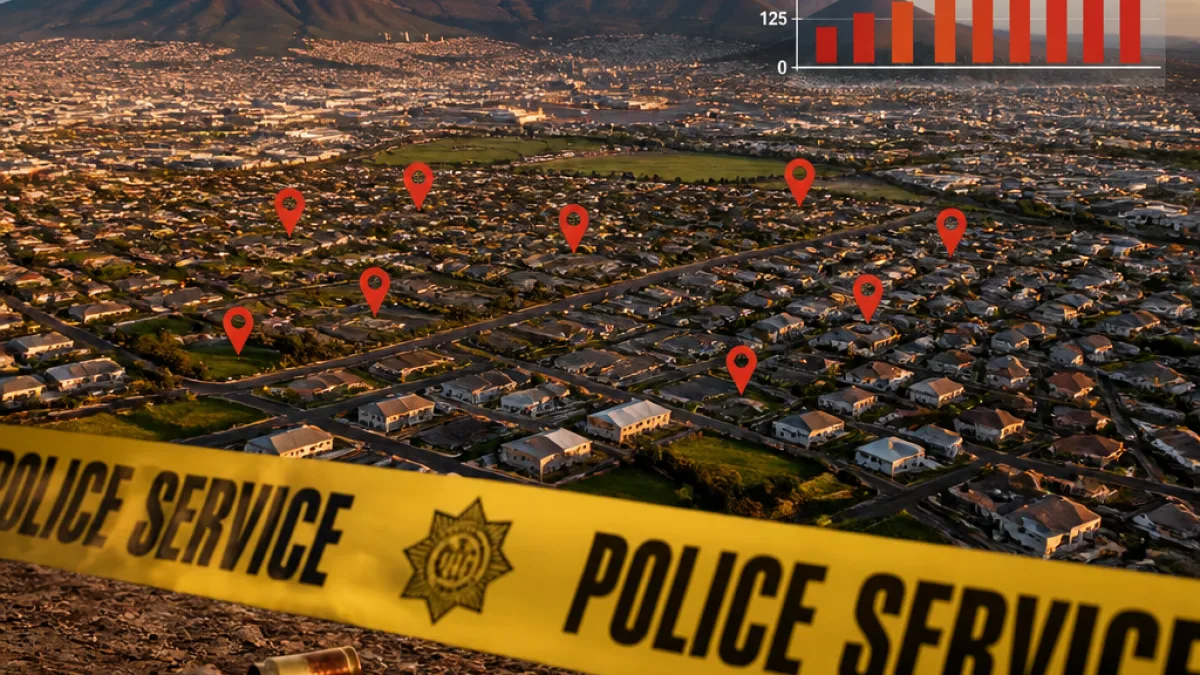
Policing districts on the Cape Flats dominate the list of precincts with the highest murder rates. The national ranking places Mfuleni and Nyanga at first and second respectively. Other Cape Town precincts in the national top 10 include Philippi East (4), Delft (5), Harare (6) and Khayelitsha (10). Rounding out the provincial representation in the top 30 are Kraaifontein (11), Gugulethu (16), Makhaza (17), Lingelethu-West (25) and Mitchells Plain (27).
| National rank | Precinct |
|---|---|
| 1 | Mfuleni |
| 2 | Nyanga |
| 4 | Philippi East |
| 5 | Delft |
| 6 | Harare |
| 10 | Khayelitsha |
| 11 | Kraaifontein |
| 16 | Gugulethu |
| 17 | Makhaza |
| 25 | Lingelethu-West |
| 27 | Mitchells Plain |
Police response and commentary
SAPS noted a fourth consecutive quarterly decline in serious crime in the Mother City, a trend the national acting Minister of Police described as evidence that targeted policing can have an effect. Acting Minister Firoz Cachalia warned, however, that many murders are carried out by “organised, heavily armed criminal groups” while others result from interpersonal disputes that reflect deeper social fractures.
“These are the crimes that create fear in our communities. Many are committed by organised, heavily armed criminal groups that operate with planning and sophistication,” Cachalia said. “Seeing sustained declines across these categories demonstrates that intelligence-led policing, targ…”
The minister’s comments, released with the statistics, pointed to intelligence-led operations as a central tactic. SAPS has not yet released ward-level intervention plans aligned with the new figures; policing and community safety organisations will watch whether resources are redirected to the precincts most affected.
What this means for residents
For families and commuters living in the affected precincts, the statistics confirm what many already experience: concentrated pockets of lethal violence despite overall provincial improvement. Firearm prevalence and the role of organised gangs suggest that law-enforcement action will need to be matched by social and economic interventions to reduce recruitment into violent networks.
- High firearm involvement: 663 of 1 071 murders involved guns.
- Gang violence: 217 murders reported as gang-related on the Cape Flats.
- Mass shootings: 65 dockets opened, tying the province with Gauteng.
Community leaders, non-government organisations and municipal authorities are likely to press for accelerated funding for violence-prevention programmes, expanded youth services and targeted policing. For commuters and residents the practical implications are immediate: continue to follow SAPS safety alerts, work with local ward councillors to escalate hotspot concerns, and use community-based reporting structures where available.
The statistics paint a province where aggregate numbers can obscure acute local dangers. The Western Cape’s mixed picture — falling overall murder numbers but entrenched precinct-level hotspots — will test whether policing strategies and social interventions can be synchronised to protect the most vulnerable communities on the Cape Flats.