Elite athletes are treating sleep as a central component of training, not an optional extra, with both practical routines and wearable monitoring used to improve recovery and performance.
Sleep as recovery — not just rest
Tom Walsh, a world-class shotputter, and other elite competitors described to RNZ how they structure bedtime and travel routines to protect what sports scientists call deep sleep, the phase most closely associated with physical recovery. Walsh said he aims for between 8½ and 9½ hours a night while in heavy training and prefers an early bedtime, commenting that “if I go to bed at 9 and wake up at 6” the sleep is different to going to bed at midnight and rising at 9.
Geoff Passfield, a lecturer at Auckland University of Technology’s School of Sport, Exercise and Health, supported the observation, noting that the early part of the night is when athletes gain most deep sleep — the stage linked to muscular repair and other recovery processes.
Monitoring sleep and tailoring behaviours
Some teams and athletes now routinely use wearable devices to track sleep stages and quality. Black Fern Maia Joseph, who is also a medical student at Otago University, said her Super Rugby Aupiki team received Whoop wrist-worn monitors as part of a study and that the devices were accompanied by education about sleep, hormones and menstrual cycles.
“With that came a lot of, I guess, education around sleep that’s particularly to do with hormones and like menstrual cycles.”
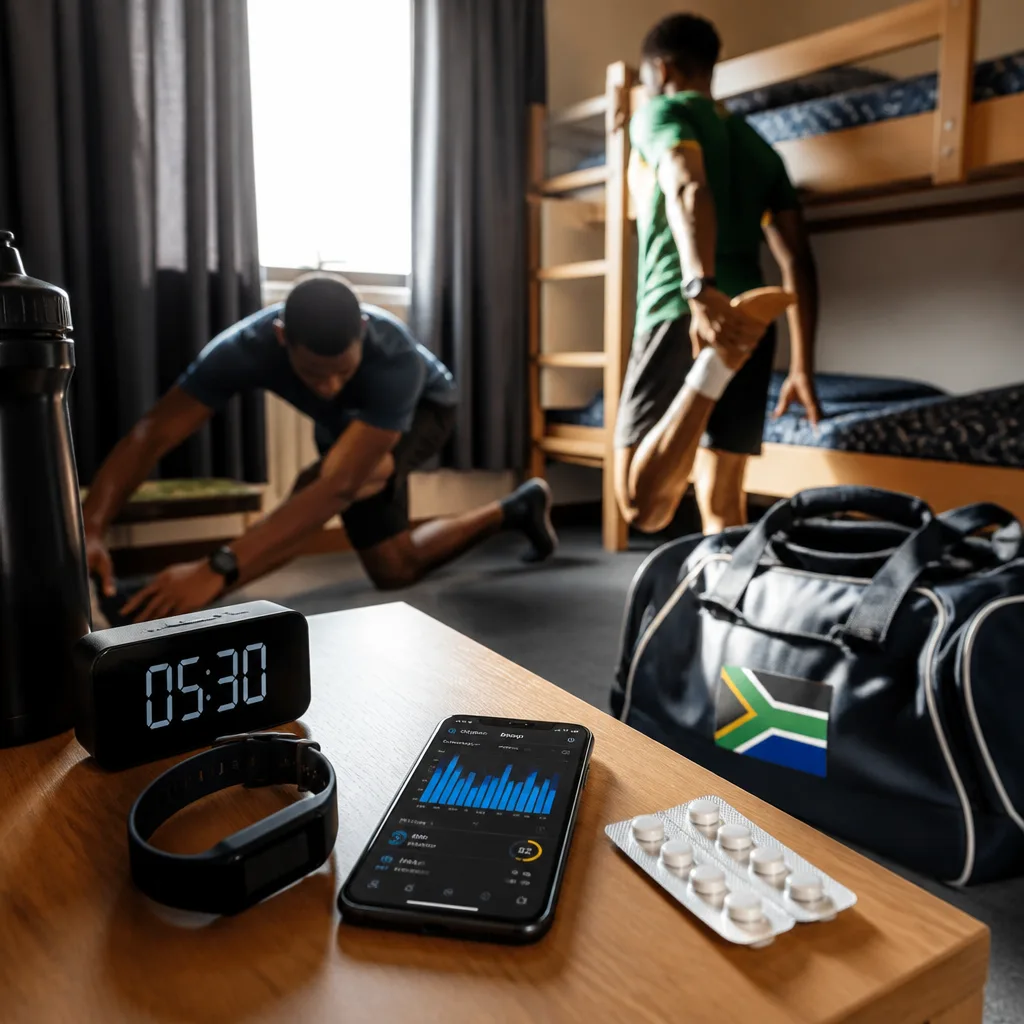
Wearable trackers measure the duration and staging of sleep and can highlight patterns that athletes and staff use to adjust training load, travel plans and recovery protocols. The goal is to increase the proportion of restorative deep sleep and ensure overall sleep sufficiency.
Practical strategies for travel and light exposure
Overseas travel and crossing time zones remain a major challenge for high-level sport. Walsh reported using melatonin to adapt more quickly to new time zones and avoiding having his phone in bed. Sprinter Tiaan Whelpton uses blue-light filters on devices after dark and deliberately seeks bright morning light upon waking to help reset his circadian rhythm.
- Early bedtimes to maximise deep sleep.
- Wearable monitors (for example, Whoop) to quantify sleep duration and stages.
- Strategic light exposure on waking to entrain circadian rhythms.
- Melatonin when relocating across time zones, and reduced device use in bed.
These strategies are low-cost, low-risk interventions that athletes can adopt without major changes to training. They reflect a shift in elite sport toward treating sleep as an intervention that can be measured, coached and optimised.
What this means for coaches and sports programmes
For performance staff and sports medicine teams the implications are practical. Tracking sleep provides objective data to guide recovery recommendations; educating athletes about sleep timing and hormone interactions can be particularly important for female athletes whose menstrual cycle influences sleep and recovery; and travel plans should build in circadian strategies rather than relying solely on pharmacology.
| Issue | Practical responses |
|---|---|
| Deep sleep deficit | Encourage earlier bedtimes; monitor sleep stages |
| Overseas travel | Use melatonin judiciously; plan light exposure to shift circadian timing |
| Device-related sleep disruption | Blue-light filters after dark; avoid phone in bed |
These measures do not replace conventional recovery strategies such as nutrition, hydration and appropriate training periodisation, but they complement them. The value of sleep lies in its integration into a broader recovery plan, and the increasing availability of sleep-tracking data helps coaches and sports scientists personalise recommendations.
As sports bodies and universities continue to study sleep interventions, athletes at all levels may gain practical gains from relatively simple changes: earlier bedtimes, measured sleep, and sensible light and travel routines. For athletes whose livelihoods and national representation depend on marginal gains, those hours in bed are increasingly being seen as time well spent.