
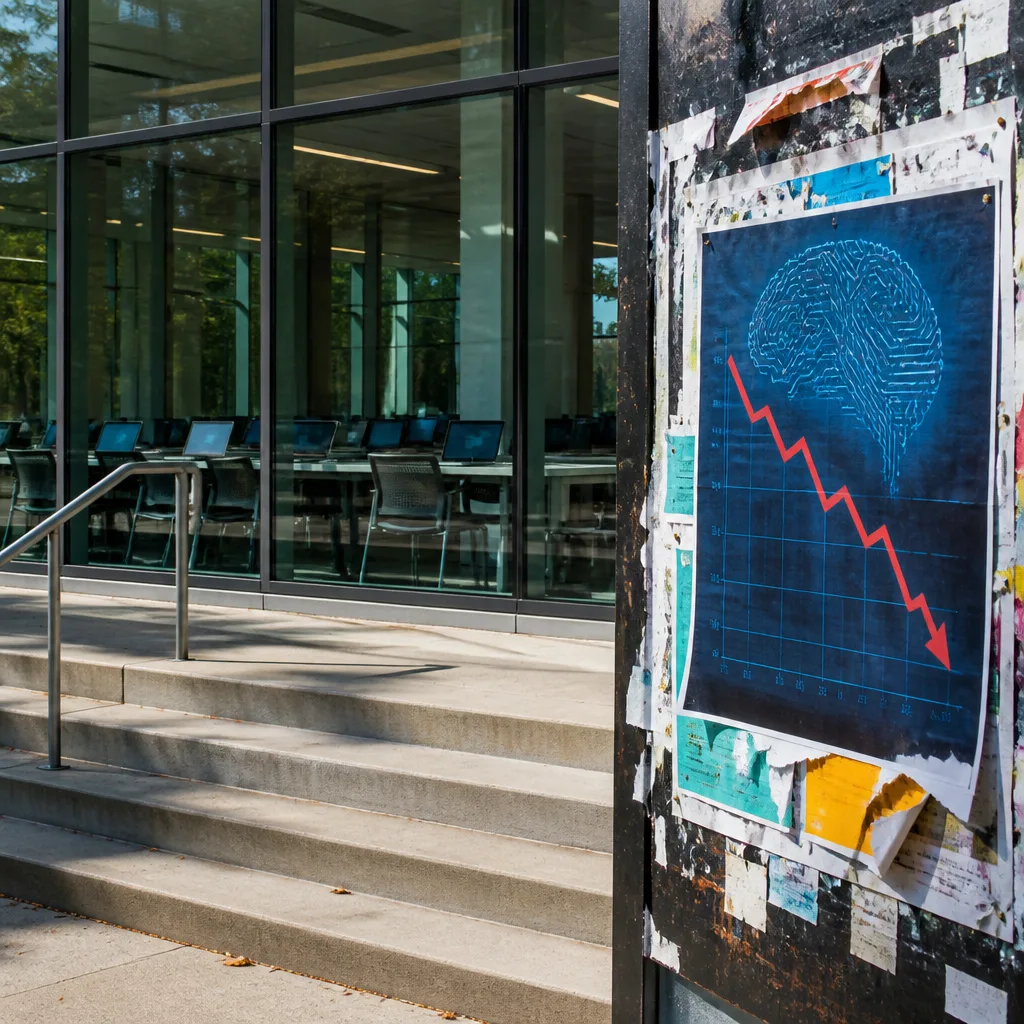
After a decade of rapid expansion, City University of New York computer science enrollment has reversed course, falling sharply as students and employers adjust to an evolving technology landscape dominated by artificial intelligence and a softer entry-level job market.
Enrollment down after long boom
New data released by the university system shows undergraduate computer science enrollment at CUNY declined from 10,330 students in 2024 to 8,819 in 2025 — a drop of about 15%. That contraction follows a decade in which CUNY’s computer science programs expanded dramatically: a report from the Center for an Urban Future found enrollment surged by 146% between 2014 and 2024, even as overall CUNY enrollment fell during that period.
The local reversal reflects a broader national shift. Recent national figures indicate undergraduate computer and information sciences enrollment at four-year institutions fell by about 8.4% this year, a signal that the rapid growth seen over the past decade may be easing.
Economic forces and AI anxiety
The decline in student interest comes amid labor-market turbulence. In New York City, entry-level technology job openings have dropped roughly 49% since 2022, according to the data cited with the university figures. The steep reduction in early-career positions is prompting questions about what skills and experiences undergraduate programs should prioritize as employers reshape hiring around new tools, including generative AI.
Advocates and analysts say the changing market raises stakes for teaching capacity and curricular alignment. Eli Dvorkin, editorial and policy director at the Center for an Urban Future, warned that faculty growth did not keep pace with the decade of enrollment gains at CUNY, creating potential bottlenecks for students seeking career pathways.
“Just a few years ago, a computer science degree alone could take a student pretty far,” Dvorkin said. “But in today’s much tougher entry-level job market, students need more applied skills, exposure to AI in context, real-world projects, industry connections, and faculty who have the insights to help them connect to careers and enough time to mentor them.”
Those comments underline a set of practical concerns for institutions that expanded capacity rapidly: whether they have enough instructors, whether faculty bring current industry experience, and whether programs provide applied opportunities that translate to employment.
Implications for curriculum and capacity
Higher education leaders face trade-offs. Continuing to scale traditional degree programs without adding faculty or applied learning opportunities risks leaving graduates underprepared for a market that increasingly prizes project-based experience and familiarity with AI tools. Conversely, hastily reorienting curricula without evidence-based planning could create mismatches between educational goals and student needs.
Possible areas of focus — reflective of the concerns raised by analysts — include:
- Expanding applied coursework and capstone projects that simulate workplace problems.
- Increasing partnerships with local employers to create internships and mentorships.
- Integrating responsible and contextual AI training into core curricula.
University systems also must grapple with capacity: hiring and retaining faculty with both pedagogical training and relevant industry experience remains a challenge, particularly where prior growth outpaced staffing.
| Measure | Value |
|---|---|
| CUNY computer science enrollment (2024) | 10,330 |
| CUNY computer science enrollment (2025) | 8,819 |
| Enrollment change at CUNY (2014–2024) | +146% |
| National undergraduate CS enrollment change (this year) | -8.4% |
| Change in NYC entry-level tech jobs (since 2022) | -49% |
The institutional response will matter not only for individual student outcomes but also for the broader pipeline feeding the tech workforce. If colleges and universities retool programs to emphasize applied AI competency and stronger employer linkages, graduates may be better positioned to navigate a labor market in flux. If they do not, students and employers alike could face a mismatch between credentials and real-world demands.
As leaders at CUNY and elsewhere weigh adjustments, the unfolding enrollment trends provide an urgent test of whether higher education can adapt rapidly enough to changes in technology and employment to continue providing clear pathways from degree to career.















