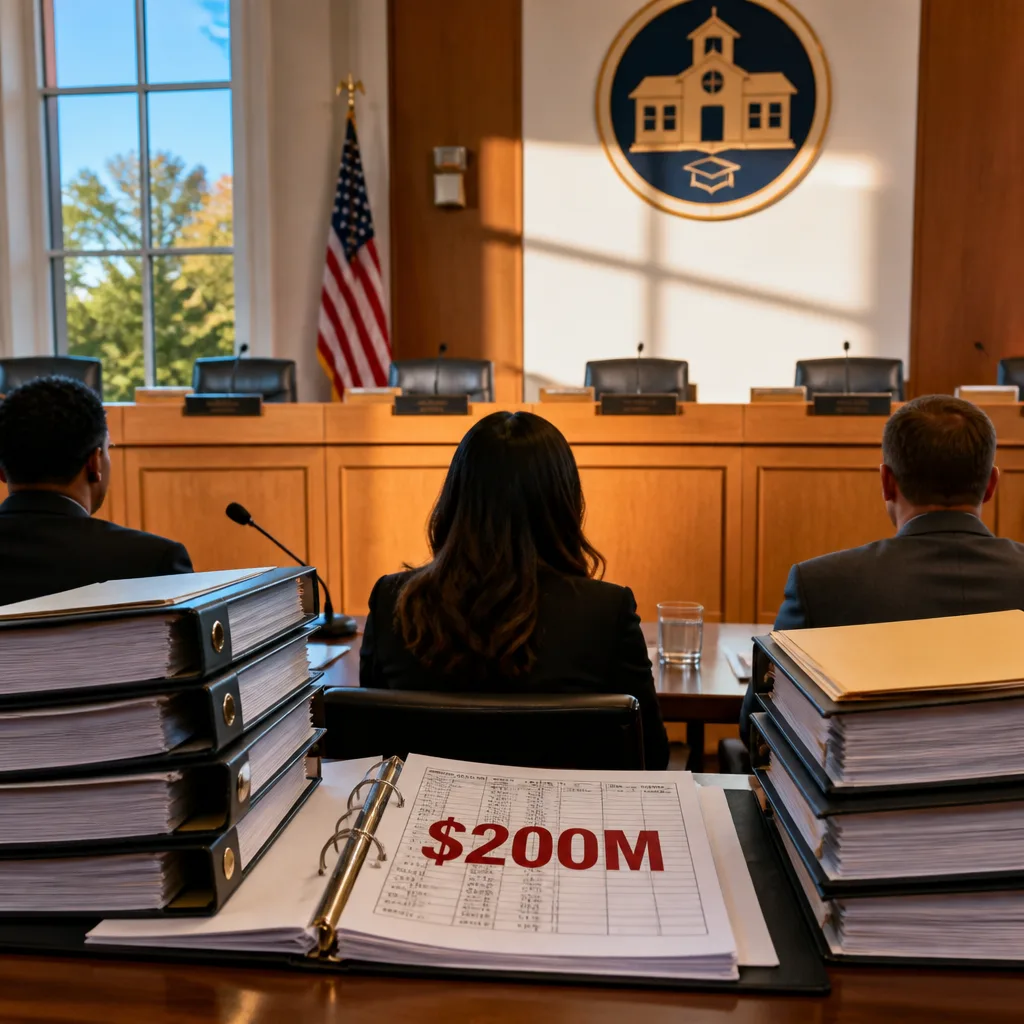
Texas legislators are scrutinizing the structure and practices of an education foundation tied to Barbers Hill Independent School District after the nonprofit amassed roughly $200 million in assets — an amount that now exceeds the district’s entire annual operating budget.
Lawmakers press superintendent on funding and governance
At issue is the foundation’s origin and the role of district leaders in its operations. Superintendent Greg Poole, who has led Barbers Hill ISD for nearly two decades, directed close to $100 million of district funds into the nonprofit foundation and serves as its executive director. During a late-August government oversight hearing, members of the Texas House questioned whether the foundation’s investment strategies, board composition and use of a now-eliminated tax incentive raised conflicts of interest or violated open meetings rules.
"We set it up very uniquely and we didn’t pattern it after any other foundation," Poole told Houston Public Media, describing the approach he used to expand the district’s finances.
Lawmakers, from both parties, sought clarity on several points: how the foundation’s board was assembled, whether district trustees who also served on the board had appropriate separation of duties, and whether meetings of those groups complied with the Texas Open Meetings Act. Some members also focused on the foundation’s use of a tax incentive that reduced taxes Barbers Hill ISD owed to the state; that incentive has since been eliminated.
Scale of the foundation and local impact
The foundation’s assets — now valuing about $200 million — were built with the goal of supporting a relatively small district that serves roughly 8,000 students about 30 miles east of Houston. The endowment’s size eclipses the district’s annual operating budget, a fact that has prompted questions about the appropriateness and prudence of redirecting public education dollars into a privately controlled nonprofit vehicle.
District officials and Poole maintain that their actions were lawful and taken with legal counsel. Advocates for the district’s strategy have argued the fund was intended to protect and grow resources for local schools amid state funding shifts and to bolster relationships with area businesses.
Questions about board composition and investments
During the hearing, lawmakers raised concerns about the foundation’s board makeup. Much of the board is made up of current and former district trustees, district employees and people linked to the investment firms that manage the foundation’s assets. Critics contend that such ties could create perceived or real conflicts between the district’s duty to taxpayers and the foundation’s investment decisions.
Other members of the board have ties to private investment firms that helped manage the endowment’s funds. Lawmakers pressed Poole on whether decisions were made in the best interest of students and taxpayers and whether the governance structure provided adequate transparency and accountability.
- Assets: Approximately $200 million in foundation endowment.
- Original redirected funds: Nearly $100 million from district sources.
- District size: About 8,000 students served by Barbers Hill ISD.
| Measure | Figure |
|---|---|
| Foundation assets | $200 million |
| Redirected district funds | ~$100 million |
| Students in district | ~8,000 |
The hearing touched on broader debates about how education foundations operate across the country. Foundations can be tools to attract private support and invest for long-term needs, but they also raise governance and transparency challenges when closely intertwined with district leadership and public funds.
As lawmakers reviewed the Barbers Hill arrangement, the episode underscored tensions between innovative finance strategies intended to shield local schools from state funding shifts and the need for clear safeguards to prevent conflicts and ensure public accountability.
Barbers Hill ISD officials say all actions were legal and guided by counsel. Lawmakers, however, left the hearing asking for more documentation and for clearer boundaries between public authority and private foundation governance as they consider whether additional oversight or guidance is needed.
The oversight hearing has opened a wider conversation in Texas about how school districts use nonprofit foundations and what rules should govern those relationships moving forward.