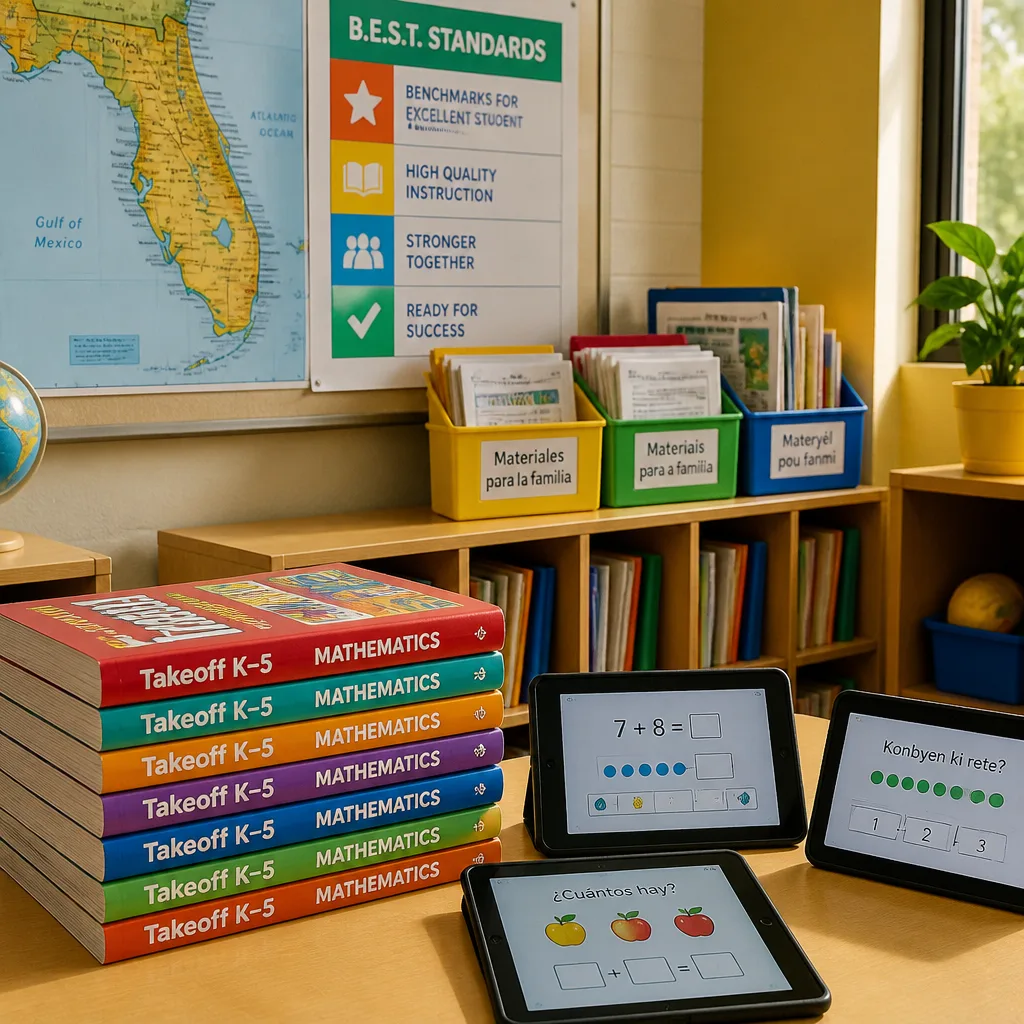
The Florida Department of Education has approved Takeoff by IXL, Florida Edition as a statewide core math curriculum for kindergarten through fifth grade, giving districts across the state access to a program designed specifically to align with the state’s B.E.S.T. standards and Mathematical Thinking and Reasoning expectations.
What the approval means
State approval makes Takeoff available for adoption by school districts from the Keys to the Panhandle. The curriculum combines traditional print workbooks with digital instructional tools intended to help teachers tailor lessons to students’ individual needs. The developer, IXL Learning, describes the program as focused on problem-centered activities and real-world connections intended to reflect Florida communities.
"Better math instruction starts with making it more responsive. Takeoff makes that possible by showing teachers exactly what each student needs and how to act on it," said Kelly Philbin, Director of Core Adoptions at IXL Learning.
The company said the curriculum was built specifically for Florida’s K-5 standards and sequencing. IXL also highlighted supports aimed at serving the state’s diverse student population, including online content available in more than 120 languages and math glossaries in the state’s 12 primary languages. The curriculum includes family-facing materials in Spanish, Portuguese and Haitian languages, according to the developer.
Features districts will evaluate
District leaders deciding whether to adopt the curriculum can expect a combination of print and digital resources that IXL says are designed for differentiation. Key features promoted by the publisher include:
- Standards-aligned lesson sequencing for K-5 math;
- Integrated print workbooks paired with interactive digital activities;
- Multilingual student supports and family communications;
- Tools intended to help teachers identify individual students’ needs and adjust instruction.
IXL framed Takeoff as the "first and only core math curriculum intentionally designed for differentiation" for Florida’s K-5 classrooms. The approval by the state education department permits districts to evaluate and procure the curriculum through standard adoption processes.
Context and potential consequences
Florida’s adoption decisions often influence textbook and curriculum markets because of the state’s size and centralized standards. A curriculum tailored to the B.E.S.T. framework and approved by the Florida Department of Education could attract significant district interest and purchasing, particularly from systems seeking materials explicitly aligned to state expectations.
For teachers, the curriculum’s emphasis on differentiation signals a shift toward resources that attempt to support varied learning paces within a single classroom. For families and communities, multilingual supports and translated family letters may improve access to information about student learning and expectations, particularly in districts with sizable Spanish-, Portuguese- and Haitian Creole–speaking households.
Districts will still determine adoption locally, weighing cost, professional development needs and compatibility with existing instructional plans. The state approval simply places the curriculum on a list of materials vetted for alignment with Florida’s standards and available for districts to purchase or pilot.
| Item | Detail |
|---|---|
| Grades covered | K–5 |
| Languages for online skills | 120+ |
| Primary languages for glossaries | 12 |
| Family letters available | Spanish, Portuguese, Haitian |
As districts consider new core materials, officials and educators will likely focus on how well the curriculum supports classroom practice, the quality of professional development and the tools’ effectiveness in raising student understanding. The approval signals that Florida policymakers have vetted the program for alignment with the state’s current math standards, but local decisions will determine how broadly it is used.
This report is based on materials provided by the publisher and state announcement regarding approval. Further reporting will follow as school districts make adoption decisions and implement any new curriculum.