
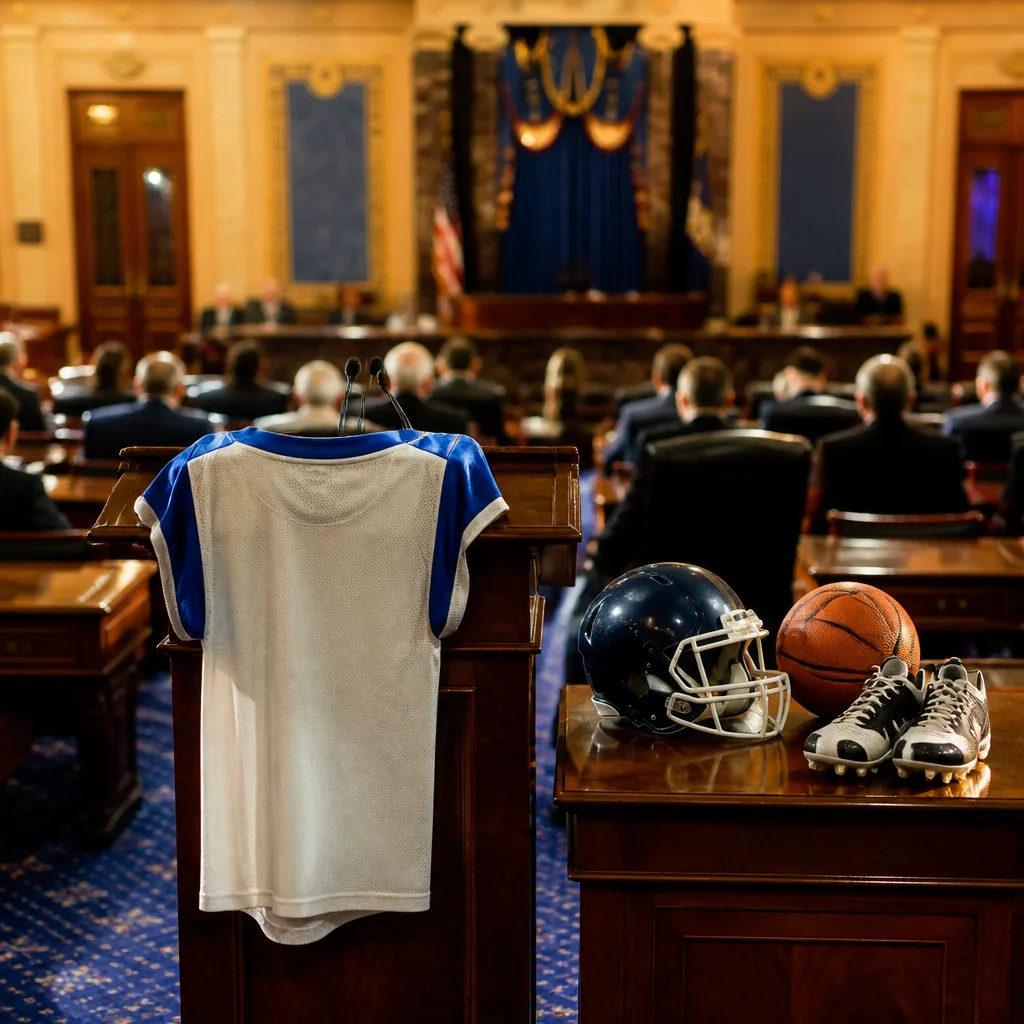
WASHINGTON — With the Protect College Sports Act poised to reach a milestone in the U.S. Senate, a notable contingent of lawmakers with firsthand experience as college athletes are playing an outsized role in framing the discussion. Supporters say the measure is necessary to address what they describe as turmoil in Division I athletics following sweeping legal and commercial changes over the last decade.
Former players add perspective
At least a half-dozen current senators once competed in NCAA Division I athletics, and several others played at lower divisions or under different collegiate governing bodies. Their time in locker rooms and on playing fields has informed how they view issues such as name-image-likeness compensation, transfer rules, litigation over eligibility and the rising cost of running major athletic programs.
Among those most active on the floor is Sen. Tommy Tuberville, the Alabama Republican and former college coach, who has spoken about the replacement of the long-standing amateurism model with widespread NIL deals. Tuberville argued that change was overdue, noting the imbalance in revenue distribution that historically favored institutions, conferences and media partners over athletes.
"For years, everyone around college sports made money — schools, conferences, television networks, sponsors, coaches — while the athletes were told they could not make any money," Tuberville said on the Senate floor.
Policy aims and the tensions at stake
Backers of the legislation argue it will restore stability to Division I by limiting certain types of lawsuits and by giving Congress or federal regulators clearer authority over eligibility and transfer standards. Critics say the bill could curtail athletes’ ability to capitalize on their name, image and likeness or to seek remedies through the courts.
The bill arrives after a period of rapid change triggered in large part by litigation that challenged NCAA rules. The legal battles, beginning years ago with cases like the one brought by Ed O’Bannon, helped loosen restrictions on athlete compensation and contributed to the current NIL market, where top football and basketball players routinely sign deals worth thousands — and in some cases millions — of dollars.
Consequences for college athletics
Lawmakers who once wore school colors say they appreciate the competing priorities: preserving educational missions, ensuring competitive fairness and responding to market-driven forces that now reward elite athletes commercially. Their involvement underscores how embedded college sports are in broader cultural and economic systems.
If the Senate advances the bill, universities and conferences could see a shift in compliance responsibilities and in how they structure recruiting and roster management. Athletic departments already coping with escalating budgets and coaching salaries may face new constraints or directions depending on the final form of the legislation.
- NIL era: Has given athletes new commercial opportunities and intensified debate over fairness and regulation.
- Transfers and eligibility: Increased player movement has become a flashpoint for those seeking stability in rosters and competitive balance.
- Litigation: Court challenges have steadily reshaped NCAA rules, prompting federal lawmakers to consider legislative solutions.
| Issue | Impact |
|---|---|
| Name-Image-Likeness (NIL) | Expanded athlete compensation, especially in revenue sports. |
| Transfers | More frequent movement of players between programs, raising competitive concerns. |
| Litigation | Judicial decisions have eroded prior NCAA amateurism rules and prompted policy responses. |
Senators who once competed at the collegiate level say their perspectives are grounded in lived experience—both as former athletes and, in some cases, as coaches or administrators. They are weighing the desire to protect opportunities for student-athletes against the need to prevent what they characterize as destabilizing trends that could threaten the broader enterprise of college sports.
The next steps will determine whether Congress imposes a new national framework or allows market-driven and state-level developments to continue shaping the landscape. Either outcome will have significant effects on recruitment, roster stability and the financial models of major athletic programs across the country.
As the Senate prepares to act, the debate promises to remain intense and closely watched by universities, conferences, athletes and the commercial partners that now play a central role in college athletics.

















