
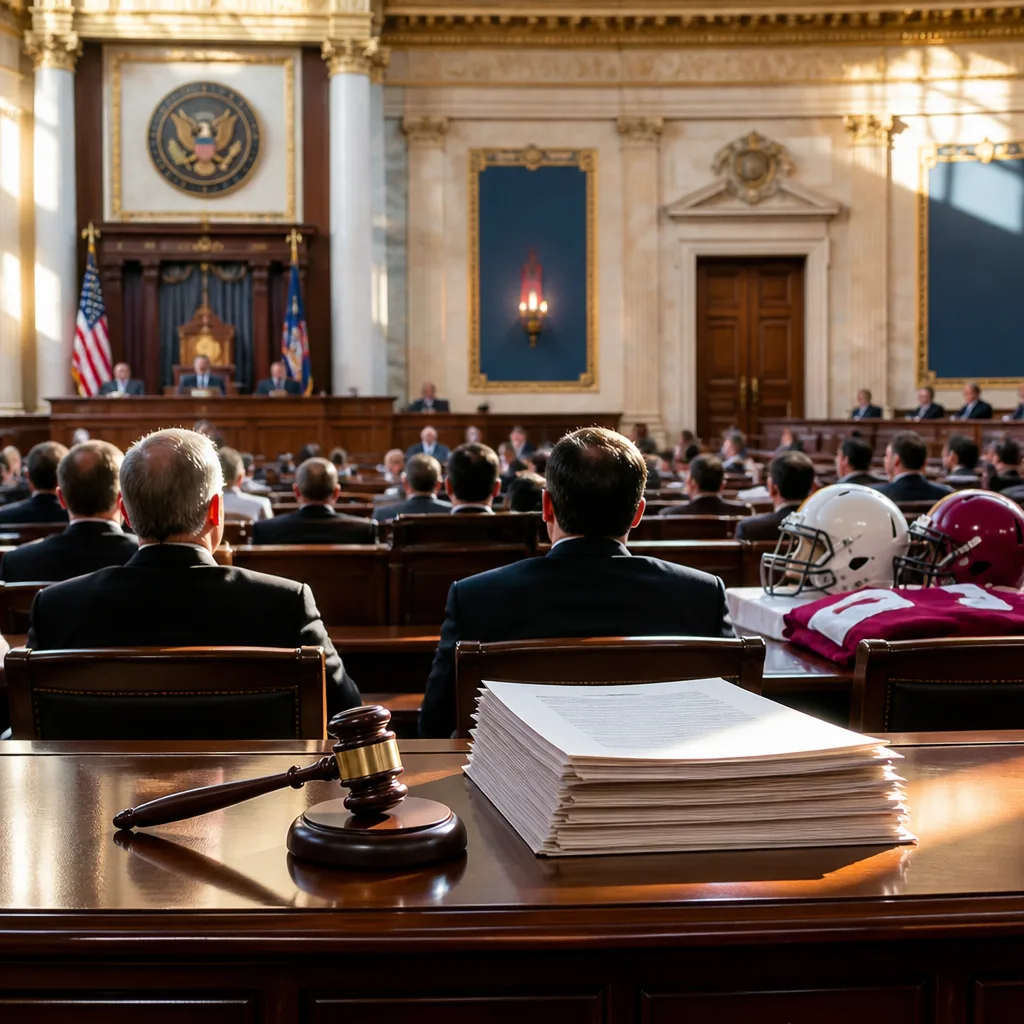
The Senate on Tuesday took a decisive step toward enacting comprehensive federal legislation that would overhaul the business of college athletics, approving a motion to move the measure forward by a 74-24 margin. The procedural victory clears a key hurdle and brings a final passage vote closer.
What the measure would do
The bill, known in Congress as the Protect College Sports Act, aims to establish uniform standards across college sports for several contentious areas that have roiled campuses, athletic departments and conferences over the past several years. Under the proposal, lawmakers would provide statutory protections for name, image and likeness (NIL) compensation, create parameters for how schools can share revenue with student-athletes, and set federal guardrails for transfers, eligibility and recruiting practices.
Political coalitions and shifting alignments
After months of negotiation and revisions, the measure attracted a mix of Republican and Democratic support — including public backing from the White House — enabling it to clear the Senate's 60-vote cloture threshold. The legislation has been led in the Commerce, Science and Transportation Committee by Chairman Ted Cruz, R-Texas, and ranking member Maria Cantwell, D-Wash.
Support and opposition in the Senate have not followed simple party lines. Instead, many senators have weighed the bill based on the interests of major programs and conferences in their states, reflecting the regional and institutional politics that have shaped the college sports landscape.
Conference dynamics and compromises
Initially, the measure encountered strong resistance from power conferences such as the Big Ten and the Southeastern Conference, which feared federal rules could upend their current governance and revenue models. After revisions, those conferences ultimately signaled support for the bill, a turning point that helped gather the bipartisan votes necessary to advance the legislation.
| Action | Senate Vote |
|---|---|
| Motion to proceed | 74-24 |
Immediate implications
If the Senate adopts the bill in a final vote and it becomes law, the immediate effect would be to create a single federal framework for NIL compensation and several other areas currently governed through a mix of state laws, NCAA rules and conference policies. For athletes, the legislation could standardize rights to market themselves and clarify when and how they may receive revenue-sharing from their institutions.
- Uniform NIL protections: The measure would codify protections for student-athletes to earn for name, image and likeness.
- Revenue sharing guardrails: It would set limits and rules around how schools may distribute revenue to athletes.
- Transfer and eligibility rules: The bill would establish federal standards for transfers, recruitment and athlete eligibility.
What comes next
Senators are expected to hold a final passage vote in the coming days. If passed by the Senate, the bill would then require reconciliation with any House measures or move to the president for his signature. The White House has endorsed the legislation, which could speed its enactment if both chambers agree on final language.
Observers say the law’s long-term impact will hinge on implementation details, enforcement mechanisms and potential legal challenges. Universities, conferences and athlete representatives will be watching closely for the precise regulatory structure that follows congressional approval, including how the rules intersect with existing contracts, state laws and NCAA governance.
The debate over the bill illustrates how college sports, once governed largely by the NCAA’s internal rules, now occupy a national policy space involving lawmakers, the executive branch and a broad cross-section of stakeholders across the collegiate athletic ecosystem.

















