
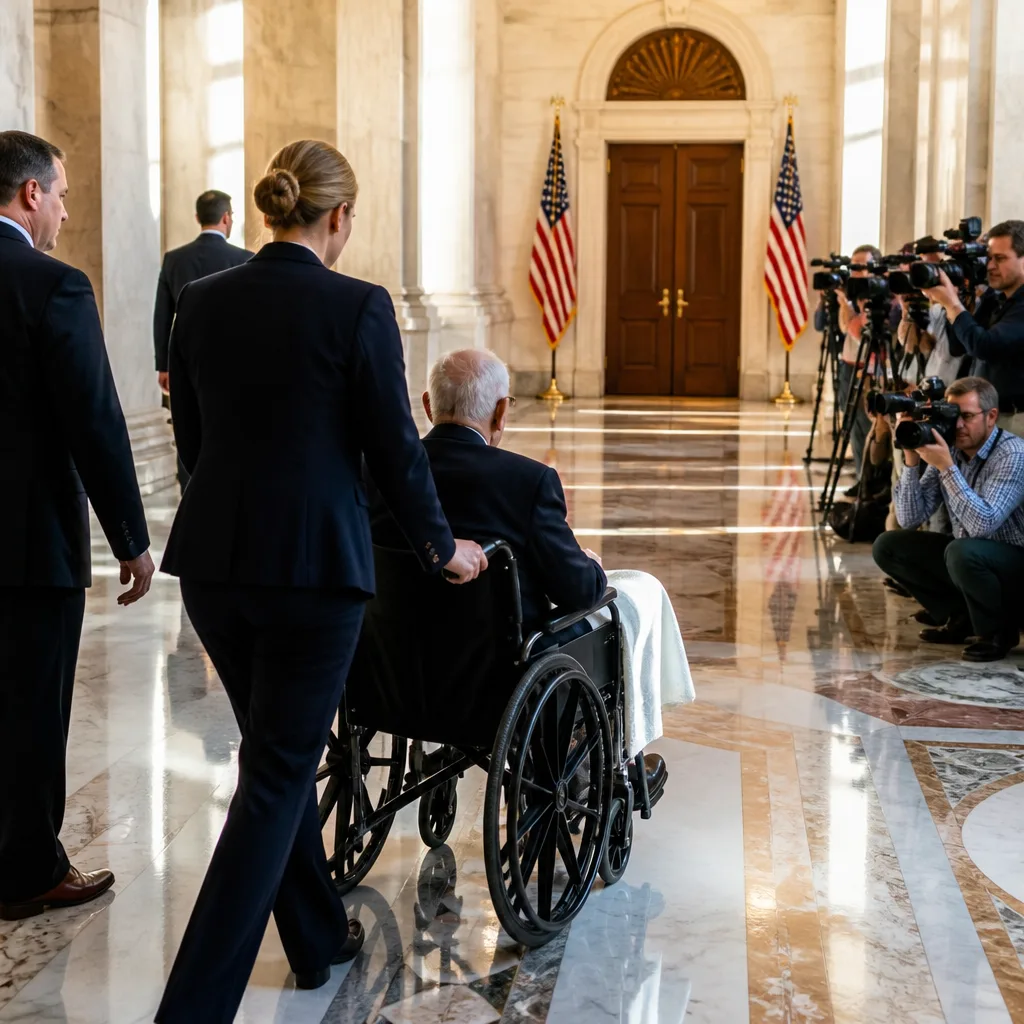
Sen. Mitch McConnell, Republican of Kentucky, returned to the U.S. Capitol on Monday after a roughly three-month absence spent recuperating from a fall at his Washington residence that had prompted questions about his fitness to serve in Congress.
Appearing outside the Senate chamber in a wheelchair and at times speaking in a voice that faltered, the 84-year-old senator told reporters he was ready to resume work. He identified several priorities, including advancing farm legislation, strengthening U.S. ties with NATO and countering Russian aggression in Ukraine. After addressing the press, McConnell entered the chamber and cast a vote for a Republican judicial nominee.
“I must admit. After two years of – decades, actually – dodging your questions, I wasn’t sure how many of you would be here today. But I’m glad to see you. Time to get back to work, finish the job for this Congress,”
Health absence and questions about capacity
McConnell’s break from the Senate followed a fall in his D.C. home. The incident and his extended absence raised public and political concerns about his ability to carry out the duties of his office. On Monday, he did not directly answer a question from a reporter about whether he planned to serve the remainder of his current term, which concludes in January.
The visibly frail appearance and intermittently unsteady voice underscored lingering worries among colleagues and constituents about the senator’s stamina and capacity for leadership. Nevertheless, his immediate return to voting and engagement with press signals an intent to remain active in the Senate’s business for the near term.
Immediate actions and congressional implications
McConnell’s public remarks emphasized legislative goals that align with longstanding Republican priorities and ongoing foreign policy concerns. His stated focus on farm policy highlights the congressional calendar’s domestic agenda items, while references to NATO and Russia reflect sustained attention to international security debates.
His presence at the Capitol also has procedural implications. As a senior Republican and long-time leader in the Senate, McConnell’s participation can influence committee assignments, floor strategy and the party’s approach to confirmations and legislation. Monday’s vote on a judicial nominee demonstrated a rapid reintegration into the chamber’s routine work.
- Absence length: ~three months
- Age: 84
- Returned to vote on a Republican judicial nominee
- Term end noted in reporting: January
| Item | Detail |
|---|---|
| Reason for absence | Recovery after a fall at his Washington home |
| Duration | Three months |
| Age | 84 |
| Immediate actions | Addressed reporters from a wheelchair; voted in the Senate |
Reactions and unanswered questions
The senator’s return did not resolve broader questions about his long-term plans. When asked whether he intends to finish his current term, McConnell declined to respond, leaving colleagues and observers uncertain about future leadership dynamics. His comments stressed a desire to "finish the job for this Congress," but provided no specific timeline for any sustained return to full duties beyond his participation that day.
McConnell’s health and capacity remain matters of public interest given his role in shaping judicial confirmations and major legislative priorities. The combination of a prolonged absence, visible frailty on return and an unanswered question about completing his term will likely fuel continued scrutiny from both political allies and opponents as the Senate moves ahead with its agenda.
For now, the senator’s reappearance signals a resumption of day-to-day participation in the chamber even as long-term questions about leadership and health linger.
















