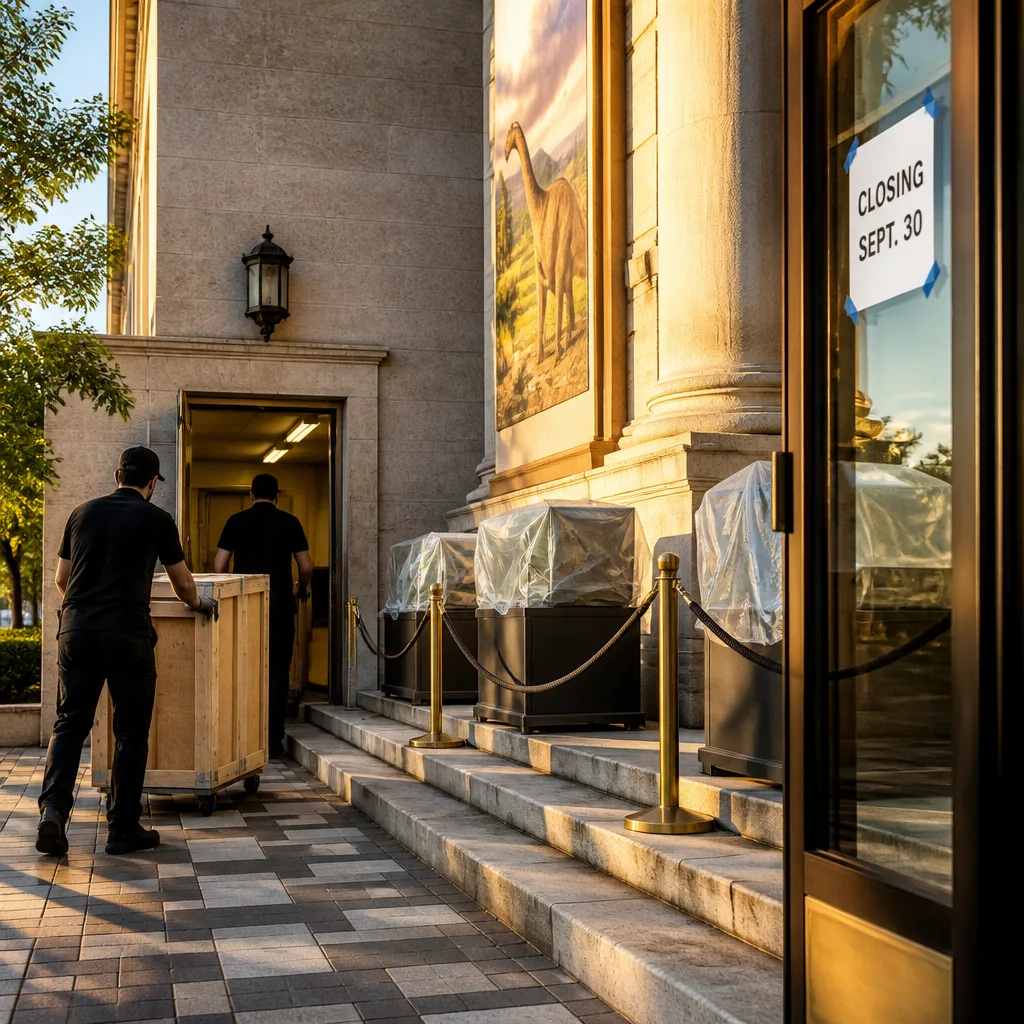
The Academy of Natural Sciences of Drexel University will close its museum on the Benjamin Franklin Parkway on Sept. 30, officials announced, ending nearly two centuries of continuous public display and education at one of the nation’s oldest scientific institutions.
Leaders at the Academy and Drexel framed the closure as a difficult but necessary measure to preserve the institution’s scientific assets and stabilize its finances. The organization said it will continue to steward its research and collections, shifting resources away from operating the Parkway museum toward sustaining long-term scientific work.
Why the museum is closing
Academy and Drexel leaders said the decision responds to persistent economic pressures that have not abated since the COVID-19 pandemic. Despite efforts to rebuild attendance and public engagement, the museum’s operating costs continued to rise, and the leadership concluded the current model was no longer sustainable.
“Closing the current Parkway museum is, therefore, a difficult decision taken to concentrate resources on the Academy’s enduring scientific assets and research,” the institution said in a statement.
The statement said the move will help protect the collections and the core scientific mission of the Academy while taking “an important step toward addressing the Academy’s financial challenges.” Officials described the closure as the first phase of a broader plan to build a sustainable future for the institution.
What will continue and what will change
Academy leaders emphasized that stewardship of the collections and research activities will continue. In their announcement, they pledged to identify new, financially viable ways to display portions of the collections and to maintain public engagement in the natural sciences.
Operational changes associated with the closure will include staff adjustments and leadership transitions. A Drexel spokesperson confirmed that 27 Academy employees will be affected by the museum’s closing. In addition, the Academy’s president and CEO, Scott Cooper, will step down from his role and remain available in an advisory capacity during the transition.
Founded in 1812, the Academy opened its museum to the public in 1828. The institution became an affiliate of Drexel University in 2011, a relationship aimed at strengthening its research and education programs. Like many cultural organizations, the Academy had already reduced its public hours in recent years in response to lower visitation and funding challenges.
Implications for research, collections and the public
Officials said protecting the Academy’s scientific holdings was a central factor in the decision. The organization described its archives and collections as among the most significant in natural history, and maintaining their integrity was cited as a responsibility that informed the decision to close the museum space.
Leaders also framed the closure as a strategic move to allow the Academy to concentrate on its research mission. They said the institution will pursue alternative, financially sustainable approaches to public exhibit and education, though specific plans for those initiatives were not detailed in the announcement.
- Closing date: Sept. 30
- Employees affected: 27 (Drexel spokesperson)
- Leadership transition: President and CEO Scott Cooper to step down, remain as advisor
- Institution founded: 1812; museum opened 1828
| Item | Detail |
|---|---|
| Affiliation | Drexel University (since 2011) |
| Parkway museum closing | Sept. 30 |
| Staff impacted | 27 |
The announcement underscores the financial fragility facing many cultural and scientific institutions that rely on a mix of admissions, philanthropy and public funding. For the Academy, officials said concentrating resources on research collections is intended to ensure the organization can continue contributing to scientific discovery even as public gallery operations cease.
Officials vowed to pursue options to keep portions of the collection accessible to the public through new formats or partner displays, but did not provide a timeline for when such opportunities might be available. The closure marks a significant shift for an institution that has served both the scientific community and the public for nearly 200 years.
As the Academy begins its transition, its leaders said they will work to protect the long-term future of the collections and the research they support while exploring sustainable ways to maintain public engagement with the natural sciences.