A Delaware entomologist has confirmed that a species of firefly long considered missing from the region is alive in a Brandywine Creek State Park meadow, a find researchers say has implications for local conservation and for the broader understanding of firefly diversity in North America.
Rediscovery in a Wilmington-area meadow
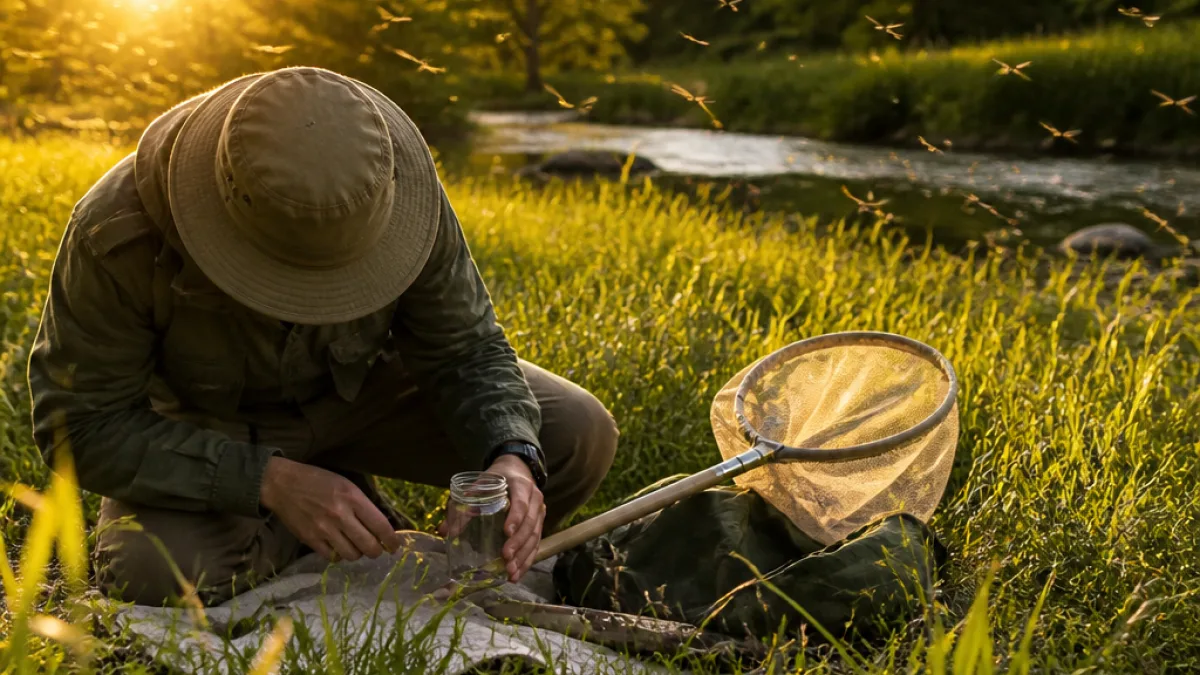
Christopher Hecksher, an ecologist and entomologist at Delaware State University, identified a swarm he first suspected belonged to Pyractomena similis, a firefly species last documented in 1983. After comparing the insects’ flash behavior and examining specimens under a microscope, Hecksher concluded the species is present in Delaware.
The rediscovery was reported in the Journal of Lost Species. Hecksher’s fieldwork focused on meadows near water — habitats historically associated with many firefly species — and his work included searches across both Maryland and Delaware before he located the population at Brandywine Creek State Park.
Hecksher said those conditions are more uncommon than you might think, as "most times we're managing them for other things, maybe livestock, or we're mowing them once in a while".
How scientists confirmed the species
Hecksher used a combination of behavioral and morphological evidence to identify the insects. The fireflies displayed an amber-colored glow and a distinct, "long rhythmic flash" pattern not matching other local species. Microscopic examination of physical traits provided the additional evidence needed to assign the specimens to Pyractomena similis.
Researchers caution that rediscovery does not automatically mean a species is secure. Many fireflies remain poorly documented, and several others are known to be threatened. According to the report cited by Hecksher, there are still dozens of firefly species across the U.S. and Canada with little to no data.
What the find means locally and regionally
For Delaware, the discovery highlights the conservation value of meadows and wetlands in and around preserved lands such as Brandywine Creek State Park. Firefly species often rely on specific habitat conditions — grassy meadows near water, minimal pesticide use and limited disturbance during their breeding season — conditions that can be lost through mowing, grazing or development.
Local land managers and conservation groups say the find underscores the importance of habitat management practices that consider invertebrate life. While this individual discovery does not yet trigger a change in formal species status, it provides a baseline for future monitoring and potential local conservation actions.
- Species confirmed: Pyractomena similis
- Last documented: 1983
- Location of rediscovery: Brandywine Creek State Park, Delaware
- Reporting source: Journal of Lost Species
| Detail | Information |
|---|---|
| Species | Pyractomena similis |
| Last documented | 1983 |
| Rediscovery site | Brandywine Creek State Park, DE |
| Identification cues | Amber color; long rhythmic flash; microscopic traits |
Next steps: monitoring and public awareness
Scientists say the appropriate response now is continued monitoring to determine the size and stability of the population and to document habitat needs more precisely. The discovery also offers a chance to engage the public in reporting firefly sightings and supporting habitat-friendly practices in private and public lands.
For residents and land managers interested in supporting firefly habitat, experts recommend limiting pesticide use, preserving unmowed native meadow areas especially near water, and timing maintenance activities to avoid the insects’ active months. Because much remains unknown about many firefly species, public observations reported to local universities or citizen science platforms can be valuable.
While Pyractomena similis’s full conservation status is not yet reassessed in light of the rediscovery, the find reduces by one the number of North American firefly species classed as “lost.” Previously, researchers counted 28 such species; the rediscovery brings that number down to 27, according to the report referenced by Hecksher.
The discovery draws attention to both the fragility and resilience of insect populations, and it gives Delaware scientists and conservation partners a clear, local example of why habitat protection and careful land management matter for species that might otherwise vanish unnoticed.