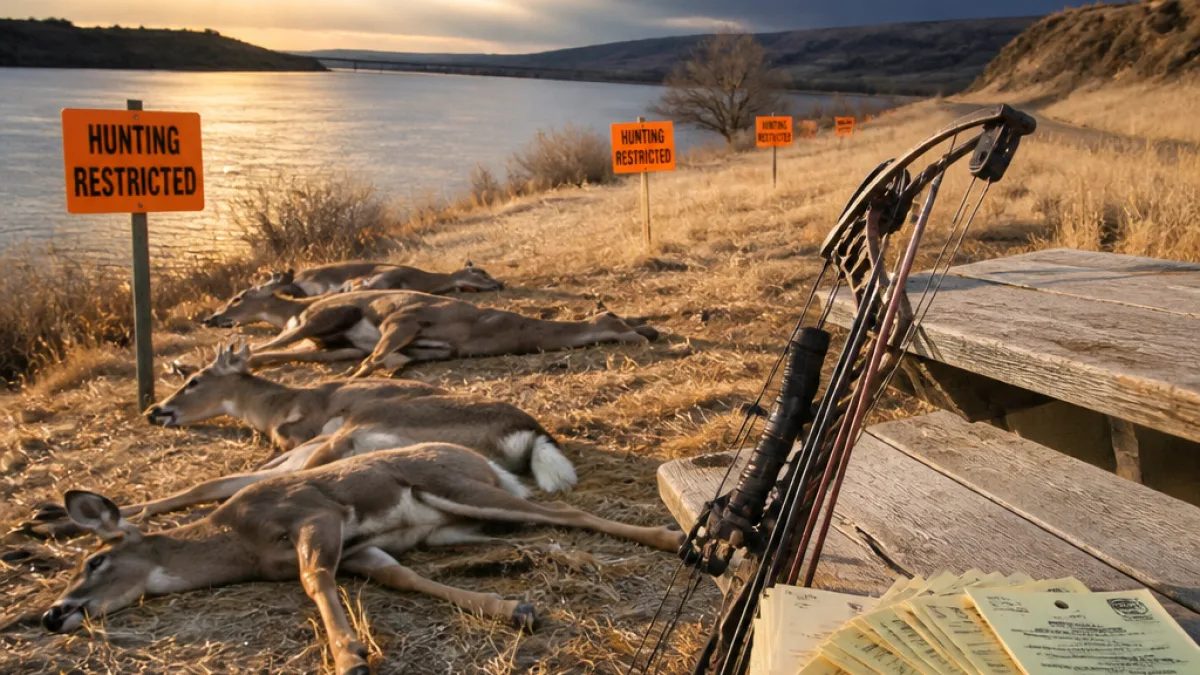
RAPID CITY, S.D. — South Dakota wildlife authorities have moved to restrict some deer hunting opportunities and offer refunds after reporting a sharp rise in deer deaths tied to epizootic hemorrhagic disease (EHD), a viral illness transmitted by tiny biting midges.
Officials cite surge in mortality
Game, Fish and Parks said this year’s reported mortality has exceeded 400 deer, a figure that is more than double what was reported just a month earlier. Most confirmed cases have involved white-tailed deer, which wildlife experts say appear particularly vulnerable to the virus.
The department has taken several actions in response to the outbreak, including reducing hunting opportunities in areas where dead and sick deer have been concentrated. Measures announced include removing some youth and mentored deer licenses and amending statewide archery rules.
- Restrictions on youth and mentored deer licenses in affected zones.
- Changes to statewide archery regulations.
- Full license refunds offered to hunters in 16 counties along the Missouri River corridor.
Why this outbreak is happening
Wildlife biologists say the season’s weather pattern — warm, dry stretches followed by intermittent rainfall — likely encouraged populations of the small biting flies that transmit EHD. The virus can cause rapid illness and death in deer, and large die-offs have occurred in previous years under similar climatic conditions.
“The disease often eases once a hard freeze reduces the number of vector insects,” the department noted, explaining why late-season cold snaps can bring outbreaks to an end.
Monitoring and public guidance
Game, Fish and Parks is asking the public to report any sightings of sick or dead deer so biologists can continue to monitor the outbreak and better understand its impact on local deer populations. Reported cases help guide management decisions, including future adjustments to hunting regulations and conservation planning.
Hunters who purchased licenses in the affected corridor are being offered full refunds. The department said the refunds apply to hunters in the 16 Missouri River–adjacent counties identified as high risk; officials did not list those counties in the initial release.
| Metric | Value |
|---|---|
| Reported deer deaths so far this year | More than 400 |
| Increase from one month earlier | More than double |
| Counties eligible for refunds | 16 (Missouri River corridor) |
Impacts on hunting and communities
The move to revoke some mentored and youth licenses and change archery rules aims to limit additional harvest in locations where deer numbers may be already reduced by EHD. Hunters and rural businesses that rely on fall hunting seasons could face economic consequences if the outbreak persists or if additional restrictions are implemented.
Biologists will continue to assess whether mortality levels in affected herds could lead to longer-term population declines. White-tailed deer recovery after outbreaks varies by area and depends on factors such as herd size before the outbreak, habitat quality and subsequent weather.
What hunters should do
Game, Fish and Parks recommends hunters stay informed of evolving regulations, check the department’s website and local communications for details about where refunds are available and how to request them, and report any observations of sick or dead deer through the department’s reporting tools.
Officials emphasize that EHD does not affect humans or domestic animals, but they continue to monitor the disease closely because of its potential to reshape deer populations and hunting seasons across the state.
As wildlife biologists track the outbreak, the timing and extent of a hard freeze will be a key factor in determining when the outbreak subsides.
State residents with information on sick or dead deer are urged to contact Game, Fish and Parks so officials can refine their response.