
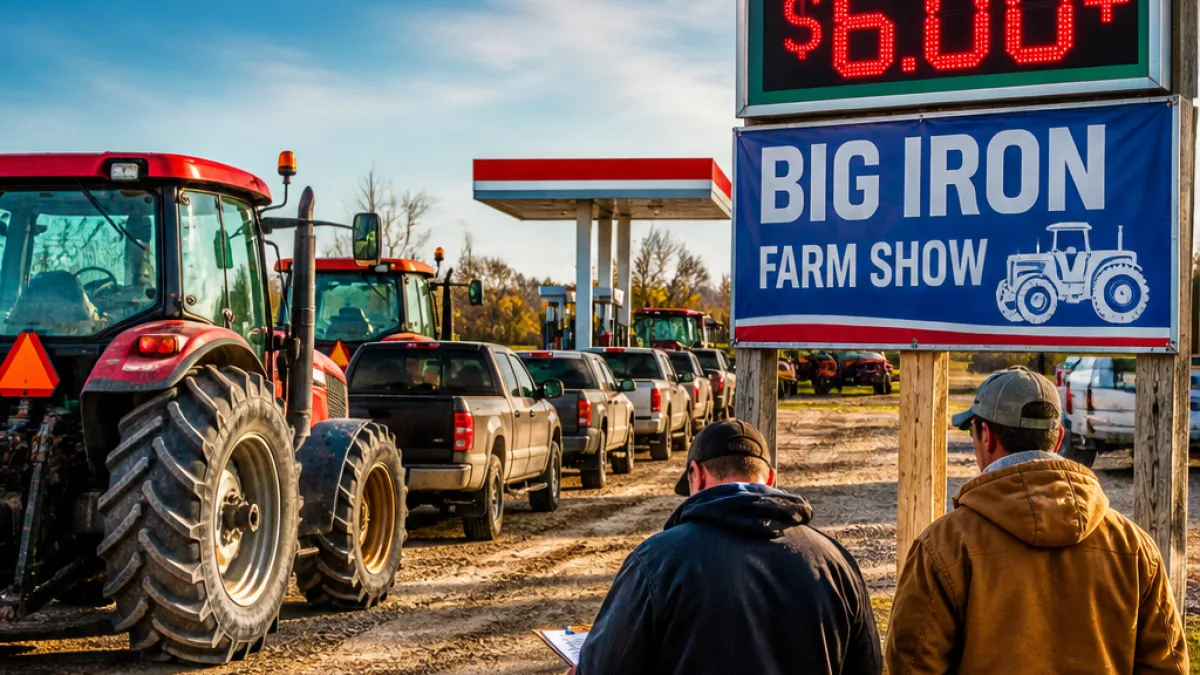
WEST FARGO — Diesel prices have surged to levels farmers in the Northern Plains say they have never seen, raising immediate concerns about profitability heading into fall harvest. In parts of North Dakota, retail diesel was reported above $6 per gallon as of Sept. 15, with national averages hitting a record high.
What producers are seeing at the pump
Attendees at the Big Iron Farm and Construction Show described diesel costs that are roughly double what some producers paid last year. In Casselton, prices were reported at more than $6 per gallon on Sept. 15. That local spike mirrors broader U.S. price movement: AAA reported a national record diesel price of $6.31 per gallon, while average regular gasoline was near $4.37 per gallon.
Farmers at the show said the timing is particularly damaging, arriving just weeks before many begin harvest activities that require sustained, high diesel consumption.
Farmers and analysts point to global supply shocks
Speakers and market analysts at the event attributed the sharp rise in fuel costs to geopolitical disruptions. They cited renewed conflict in the Middle East and actions affecting oil flows that have tightened global supply. One expert described the current fuel market as driven by headlines and sudden supply changes.
“I think a lot of people expected that maybe the war would wrap up, and the prices would go down some, and they never really did drop very much,” said Chris McDonald, president of the North Dakota Soybean Growers Association, at the Big Iron show.
Another analyst noted that an attack on a Saudi Arabian pipeline earlier in the week had a pronounced effect on markets, pushing prices higher as crude supplies momentarily tightened.
Immediate implications for operations
Producers warn that elevated diesel expenses can erode or eliminate margins on grain and oilseed sales, especially in a year when many are already managing other cost pressures. Farmers typically rely on heavy diesel use during planting and harvest; when prices spike, input budgets and cash-flow plans are strained.
- Higher operating costs: Fuel is a direct input for fieldwork, grain movement and on-farm machinery.
- Contracting challenges: Not all producers have forward fuel contracts; those without may be most exposed.
- Budget pressure: Sudden increases can outpace projected returns for a crop year.
Practical steps producers discussed
At the Big Iron show, speakers and attendees discussed risk-management approaches that farmers use to mitigate volatile fuel costs. Options mentioned by farmers included forward contracting for fuel, adjusting machinery and field operations to improve efficiency, and factoring higher fuel costs into marketing and budget decisions.
A market analyst at the panel characterized the fuel trade as “headline-driven,” reflecting how news events can instantaneously shift prices. Given that backdrop, several producers said they were reassessing short-term plans rather than making long-term changes.
| Data point | Value |
|---|---|
| Diesel price reported in Casselton (Sept. 15) | > $6.00/gal |
| U.S. record diesel price (AAA) | $6.31/gal |
| U.S. average gasoline price (AAA) | ~$4.37/gal |
For farm operations in South Dakota and neighboring states, the spike underscores the interconnectedness of global energy markets and local agriculture. While fuel prices can fluctuate rapidly, producers said preparing for volatility — through contracts, efficiency measures and careful budgeting — is the most practical near-term response.
With harvesting activity imminent in parts of the region, farmers will be watching both geopolitical developments and market signals closely as they finalize fall work plans.















