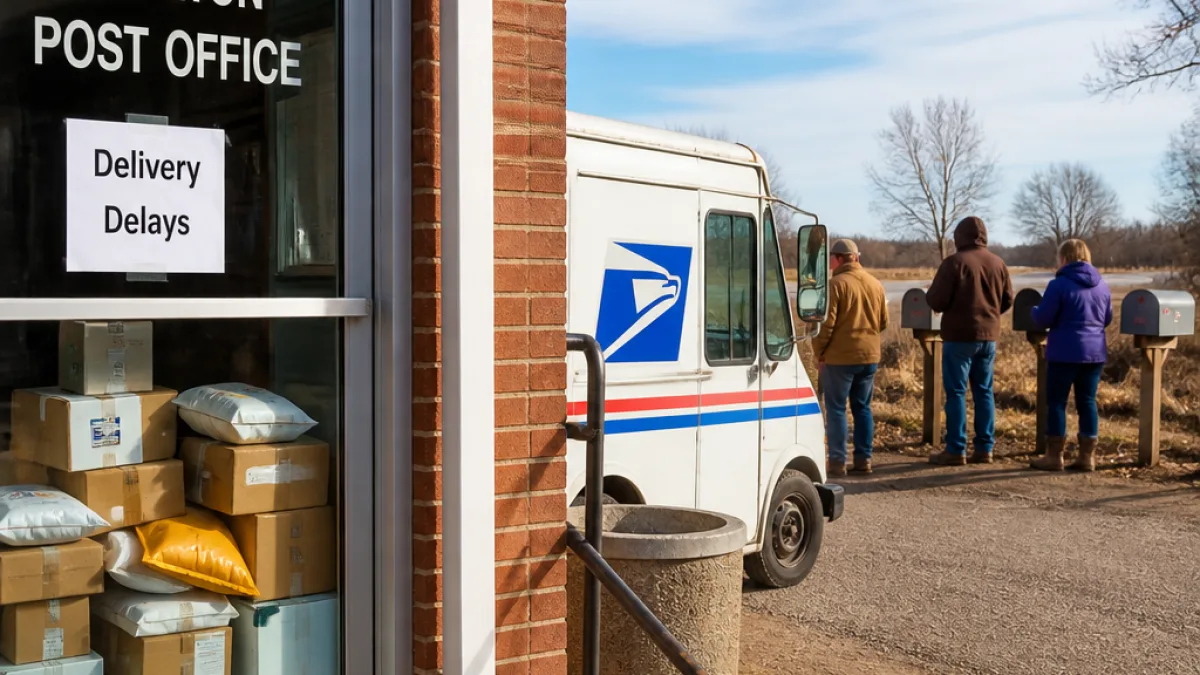
YANKTON, S.D. — Nine months after U.S. Sen. Mike Rounds publicly urged the U.S. Postal Service to address problems with mail delivery in South Dakota, residents continue to see uneven service, with only limited improvements for some inbound mail and persistent delays elsewhere, according to postal data reviewed by local reporters.
Limited inbound gains, outbound still lagging
USPS performance metrics indicate that the modest progress reported since Rounds’ appeal has been concentrated primarily on mail arriving in parts of the state from other locations. Most outbound delivery — mail sent from South Dakota to other destinations — has either worsened or shown no measurable improvement, the data show.
Local postal officials have acknowledged issues in service performance in recent months but disputes over causes and remedies remain. Residents in rural and smaller communities say they continue to wait longer than expected for bills, prescriptions and other time-sensitive items, while businesses complain of inconsistent delivery times that complicate operations.
Where improvements and problems are being felt
USPS data and firsthand accounts paint a mixed picture: some pockets of the state have seen incremental inbound improvements, but many regions still lag behind national targets for timely delivery.
- Inbound mail: Small improvements for mail coming into certain South Dakota ZIP codes from outside the state.
- Outbound mail: Most areas show either declines or no change in the speed of mail leaving the state.
- Rural communities: Continue to report the longest waits and the most inconsistent service.
Postal officials have attributed delays to a variety of operational challenges, including staffing shortages, route changes and transportation constraints. Local lawmakers have pressed the agency for clearer timelines and remedial action.
Political response and pending legislation
Sen. Rounds, Republican of South Dakota, formally requested the Postal Service to take steps to fix what constituents described as shoddy delivery. That intervention came as Congress is weighing broader postal legislation that could affect operations, funding and accountability mechanisms for the agency.
Advocates for rural communities are watching the congressional debate closely. Any legislation could shape how USPS prioritizes service standards, invests in infrastructure and staffs remote routes — all elements that directly affect delivery times in South Dakota.
Practical impact for residents and businesses
Delays have practical consequences. Residents relying on mailed prescriptions, legal notices, or utility bills face potential disruptions; small businesses that ship products or depend on timely invoices report increased costs and customer complaints.
Experts and local officials advise consumers to consider alternative options for critical deliveries: electronic billing, online pharmacy refills and trackable courier services where feasible. However, those alternatives can be limited in rural areas and may impose additional expense.
| Service Direction | Current Status (qualitative) |
|---|---|
| Inbound mail | Limited improvements in select areas |
| Outbound mail | Mostly worse or unchanged |
Postal Service spokespeople have said they are reviewing performance and making adjustments, but local lawmakers say they want clearer, enforceable commitments and improved transparency about routes and staffing levels.
What’s next
As Congress debates measures that could reshape the Postal Service, South Dakotans and their elected officials are pressing for tangible, near-term fixes to delivery problems. For now, the improvements that have occurred are incremental and geographically limited, leaving many residents and businesses still coping with unreliable service.
State and local leaders say they will continue to monitor USPS metrics and constituent reports. Residents experiencing chronic delays are encouraged to document missed or late deliveries and to report problems through their local post office and the USPS customer service channels, which helps inform oversight discussions in Washington.
Reporting from Yankton and review of USPS data contributed to this story.