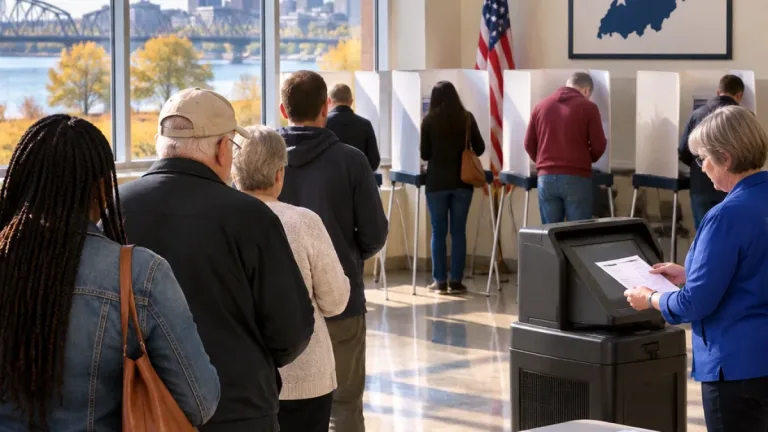

Seven measures receive voter approval
Louisiana voters approved seven constitutional amendments Tuesday, changing provisions involving property taxes, criminal proceedings, gubernatorial eligibility, drinking-water infrastructure and real estate transactions involving foreign adversaries. The measures were among 10 amendments placed before voters after receiving the required support from the state Legislature.
Three of the proposals failed, according to the election summary, while the seven successful measures will be added to the state constitution. The amendments originated during the 2026 regular session of the Louisiana House of Representatives. Before reaching the ballot, each proposal had to win approval from two-thirds of the elected members in both legislative chambers.
Voter approval required a majority at the polls. Because constitutional amendments change the state’s governing document, the measures are not ordinary statutory changes that can be enacted solely through the legislative process. Their approval gives the provisions a constitutional status and sets the framework for when several of them will begin operating.
Property-tax provisions target veterans and older homeowners
Amendment 1 expands the ability of a surviving spouse of a deceased disabled military veteran to retain a special, higher property-tax exemption. Under the approved change, the surviving spouse may move to another home and keep the exemption if the deceased veteran had qualified for it.
The measure is scheduled to take effect Jan. 1, 2027. Its practical effect, as described in the ballot summary, is to preserve the tax treatment when a surviving spouse changes residences rather than tying the benefit permanently to the original property.
Amendment 6 also concerns property-tax relief. It authorizes parishes and municipalities to provide another exemption to eligible property owners who are already receiving the homestead exemption. The additional benefit applies to people who are 65 or older, own and occupy the property, and qualify for the state’s special assessment level.
The local governments are authorized to grant the additional exemption; the amendment does not state that every parish or municipality must do so. Like Amendment 1, Amendment 6 is set to take effect Jan. 1, 2027. The measure therefore gives local governments a new option affecting qualifying older homeowners.
Income threshold will rise under Amendment 9
Amendment 9 changes the income rules connected to the special assessment level. It raises the income ceiling to $150,000 and provides for annual inflation adjustments beginning with the 2028 tax year.
The amendment also permits assessors to determine whether an applicant meets the income requirement by checking the applicant’s federal adjusted gross income as reported on the previous year’s Louisiana income-tax return. That provision establishes a method for verifying eligibility instead of relying only on information submitted through the application itself.
The amendment’s effect will depend on how applicants, assessors and local governments apply the revised threshold and verification process. The source does not specify additional administrative procedures or the number of property owners who may qualify.
Criminal procedure and the governor’s service limit
Amendment 3 removes the possibility of post-conviction bail for defendants convicted of an aggravated offense against a minor. The offenses listed in the measure include rape, sexual battery, kidnapping, crimes against nature, molestation and trafficking.
The change applies after a conviction, according to the amendment description. It does not describe a broader revision to bail before trial. The measure specifically addresses whether a person convicted of one of the listed aggravated offenses against a minor may obtain post-conviction bail.
Amendment 4 establishes a permanent restriction on gubernatorial service. A person who has completed two four-year terms as governor may not be elected governor again. The language goes beyond limiting consecutive service by barring another gubernatorial election after the two terms have been served.
Water lines and property tied to foreign adversaries
Amendment 7 authorizes the use of public money to identify, remove and replace hazardous drinking-water service lines. The work may occur on private property, a provision that addresses situations in which a dangerous line extends beyond public rights of way or into privately owned land.
The amendment authorizes the public funding; the source does not identify a specific agency, funding program or timetable for carrying out the work. Communities and property owners will need to rely on future implementation details to determine how projects are selected and administered.
Amendment 8 concerns companies owned, controlled or directed by a foreign adversary. It prevents such a company from using Louisiana law to force the sale of private property. The approved change therefore establishes a constitutional protection against a forced sale carried out through state legal mechanisms by a company meeting that definition.
What voters approved
| Amendment | Primary subject | Timing or key effect |
|---|---|---|
| 1 | Veterans’ surviving spouses | Exemption may move to another home; effective Jan. 1, 2027 |
| 3 | Post-conviction bail | Ends bail option for specified aggravated offenses against minors |
| 4 | Gubernatorial eligibility | Two four-year terms result in a permanent bar from election as governor |
| 6 | Older homeowners | Local governments may add an exemption; effective Jan. 1, 2027 |
| 7 | Drinking-water lines | Public funds may address hazardous lines on private property |
| 8 | Foreign-adversary companies | Bars use of Louisiana law to force private-property sales |
| 9 | Special assessment income limit | Limit rises to $150,000, with inflation adjustments beginning in 2028 |
Together, the measures approved Tuesday reach into both household finances and state policy. Some changes provide new protections or tax-related options, while others impose restrictions on defendants, former governors or companies connected to foreign adversaries. The immediate next step is implementation: provisions with specified effective dates will begin in 2027, while Amendment 9’s adjusted income framework begins with the 2028 tax year.
- Seven of the 10 proposed amendments passed.
- Amendments 1 and 6 take effect Jan. 1, 2027.
- Amendment 9 sets a $150,000 income limit, adjusted for inflation beginning in 2028.