
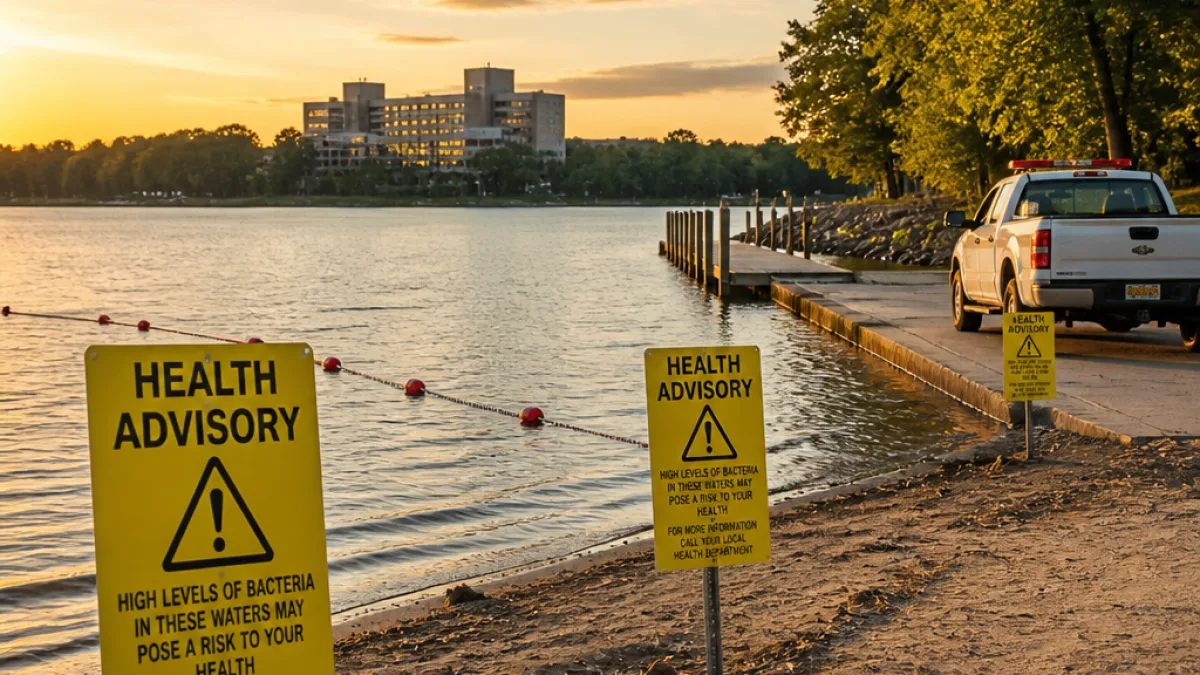
The Louisiana Department of Health confirmed Wednesday that a resident has been hospitalized after contracting Naegleria fowleri, a rare amoeba that causes the deadly brain infection primary amebic meningoencephalitis (PAM). State officials said the infection followed swimming in Lake Claiborne.
What officials are saying
On Aug. 18 the department issued a Health Alert Network advisory to clinicians outlining clinical signs, testing and reporting guidelines; state public health authorities then confirmed the case to the public on Aug. 19. The advisory is intended to help health care providers recognize the infection quickly, because PAM progresses rapidly and diagnosis is often difficult.
Naegleria fowleri is a single‑celled organism found in warm freshwater environments, including lakes, rivers and inadequately treated swimming pools. The organism typically infects people when contaminated water enters the nose and migrates to the brain.
How rare — and how deadly — is it?
The Centers for Disease Control and Prevention reports that from 1937 through 2025 there were 173 reported U.S. infections, with only four survivors. That translates to an overall reported survival rate of roughly 3 percent, meaning the fatality rate is about 97 percent. Louisiana has recorded just three confirmed cases since 1937 before this most recent infection.
| Metric | Number |
|---|---|
| U.S. reported infections (1937–2025) | 173 |
| U.S. survivors | 4 |
| Louisiana confirmed cases since 1937 (before current) | 3 |
Symptoms and timeline
Health officials say symptoms usually begin within one to nine days after nasal exposure. Initial signs can include severe headache, fever, nausea and vomiting. As the infection advances — often within days — symptoms may progress to stiff neck, seizures, altered mental status, hallucinations and coma. Many people who develop symptoms die within about 18 days of illness onset.
- Common early symptoms: severe headache, fever, nausea, vomiting
- Later symptoms: stiff neck, seizures, confusion, coma
- Typical incubation: 1–9 days after exposure
Where the organism is found and what to watch for
Naegleria fowleri thrives in warm freshwater and is more common in summer months and in southern states where waters heat up. The organism also can be present in poorly maintained or minimally chlorinated pools. Because infection occurs when water containing the amoeba enters the nose, authorities emphasize that the risk is tied to activities that forcefully push water up the nasal passages, such as diving, water skiing, or vigorous splashing.
Advice from health authorities
State health officials have urged caution around warm freshwater and reminded clinicians to consider PAM in patients who present with the relevant signs and a recent history of freshwater exposure. The advisory to clinicians outlines testing and reporting steps; early recognition and prompt laboratory testing are critical, even though outcomes historically have been poor.
Public health messaging focuses on awareness of symptoms and minimizing nasal exposure to warm freshwater.
What this means locally
Lake Claiborne is a popular recreation destination in northwestern Louisiana; confirmation of a Naegleria fowleri infection there is likely to raise concern among swimmers, boaters and local health providers. While infections remain extremely rare, the combination of warm summer water temperatures and common recreational water activities increases the potential for exposure.
Officials did not release the patient’s age, sex or exact location beyond confirming the Lake Claiborne connection. The department’s alert emphasizes prompt reporting from clinicians and laboratory confirmation to help track and respond to cases.
As state and local health authorities continue their investigation and monitoring, residents and visitors should remain aware of the symptoms and consult health care providers promptly if they develop signs consistent with PAM following freshwater exposure.
This report will be updated as state health officials release additional information.

















