
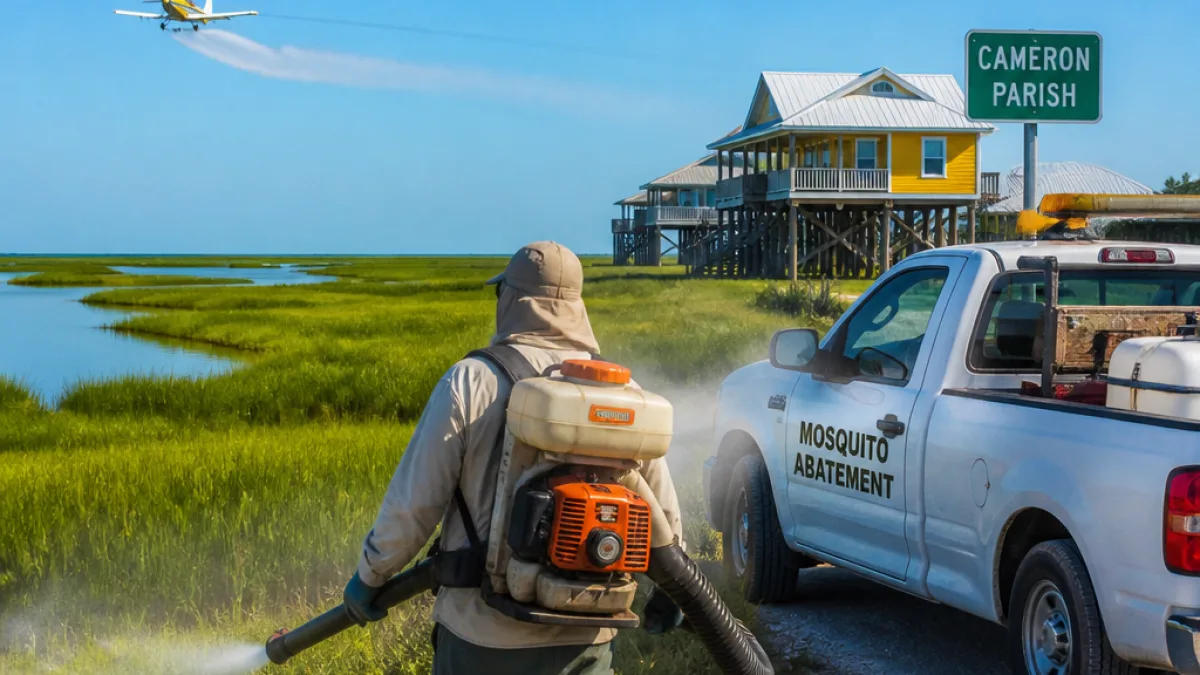
Having lived for 14 years in Cameron Parish, from 1978 to 1992, one clear lesson stands out: effective mosquito control is not a luxury in coastal Louisiana — it is essential to daily life and public health. In a region where marshes stretch for millions of acres and warm, wet weather creates ideal breeding grounds, organized abatement programs play a central role in protecting residents from both nuisance mosquitoes and disease-carrying species.
Why mosquito programs matter here
In Louisiana's southern parishes, extensive marshes, frequent rainfall and tidal influences combine to create prolific mosquito habitat. Salt-marsh species, in particular, can emerge in huge numbers and travel considerable distances from their breeding areas, bringing biting pressure into neighborhoods and posing a vector risk for illnesses such as West Nile virus and other mosquito-borne diseases.
Local mosquito-control programs do more than reduce irritation. They represent a public-health service that mitigates the potential spread of disease and helps preserve residents' ability to work, attend school and spend time outdoors during peak mosquito seasons.
How programs are structured and funded
Most organized mosquito abatement operations across coastal parishes are funded through property taxes approved by local voters. Governance typically falls to mosquito control boards, whose members are appointed by the parish police jury or parish council. These boards are charged with ensuring that mosquito abatement services are conducted professionally, efficiently and responsibly.
On the operational side, a parish program commonly employs a director who oversees staff and daily operations. Equipment ranges from specialized ground trucks to small aircraft used for aerial application of approved insecticides in areas experiencing particularly heavy mosquito activity.
- Funding: property taxes approved by voters
- Oversight: appointed mosquito control boards
- Operations: directors, ground crews, specialized trucks and sometimes aircraft
Local impact and challenges
Residents in coastal communities often rely on these programs to keep mosquito populations at tolerable levels. During periods of extreme mosquito activity — often tied to seasonal rains and tidal events — control efforts provide substantial relief. That relief is both practical and economic: fewer mosquitoes mean fewer disruptions to outdoor work and recreation and potentially lower risk of mosquito-borne illness.
Yet the geography that makes these parishes unique also complicates control. Mosquito breeding is driven by a complex interplay of marsh conditions, rainfall and tides; populations can surge rapidly when conditions align. Salt-marsh mosquitoes are especially troublesome because of their prolific breeding and long flight range, which can bring infestations far from the source.
What residents should know
Voters who support funding for mosquito control through local taxes are investing in a public-health service as well as in quality of life. For those living in or visiting coastal parishes, understanding how programs operate can help set expectations during high-activity periods:
- Programs rely on both targeted aerial and ground applications of approved insecticides; these are deployed when monitoring indicates high mosquito densities.
- Boards and directors are responsible for professional oversight and efficient use of resources — concerns about operations and safety should be raised with the parish mosquito control board or council.
- Personal prevention measures — repellents, window screens and eliminating standing water on property — remain important complements to organized abatement.
Oversight and public accountability
Because most programs are funded through property tax levies, they are ultimately accountable to voters and to the parish governing body that appoints board members. That structure places a premium on transparency: residents should be able to review program budgets, operational plans and monitoring results to ensure local dollars are being spent effectively.
| Responsibility | Typical arrangement |
|---|---|
| Funding | Property taxes approved by voters |
| Governance | Mosquito control boards appointed by parish police jury or council |
| Operations | Director, ground crews, specialized vehicles, occasional aircraft |
Organized mosquito control in coastal Louisiana is a practical adaptation to an environmental reality. For residents of Cameron Parish and other southern parishes, these programs help preserve public health, economic activity and the ability to enjoy life outdoors despite the marshland that shapes the region.
Residents with questions about local operations, budgets or spray schedules should contact their parish mosquito control board or the parish governing body for the most current information.

















