
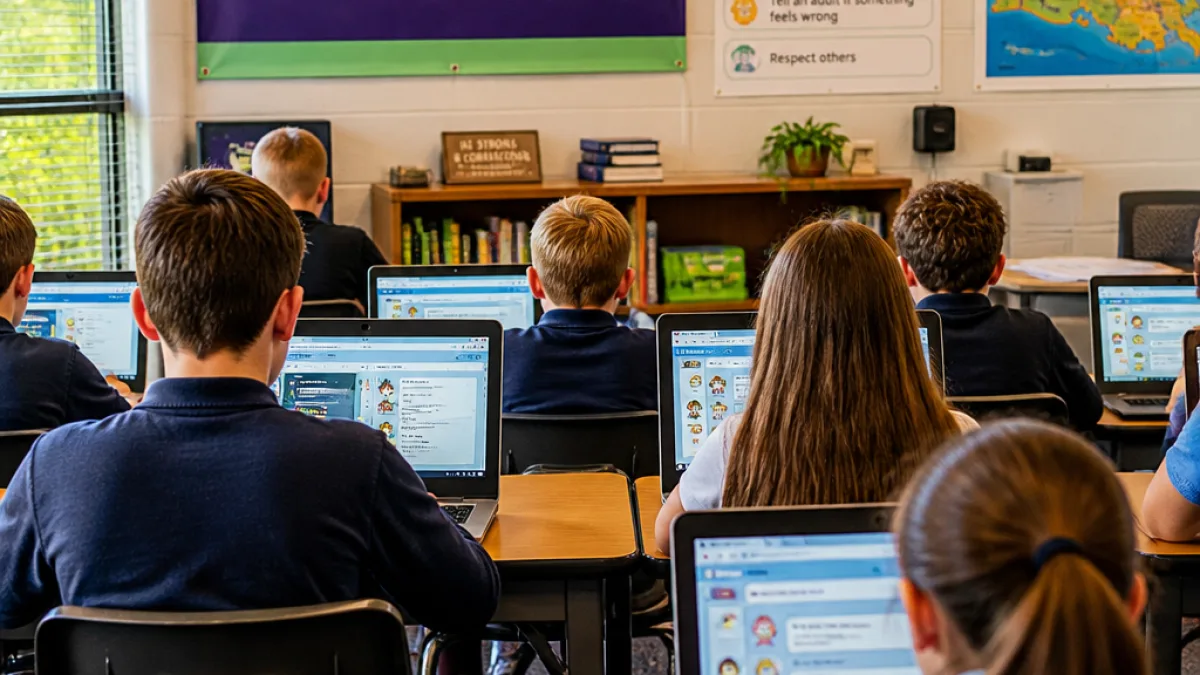
BATON ROUGE — Louisiana officials on Wednesday introduced PlaySafe Louisiana, a free online game created to help children ages 10 to 16 recognize and report online predator behavior. The interactive program places young players in realistic gaming chatroom scenarios so they can learn to spot grooming tactics and dangerous advances.
Why the state developed the game
The effort comes as state leaders warn that traffickers and sexual predators increasingly use social platforms and online gaming spaces to contact children. Officials said the game is intended to give students practical experience responding to risky online interactions without exposing them to real harm.
"From my time as Attorney General to now as Governor, fighting human trafficking and protecting Louisiana's kids has been a top priority from day one. We have to do everything we can to keep our kids safe, especially online," Gov. Jeff Landry said. "PlaySafe Louisiana gives our young people the tools to recognize dangerous behavior and help stop trafficking before it starts."
PlaySafe was unveiled at Parkview Baptist School, where students had the opportunity to try the game firsthand. State officials said the title is accessible on smartphones, tablets and computers and does not require an account or login, a design choice aimed at lowering barriers for schools and families to use the tool.
Scope of the problem
Officials cited national reporting that highlights the scale of online exploitation. In 2025 the National Center for Missing and Exploited Children received 21.3 million CyberTipline reports involving online child sexual exploitation, a figure state leaders used to emphasize the urgency of prevention efforts.
| Item | Detail |
|---|---|
| Target age | 10–16 years |
| Access | Smartphone, tablet, computer — no login required |
| National CyberTipline reports (2025) | 21.3 million |
Although the CyberTipline statistic is national rather than state-specific, it underscores the volume of online reports and reinforces why Louisiana leaders say prevention and education are essential.
How the game teaches safety
PlaySafe places players in simulated conversations and gaming-room interactions that replicate common grooming techniques, according to officials. Players must make choices about how to respond to suspicious behavior, including when to refuse requests, block accounts, save evidence and tell a trusted adult or authority.
- Scenario-based practice in virtual chatrooms and gaming contexts
- Guidance on preserving evidence and reporting abuse
- No account creation required to reduce privacy concerns
Educators and parents at the Parkview Baptist demonstration said the interactive approach can be more engaging for students than traditional classroom talks. State officials plan to make the game widely available for schools to integrate into digital-safety lessons and for families to use at home.
Implementation and next steps
Officials with the Governor's Office of Human Trafficking Prevention said they will promote PlaySafe through school networks, law enforcement partners and community outreach. They did not provide a timeline for mandated classroom use, leaving adoption to local school systems and parent choice.
The game’s no-login design may ease adoption, but some advocates say broader prevention requires training for teachers and parents to recognize warning signs and support affected children. Officials said PlaySafe is one tool among several planned efforts aimed at reducing trafficking and exploitation in Louisiana.
Parents and educators interested in the game can access PlaySafe Louisiana on compatible devices without an account. For families seeking additional resources about reporting or support, local law enforcement and national hotlines remain primary points of contact.















