
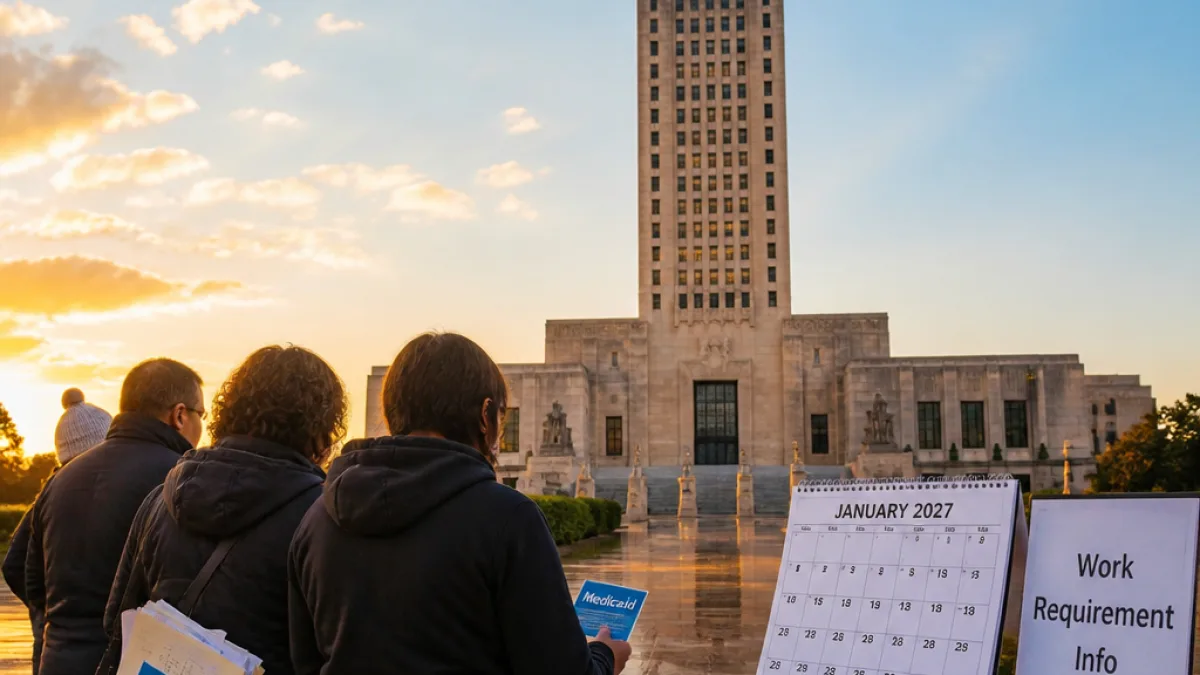
LOUISIANA — New federal Medicaid work requirements set to begin in January 2027 could force as many as 58,000 people in Louisiana to take additional actions to retain health coverage, state health department figures show.
Who will be affected
The information was presented to lawmakers in an informational packet at a meeting of the Joint Legislative Committee on the Budget. Louisiana has about 1.3 million Medicaid enrollees, and the state breakdown indicates the vast majority will be excused from the new rules.
According to the department, roughly 1.1 million enrollees will qualify for automatic exemptions under the new policy. Common exemption categories detailed by the department include parents or caregivers, people with disabilities, pregnant women and postpartum women.
| Category | Number of enrollees |
|---|---|
| Total Medicaid enrollees | 1,300,000 |
| Automatically exempt | 1,100,000 |
| Potentially required to take action | 58,000 |
What the requirement demands
The new rule will require Louisiana residents between the ages of 19 and 65 who do not qualify for an exemption to meet one of the following each month:
- Earn at least $580, or
- Work or volunteer at least 80 hours, or
- Enroll part-time in school or job training.
The department's packet notes that about 80,000 enrollees already meet the work standard through their current jobs. Conversely, roughly 46,000 people who receive Medicaid report no income, making them likelier to face new compliance steps. An additional 12,000 enrollees report some income but not enough to meet the $580 monthly threshold.
Unanswered questions and administrative gaps
State officials acknowledge uncertainty about how many of the approximately 58,000 people identified will already comply through part-time schooling, job training, or volunteer activity. The health department has not yet started tracking those activities, the packet states, leaving an information gap about actual compliance rates once the rule takes effect.
That lack of tracking raises questions about outreach and administrative capacity. Meeting the new federal requirement will likely involve verification systems, reporting mechanisms and enrollment supports for those who must transition into work, training or volunteer programs to retain benefits.
Implications for households and local programs
For households that fall into the nonexempt group, the change could require logistical and financial adjustments — from finding child care or transportation to connecting with job-training programs. The state data show a substantial slice of enrollees already have caregiving responsibilities or health limitations that qualify them for exemptions, but the remaining cohort may need targeted assistance to comply.
Community organizations, workforce development agencies and local social service providers could play key roles helping people document compliance, enroll in qualifying programs, or obtain employment that meets the income threshold. The packet does not specify what state resources will be deployed for that support.
Next steps for the public
Officials will likely need to finalize rules and set up reporting and exemption procedures before the January 2027 implementation date. Medicaid enrollees and advocates should watch for guidance from the state health department on how to demonstrate work, training, volunteer hours or income eligibility.
Until the department develops tracking and verification processes, many questions remain about how enforcement will proceed and how the state will help people avoid coverage loss.
The coming months are expected to bring additional detail from the health department and from lawmakers as they consider the program’s administrative and fiscal impacts.
— Danielle Boudreaux, State Correspondent

















