
Global conflict pushes local pump prices higher
BATON ROUGE — Drivers across Baton Rouge are seeing higher prices at the pump as renewed tensions in the Middle East ripple through global oil markets. According to data cited by AAA and local reporting, the national average for a gallon of gasoline jumped in recent days, while the local price for regular fuel in Baton Rouge climbed about 12 cents over the past week to roughly $4.00 per gallon.
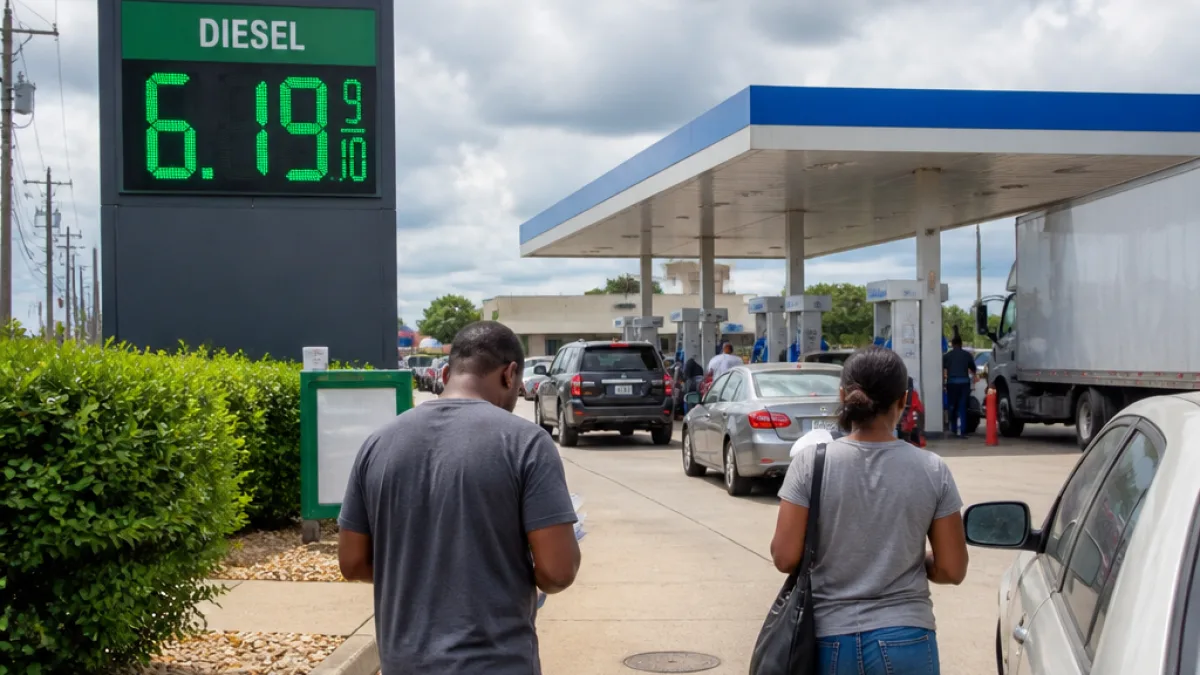
Diesel fuel reached a new local milestone this month, passing $6.00 per gallon. That increase carries direct consequences for residents who commute by car, for companies that rely on delivery and freight, and for households that use diesel-powered equipment.
| Measure | Reported figure |
|---|---|
| Average Baton Rouge regular gas | $4.00 per gallon (≈ +12¢ from last week) |
| National average change | ≈ +16¢ per gallon |
| Diesel (local) | Above $6.00 per gallon (record high) |
What residents are saying
Local drivers described tighter budgets and altered habits. One resident said their usual fill-up now buys significantly less fuel than before: "It's been horrible. Normally, $30 will take me closer to full and it barely gets me half a tank," a Baton Rouge resident told reporters.
"Feels like the war is unnecessary. I feel like it's pointless and meaningless. Why do we have to suffer for that? With a country as rich as ours, we shouldn't even be dealing with this,"
Other residents expressed similar frustration. Another local said they now spend nearly $100 a week on gasoline. Opinions were mixed about the broader U.S. response to the international situation; some residents voiced support for the president, while others questioned whether the rising costs are an acceptable price.
Why prices are rising
Analysts point to continued disruptions tied to the conflict involving Iran and operations in the wider region. A critical concern is potential interruptions in the Strait of Hormuz, a chokepoint for a sizable share of the world's seaborne oil. In recent days, the Houthi movement, which has ties to Iran, carried out strikes on oil infrastructure in Saudi Arabia, raising the risk premium in global crude markets and putting upward pressure on refined fuel prices.
Local prices reflect a combination of national market moves and regional supply factors. If the conflict continues to threaten shipping lanes or production, experts warn the upward trend could persist; conversely, a de-escalation would likely relieve some pressure on prices.
Local consequences and coping strategies
The rising cost of fuel in Baton Rouge has practical effects across the city:
- Household budgets are strained as weekly fuel expenses increase.
- Businesses that depend on trucking and deliveries face higher operating costs, which can filter into consumer prices.
- Public transportation and carpooling options may see greater demand as commuters look to cut costs.
Residents and business owners can consider several responses: consolidating trips, exploring alternative commuting methods, using fuel price apps to find lower-priced stations, and, for businesses, reviewing routing and scheduling to minimize fuel consumption.
What to watch next
Local motorists and officials will be monitoring three main factors: developments in the Middle East and any disruptions to oil flow, wholesale crude and refined product prices, and regional supply logistics that affect distribution to Gulf Coast refineries and terminals. For now, Baton Rouge drivers are feeling the immediate effect at the pump, and many say rising fuel costs are reshaping daily decisions and household budgets.
Whether prices continue upward or stabilize ultimately hinges on global supply conditions and geopolitical developments beyond local control. In the meantime, Baton Rouge residents are adjusting to the cost increases and weighing how long their budgets can absorb sustained higher fuel bills.
















