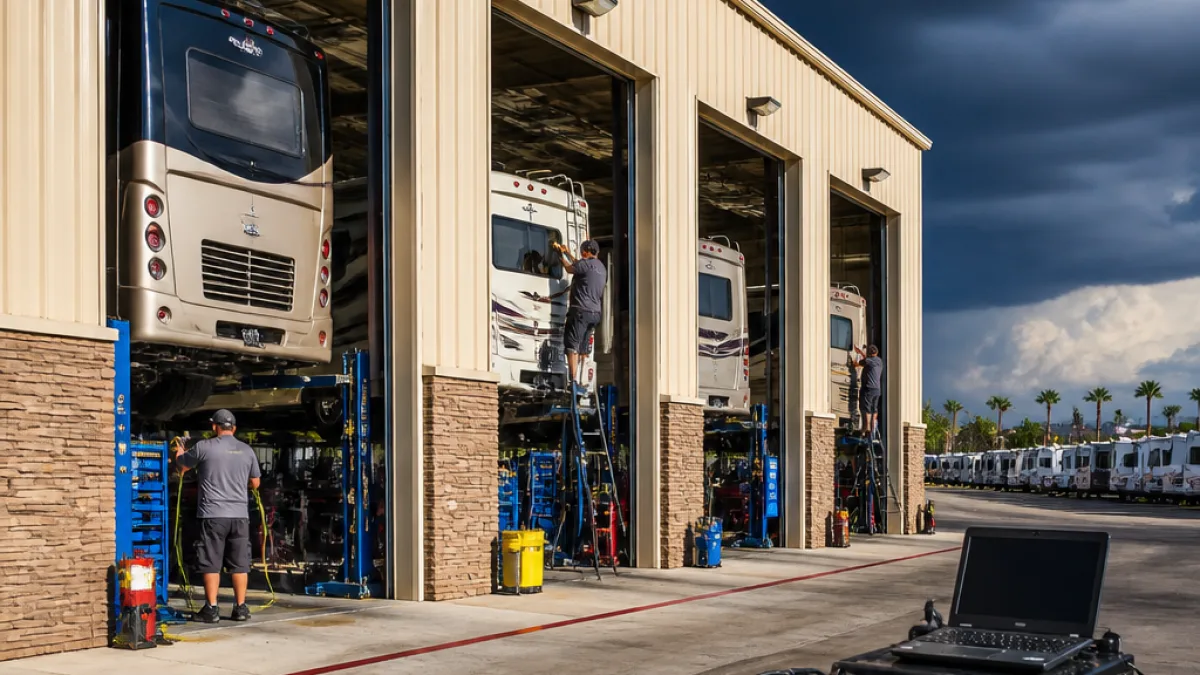
MESA, Ariz. — A long-running recreational vehicle repair shop in Mesa has expanded its facility to handle a growing number of heat-damaged motorhomes and trailers, a development city residents and visiting RV owners are likely to notice during the late-summer service rush.
Expansion targets climate-driven wear on large vehicles
Arizona RV Service—operating in the East Valley since 2006—added four high-clearance service bays and dedicated diagnostic stations at its Mesa location. The owner decided to increase capacity after internal repair logs from 2024 through 2026 recorded a 40% increase in climate-driven system failures during peak summer months, according to the company’s summary of service data.
Technicians and the shop’s records point to several heat-amplified failure points: rooftop sealant breakdowns, accelerated tire degradation, undercarriage heat transfer and electrical and cooling-system stress. Those conditions combine in ways that can leave large RVs sidelined just before or during the late-summer monsoon season.
"forty percent increase in climate-driven system failures"
Service records from more than 500 vehicle inspections conducted between 2024 and 2026 show that failing lap sealants around vents and rooftop cooling units are a major vulnerability. When those sealants deteriorate, rainwater can seep into wood framing and fiberglass sidewalls, causing structural rot that often predates any visible interior moisture.
Operational strain on cooling and electrical systems
According to the shop’s diagnostic evaluations of over 400 summer service calls, continuous operation of air-conditioning units in triple-digit temperatures leads to problems such as condenser coil fouling, fan motor failures and capacitor burnout. Technicians also report rising electrical line resistance and low refrigerant levels contributing to breakdowns.
- New capacity: four high-clearance bays and dedicated diagnostic stations.
- Service history: more than 500 inspections (2024–2026) and 400+ summer diagnostic calls cited.
- Primary vulnerabilities: rooftop sealant failure, tire degradation, condenser and electrical failures.
The additional bay capacity enables crews to perform full roof resurfacing on multiple large motorhomes at once, easing the seasonal backlog that often builds before monsoon rains. Rapid turnaround matters for owners because exterior roof structures must be repaired before heavy rains to avoid costly interior damage and structural rot.
| Metric | Reported Figure |
|---|---|
| Years operating in the area | Since 2006 |
| Increase in climate-driven failures (2024–2026) | 40% |
| Inspections cited | 500+ |
| Summer diagnostic calls reviewed | 400+ |
Why Mesa residents and visitors should care
The National Weather Service data cited by the shop indicates that summer pavement temperatures in central Arizona can routinely exceed 150 degrees Fahrenheit, a condition that accelerates tire wear and increases heat transfer to undercarriage components. For Mesa residents who own RVs, or for travelers passing through the city, the expanded service capacity means shorter wait times and greater access to specialized repairs that address heat-specific failures.
Local mechanics told the shop that early intervention on rooftop sealants and cooling systems not only prevents water intrusion during monsoon season but also extends the usable life of expensive components. The expansion also helps local tourism and business travel by keeping more rigs on the road and reducing the chance of breakdowns that can strain roadside services and emergency responders.
City officials have not issued an endorsement in the materials provided by the shop, but the upgrade reflects a broader adaptation by private service providers to the region’s extreme summer heat. As temperature extremes become more frequent, local repair infrastructure in Mesa is adjusting to preserve both traveler safety and owners’ investments.
For RV owners, technicians recommend inspecting roof sealants, checking tire condition and having cooling systems professionally evaluated before peak summer heat and the arrival of late-summer storms.