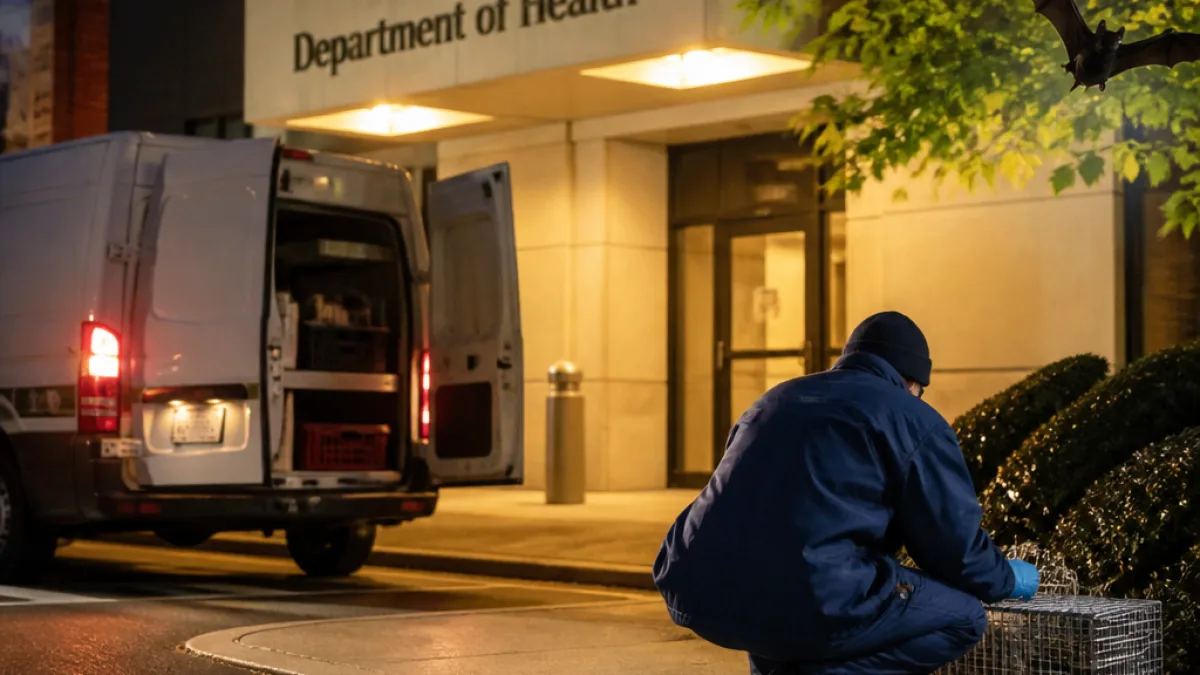
The Rhode Island Department of Health is reporting an uptick in rabies activity this year, with most positive cases found in raccoons and bats, and isolated detections in a cat, coyote, skunk and woodchuck, officials said Monday.
State program assesses exposures around the clock
Health Department staff operate an exposure assessment program 24/7 to evaluate individual incidents and determine whether a person bitten or scratched requires post‑exposure prophylaxis, or PEP. The treatment is effective at preventing rabies when administered before symptoms appear; once symptoms develop, the disease is almost always fatal.
“This is a win for patients, healthcare providers, and the healthcare system overall,”
— Director of Health Jerry Larkin, commenting on the state’s exposure assessment program.
Costs, trends and an analysis of the state program
A full PEP course typically requires multiple visits and carries a substantial cost, estimated at $11,000 to $14,000 per person. An analysis published this month in the Journal of Public Health Practice and Management examined Rhode Island’s exposure assessment work from 2013 through 2022 and found that animal bite reports rose while the share of people receiving PEP declined.
The study concluded the program likely prevented unnecessary treatment for an estimated 1,800 to 2,300 people each year, producing annual savings between $5 million and $16 million. State officials said those findings demonstrate the value of careful case-by-case evaluation in avoiding unwarranted, costly medical interventions.
Regional context: more inquiries and vaccine use nationally
The federal Centers for Disease Control and Prevention issued a health advisory on Sept. 10 noting heightened rabies-related activity in other parts of the country as well. The CDC reported a 17% increase in rabies-related inquiries during July and August compared with the same months last year and said at least eight state health departments had reported increased PEP administration, administration errors, or both.
Nationally, use of rabies vaccine rose about 33%, while administration of rabies immune globulin increased roughly 76% over last year’s levels. The CDC said there is currently no shortage of these products.
What Rhode Islanders should do
Health officials reiterated basic precautions and steps residents should take to reduce risk and respond appropriately to potential exposures:
- Keep a safe distance from wild animals and do not attempt to handle them, especially animals active during daylight that are normally nocturnal.
- Ensure household pets are up to date on rabies vaccinations.
- If bitten or scratched, immediately wash the wound with soap and water for 15 minutes.
- Contact a clinician or public health official promptly to determine whether PEP is recommended.
The Department of Health posts collection dates and locations for animals that tested positive on its rabies data dashboard at health.ri.gov/rabies.
Local impact and public-health priorities
Public health authorities emphasize that careful exposure assessment helps protect both individuals and the broader healthcare system. By evaluating each case, clinicians and public health staff can avoid unnecessary vaccine and immune globulin administration while ensuring that those truly at risk receive timely, life‑saving treatment.
Officials also cautioned that encounters with wildlife remain the principal risk factor. Residents who encounter animals displaying unusual behavior — such as tame or disoriented wildlife, animals out in daylight that typically are nocturnal, or animals that appear ill or injured — should leave the animal alone and report the situation to local animal control or public-health authorities.
| Species with rabies detections reported |
|---|
| Raccoons |
| Bats |
| Cat |
| Coyote |
| Skunk |
| Woodchuck |
Rhode Island’s heightened surveillance and 24/7 exposure assessment are intended to strike a balance between preventing disease and avoiding unnecessary interventions. Residents with questions about specific exposures or the need for treatment should contact the Department of Health or their healthcare provider without delay.