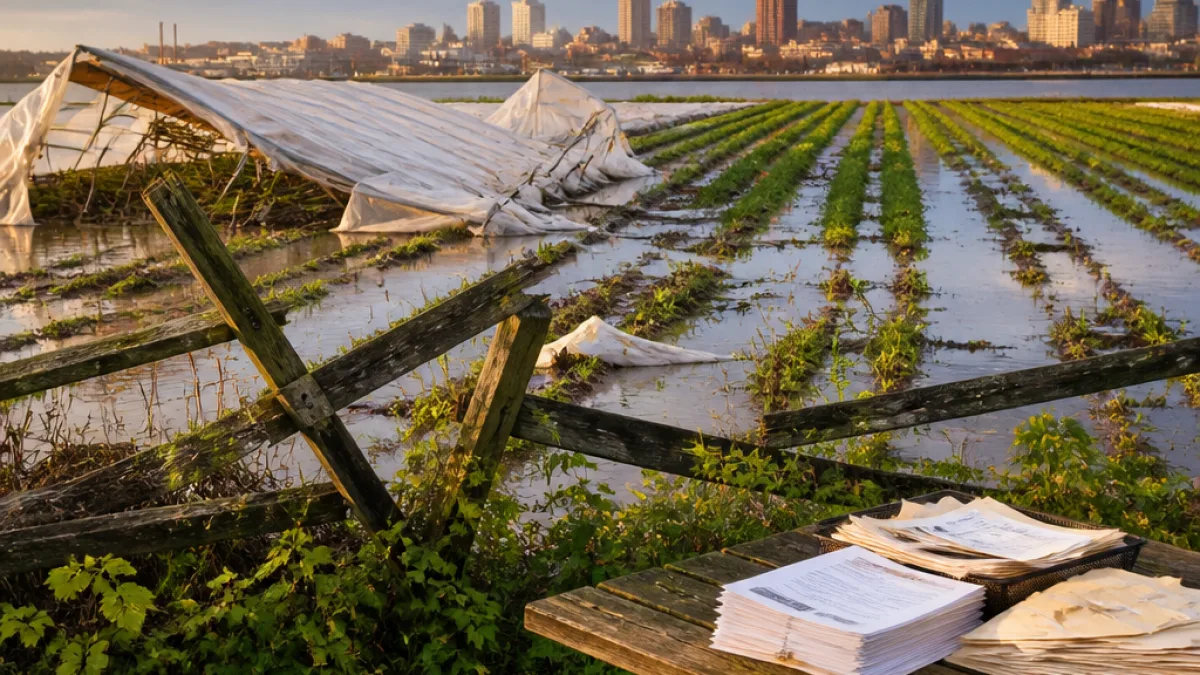
PROVIDENCE, R.I. — Rhode Island farmers who suffered damage from drought, fires, tornadoes, flooding and severe winter storms can apply for nearly $15 million in federal assistance, state officials announced this week.
What the fund covers and how it was made available
The state Department of Environmental Management said the U.S. Department of Agriculture's Farm Service Agency has allocated $14,944,632.43 for distribution in Rhode Island under the 2025 Disaster Relief Supplemental Appropriations Act. That law directed resources to regions including New England, Alaska and Hawaii; New England's share totals part of a broader $220 million allocation.
Officials said the program is intended to help producers recover from losses tied to extreme weather events in 2023 and 2024, including infrastructure damage, lost market opportunities and future economic losses associated with crop, livestock or timber operations.
Who is eligible
State officials outlined eligibility requirements for the Rhode Island Disaster Relief Program. To qualify, producers must show they:
- Experienced one or more qualifying losses directly caused by a weather event in 2023 or 2024 — examples cited include infrastructure loss, market loss, timber loss or costs for bare-ground practices to mitigate land loss.
- Held an ownership share and production risk in the affected crop, livestock or timber (including timber rights) at the time of the loss.
- Demonstrated that the losses occurred in Rhode Island.
State officials urged producers to gather documentation showing ownership, loss estimates and dates tied to the qualifying events to support applications.
Local reaction and the case for investing in agriculture
The allocation drew support from farming advocates and lawmakers who said the funds aim to restore damaged infrastructure and help farms prepare for future extreme weather.
“The high winds that we occasionally get, or I should say often get, we see the damage now to people with high tunnels, barns, and infrastructure overall. That can be devastating when that's either where you store your items or where your crops are starting to grow for the winter,”
— Heidi Quinn, director of the Rhode Island Farm Bureau, described structural and operational damage that can ripple through small and mid-sized farms.
“Local food that's freshly grown and quickly delivered is some of the best food you can ever have. Now, particularly with the price problems, we can no longer depend upon outside food exclusively; we have to do more here,”
— U.S. Sen. Jack Reed emphasized the importance of investing in the state's agricultural capacity when discussing the relief funds.
Practical details and next steps for producers
State agriculture and emergency management staff are expected to provide application instructions and timelines through the Department of Environmental Management. Producers should watch the department's website and local agricultural extension services for notices about deadlines, required forms and any public meetings or workshops to help complete applications.
To help farmers plan, consider these immediate actions:
- Collect receipts, photographs and repair estimates documenting damage to buildings, equipment, crops, livestock or timber.
- Gather proof of ownership and evidence showing production risk at the time of the loss (contracts, inventory records, permits).
- Contact agricultural extension agents or the Farm Bureau for guidance on documentation and applying for assistance.
Funding breakdown and program context
The federal appropriation for New England formed part of a larger regional package intended to address a range of weather-related impacts across several states and territories. Rhode Island’s award of $14,944,632.43 will be distributed among qualifying producers statewide, subject to application review and program rules.
| Item | Amount |
|---|---|
| Rhode Island allocation | $14,944,632.43 |
| New England/Alaska/Hawaii portion of federal act | $220,000,000 |
State officials said the program is intended to reduce the financial burden on producers as they repair losses and implement measures to reduce future vulnerabilities. Additional guidance, including timelines and forms, will be published by the Department of Environmental Management.
Farmers seeking assistance should monitor official state channels and contact the Department of Environmental Management or the Farm Service Agency for the latest application details.
Reporting for this article drew on a state announcement and statements from agricultural officials and lawmakers regarding the relief program.