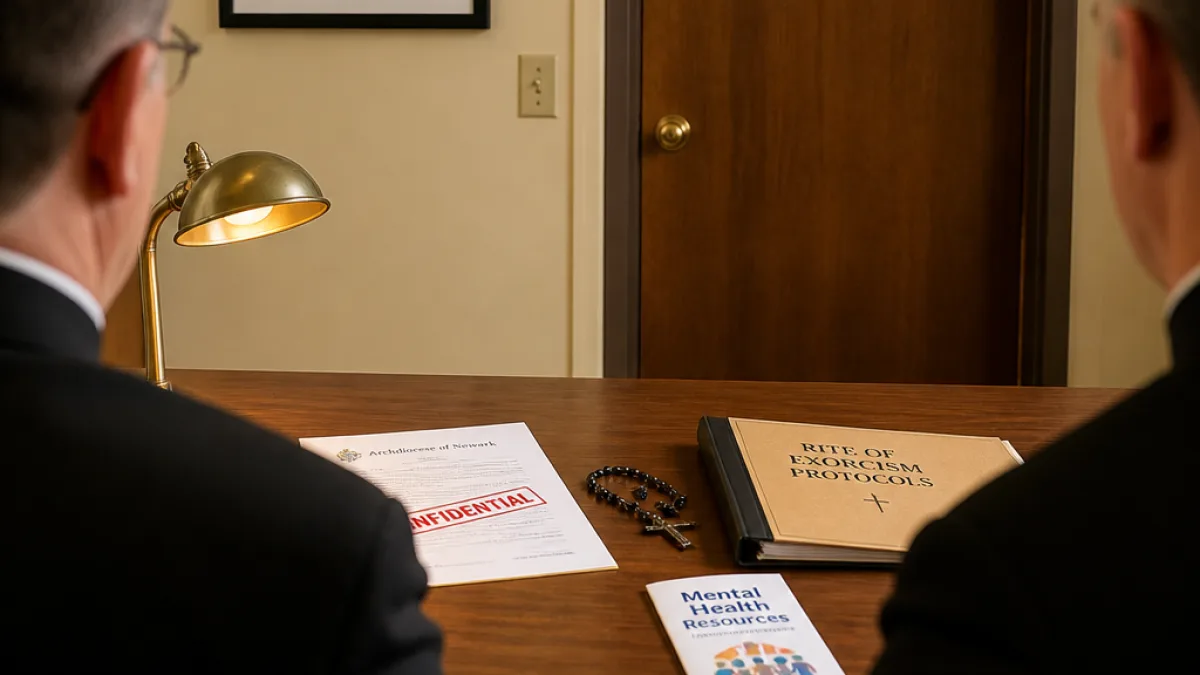
The Archdiocese of Newark has circulated new, internal guidelines for handling requests for exorcisms, instructing parish priests to balance pastoral compassion with caution and to involve mental health professionals where appropriate.
New guidance, formal referral process
In a memo emailed last week to clergy, archdiocesan leaders outlined steps priests should take when parishioners seek the Rite of Exorcism. The protocols, obtained by The Record and confirmed by multiple clergy sources in the archdiocese, direct priests to counsel requesters locally, consider psychological evaluation and forward cases that appear to involve what the church describes as “extraordinary demonic influence” to the vicar general's office.
The memo also notes that Cardinal Joseph Tobin, archbishop of Newark, has designated a priest to serve as the archdiocese’s exorcist under Catholic canon law. The document was not released publicly by the archdiocese, and repeated requests for comment were not acknowledged.
What the protocols require
The new rules emphasize confidentiality, careful listening and pastoral sensitivity. Clergy were told to treat all requests with dignity whether the underlying cause is spiritual, psychological or related to substance use. The guidance sets out a triage-style approach:
- Counsel the person seeking an exorcism at the parish level.
- Assess whether a psychological evaluation is warranted.
- Refer cases judged to involve potential “extraordinary demonic influence” to the vicar general’s office.
- Handle all cases discreetly and with an eye to the person’s well-being.
In an accompanying letter, Vicar General Rev. John Chadwick said he received “several inquiries from parish priests regarding the possible need for the Rite of Exorcism” over the summer and expressed concern for “the well-being of those who may be struggling with what they believe to be demonic possession.”
“Anyone who asks a priest for one ‘must be met with compassion, careful listening, respect, regardless of whether their suffering is spiritual, psychological, or related to addiction,’”
The memo cautions that asking for an exorcism does not automatically mean the rite will be performed. It stresses the possibility that many such cases are rooted in mental health issues while acknowledging the church’s recognition of spiritual affliction.
Local context and implications
Newark is home to one of the larger Catholic populations in New Jersey, and the archdiocese oversees dozens of parishes in Essex and Hudson counties. The new protocols seek to standardize responses across that network of parishes, reducing ad hoc decision-making and encouraging priests to work with archdiocesan leadership and health professionals.
For parishioners, the policies mean a clearer pathway for how requests are handled and who within the archdiocese will evaluate them. For priests, the guidance provides a formal process for escalating complex pastoral cases and highlights a requirement to consider mental health evaluation before making a referral.
Officials did not release the name of the priest appointed as the archdiocese’s exorcist, and the archdiocese has not provided a public statement explaining the decision or the full text of the protocol. The Record’s report that first disclosed the memo noted that the document was obtained from a clergy source and that the archdiocese had not publicly posted the guidelines.
Protocol summary
| Step | Action |
|---|---|
| 1 | Parish-level counseling and assessment |
| 2 | Consider psychological evaluation |
| 3 | Refer potential extraordinary cases to vicar general |
| 4 | Possible involvement of archdiocesan exorcist under canon law |
The move follows several inquiries by parish priests this summer about individuals who believed they needed the rite, according to the vicar general’s letter. The protocols are intended to ensure that parishioners receive pastoral care while safeguarding both their health and the integrity of the church’s sacramental practices.
As the archdiocese considers whether to make the protocols public, parish leaders and mental health professionals in Newark will likely continue to watch for how the guidance is implemented across parishes and how it shapes collaboration between clergy and clinicians.