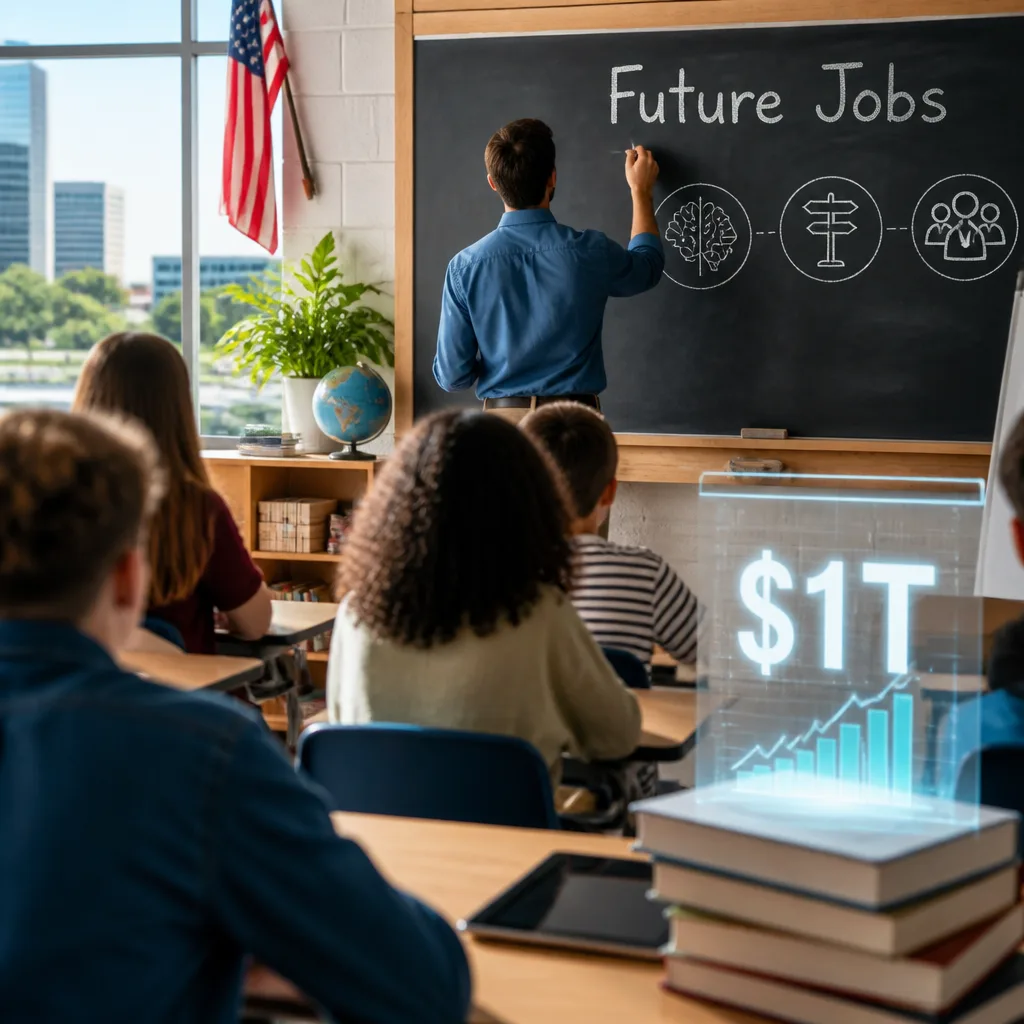
The United States spends roughly $1 trillion on education every year, but some experts say that investment is not sufficiently translating into readiness for the jobs and careers of the future. Leaders in assessment and talent development argue schools, families and employers must recalibrate priorities to equip students with the knowledge, skills and confidence to take meaningful next steps after graduation.
Amit Sevak, chief executive of ETS, a global education and talent solutions organization that works with more than 30 million students annually, told reporters the education system must evolve more quickly to match new workforce demands.
"Our education system isn’t evolving quickly enough to prepare our students for the jobs of tomorrow," Sevak said. "Students only get one chance at an education, and we have a responsibility to understand what’s working, what’s not and where additional support is needed."
Early exploration, practical skills and AI literacy
Advocates say that preparing young people for varied career trajectories begins well before students choose a college major or vocational pathway. One recommendation is to start exploratory conversations early — at home and in the classroom — so students can identify interests and consider alternatives to the traditional high school-to-college pipeline.
Practical, real-world experiences also figure prominently in the discussion. That includes internships, apprenticeships, project-based learning and employer partnerships that let students apply classroom knowledge to workplace problems. Supporters argue such exposure helps learners test assumptions about career fit and build transferable skills employers value.
Another major theme is integrating responsible, critical engagement with artificial intelligence into learning. Rather than treating AI as an academic threat or as an easy shortcut, educators are encouraged to teach students both the capabilities and limitations of these systems so learners can use AI tools effectively while preserving human judgment.
- Start conversations early: Encourage students to explore interests and pathways before high-stakes decisions arrive.
- Embed real-world learning: Increase access to internships, apprenticeships and employer-led projects.
- Teach AI literacy: Balance use of emerging tools with instruction on their limits and ethical use.
What this means for policy and practice
The recommendations underscore multiple actors sharing responsibility: families, K-12 and higher-education institutions, employers and policymakers. For school systems, this may mean redesigning curricula and guidance services to prioritize exploration, applied learning and digital-literacy skills. Employers can expand structured entry-level opportunities and collaborate with educators on competency expectations. Policymakers can consider incentives or funding models that support partnerships and nontraditional pathways into careers.
Questions remain about how to measure success beyond diplomas and degrees. Proponents of the changes say metrics should capture whether graduates have practical skills, career awareness and the capacity to continue learning as job requirements shift.
| Recommended focus | Purpose |
|---|---|
| Early conversations | Help students explore options and reduce pressure to choose prematurely |
| Real-world experiences | Connect classroom learning to workplace expectations |
| AI literacy | Teach effective, ethical use and awareness of limitations |
Those involved in the dialogue emphasize that a diploma remains an important milestone, but it should not be the only indicator of readiness. The overarching goal, they say, is ensuring that when students finish school they possess the capacity to pursue further education, enter employment or move between roles as their careers evolve.
As national conversations continue about how best to allocate the sizable public investment in education, proponents of these changes urge a careful look at current outcomes and a willingness to pilot new approaches that align schooling with fast-changing workforce needs.