University of Louisiana at Lafayette leaders told faculty and staff Friday that the school has erased an immediate cash crisis but still faces a structural budget gap that will require sustained action and revenue growth to close.
Budget moves left $10 million surplus but a recurring shortfall remains
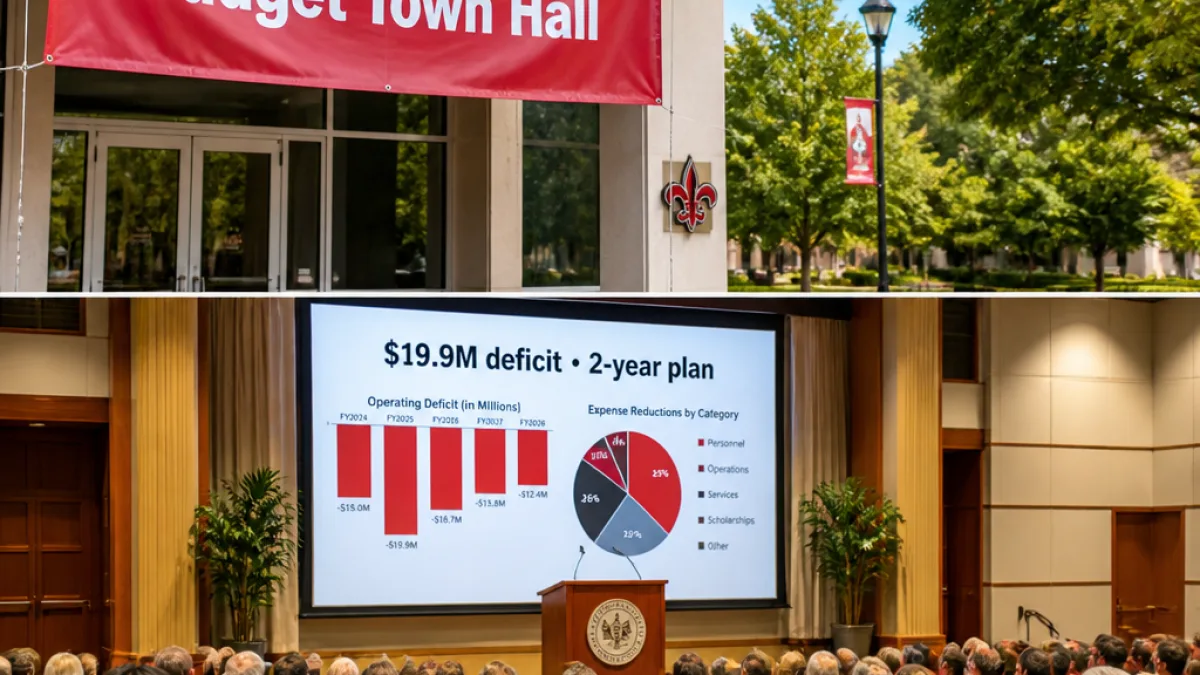
President Ramesh Kolluru held a town hall on campus to present updated fiscal figures and a plan to eliminate a $19.9 million cumulative unrestricted deficit over the next two years. Kolluru said aggressive cost reductions during the last fiscal year and a one-time legislative allocation helped stabilize the university’s finances.
At the end of fiscal year 2025, UL Lafayette faced a reported structural and recurring deficit of about $50 million. Through cuts that produced roughly $17.8 million in savings and an infusion of $16 million in one-time state funds, the president said the university closed FY26 with a $10 million surplus.
“On the day I became interim president, on Nov. 13, 2025, we had $2.2 million in the bank,” Kolluru said. “I never prayed more than I prayed during those months.”
Despite the improved cash position, Kolluru told the assembled faculty and staff that a persistent unrestricted shortfall of $19.9 million remains and will be addressed over two fiscal years rather than in a single, disruptive push.
Two-year plan emphasizes revenue growth and enrollment retention
The administration is aiming for a staged reduction of the deficit: a $9 million decrease in the current fiscal year and an additional $10.9 million in FY28. Kolluru warned there is little left to trim without impairing core services.
“There’s not much more to be cut,” he said, noting that many of the easier savings already have been realized. He framed the coming effort as one that must focus on growing revenue and protecting the campus from further painful reductions.
- FY25 structural shortfall reported: $50 million
- Savings achieved in FY26 through cuts: $17.8 million
- One-time state funds provided: $16 million
- FY26 ending surplus: $10 million
- Remaining unrestricted deficit to eliminate: $19.9 million
One concrete revenue- and retention-focused target is to reduce student “melt” — the number of students who enroll in the fall but do not return in the spring — by 20 percent, equivalent to 257 students. The administration projects that lowering melt would boost tuition revenue and help close the budget gap.
Implications for campus and Lafayette area
University cost decisions ripple through Lafayette’s economy. Faculty and staff reductions, program cuts or diminished service levels can affect household incomes, student support services and local businesses that rely on campus activity. Kolluru stressed that administrators will aim to avoid sudden, deep cuts.
He spelled out the timeline and rationale for spreading the adjustments over two years. “We are going to do this in two years, not one year, because the alternative will be bloody, and I'm not prepared for that. I'm not going to ask my campus to be prepared for that,” Kolluru said at the town hall.
University officials will continue to present budget updates to campus constituencies as they implement the plan and work on strategies to increase enrollment, reduce attrition and expand non‑tuition revenue streams.
| Item | Amount |
|---|---|
| Reported FY25 structural shortfall | $50,000,000 |
| FY26 cost savings | $17,800,000 |
| One-time state funds | $16,000,000 |
| FY26 ending surplus | $10,000,000 |
| Remaining unrestricted deficit | $19,900,000 |
As the university proceeds, Lafayette residents and campus stakeholders will be watching whether the administration’s revenue initiatives and retention efforts can preserve academic programs and services while restoring long-term financial stability.