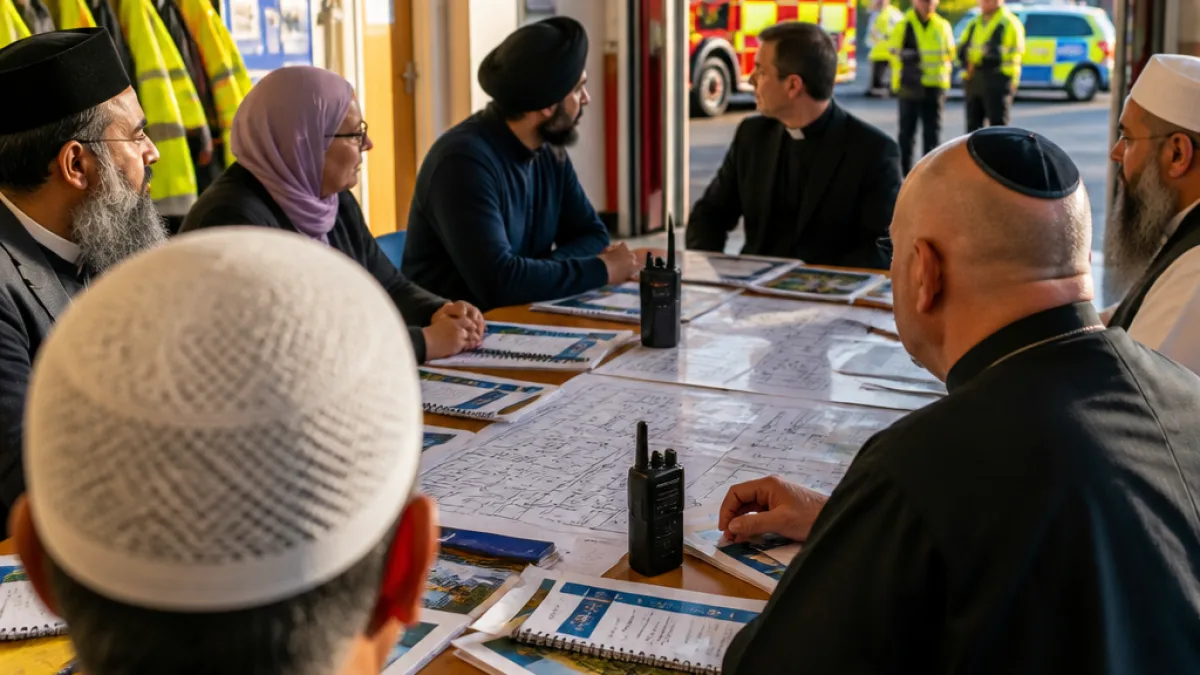
CHARLESTON — More than a dozen Christian and Muslim religious leaders joined families and preservation advocates Oct. 23 for a faith-centered commemoration at 106 Coming St., a downtown parcel now at the center of a dispute over the College of Charleston’s planned freshman residence hall.
The event, titled "A Celebration of Ancestors Unknown but Not Forgotten," followed the release of a ground-penetrating radar survey that indicated the likely presence of graves beneath the site. The parcel is believed by some researchers and community groups to contain the final resting places of thousands of people, including enslaved people of African descent who labored in and around Charleston in the 18th and early 19th centuries.
Faith, memory and a public plea
Speakers included Bishop Ordinary Willie J. Hill of the Reformed Episcopal Church and Alagba Babatunde Akinsegun of South Carolina’s Oyotunji African Village. The ceremony featured dancing, drumming and singing and was organized by the Burial Ground Commemoration and Memorialization Task Force, a local group that advocates for preserving historic burial sites of marginalized communities.
“These individuals participated in the building of this city, but they don’t have names and monuments,” said Bishop Ordinary Willie J. Hill at the ceremony.
Brother DeAndre Muhammad of the Nation of Islam urged attendees to translate remembrance into action. “Brothers and sisters, we got to realize and recognize that our suffering was not in vain,” Muhammad said, adding that the memory of those buried must be honored through continued efforts for justice and equality.
Historical context and local stakes
Enslaved Africans brought through Charleston Harbor included adherents of Islam, among other faiths. The harbor was one of the busiest slave-trading ports on the North American mainland during the period when many believe those interred at 106 Coming St. lived and died.
The College of Charleston first began seeking permission in June 2025 to demolish a former YMCA building that once occupied the block and to move forward with construction of a freshman residence hall. Since then, archaeological and community concerns have mounted, particularly after the ground-penetrating radar results were shared publicly.
Organizers and clergy framed the Oct. 23 ceremony as both a spiritual act and a civic intervention: honoring the dead, calling attention to the evidence of burial, and pressing for preservation and respectful commemoration should human remains or confirmed graves be found.
- Event: “A Celebration of Ancestors Unknown but Not Forgotten”
- Date: Oct. 23
- Location: 106 Coming St., Charleston
- Organizers: Burial Ground Commemoration and Memorialization Task Force
Process ahead and community concerns
City review boards and the college’s own planning officials will be central to the next steps. The presence of likely graves complicates demolition and construction timelines and raises questions about archaeological investigation, legal protections for burial sites and appropriate memorialization. Descendant communities, faith leaders and preservationists have urged that any development pause until more thorough investigation and public consultation occur.
At the ceremony, several speakers emphasized that the people believed buried at the site contributed labor, skill and life to the building of Charleston yet lack headstones, monuments or formal recognition. Those remarks reflect longstanding debates in Charleston over how to acknowledge and memorialize enslaved people and other marginalized groups whose labor underpinned the city’s growth.
| Item | Status |
|---|---|
| Ground-penetrating radar results | Indicate likely graves on site |
| College plan | Freshman residence hall proposed for 106 Coming St. |
| Community response | Ceremony held; calls for further investigation and preservation |
For many Charleston residents, the site is more than a development parcel; it is a touchstone for how the city confronts the legacy of slavery, who is honored in public spaces and how archaeology and community memory are balanced with institutional expansion. The conversation is likely to continue in public meetings and hearings as officials, the college and community groups weigh the evidence and options.
Organizers said the Oct. 23 gathering aimed to keep public attention on the site and to press city and institutional leaders to respect the deceased and the descendant communities in any decisions that follow. Whether that leads to altered plans, formal protection or a public memorial will depend on further investigation and the outcomes of regulatory reviews now under way.