
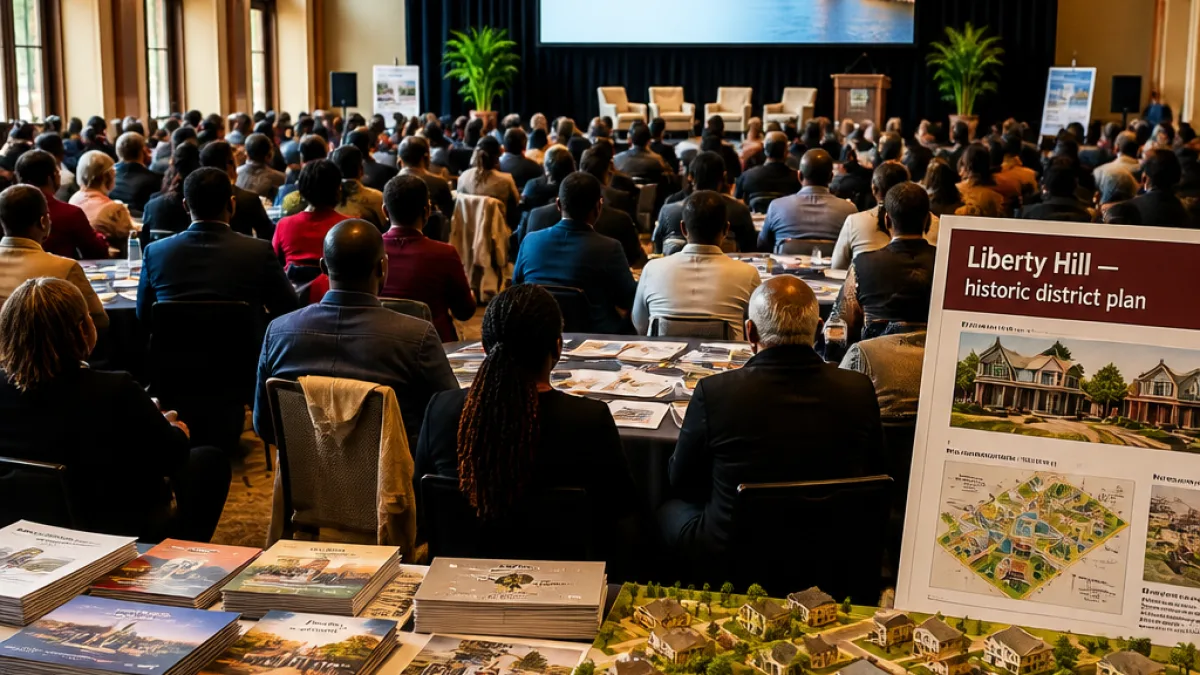
Nearly 100 community leaders, heritage stewards and tourism professionals convened at the College of Charleston this weekend for the South Carolina African-American Tourism Conference, where speakers emphasized converting local history and culture into sustained economic opportunity.
Conference focus: culture, commerce and community
The event, organized by the South Carolina African-American Tourism Council, brought together participants from across the state to examine how Black communities can build tourism products that generate revenue and jobs while preserving authenticity. Organizers highlighted research showing Black tourism’s measurable impact across South Carolina.
| Measure | Figure |
|---|---|
| Economic impact | $2.4 billion |
| Jobs supported | More than 26,000 |
| Attendees at conference | Nearly 100 |
Those figures, cited by conference organizers, framed much of the discussion: how to turn cultural assets into visitor experiences, how to access capital and grants, and how communities can market their stories to travelers looking for authentic, place-based tourism.
Practical workshops aim to move ideas into action
Kwadjo Campbell, chair of the South Carolina African-American Tourism Council, described the conference as a workshop-driven effort to give communities a concrete roadmap.
"People have dream, and they don’t know how to implement those dreams," Campbell said. "So this conference tries to help provide a road map for people to access their dreams."
Sessions were designed to be hands-on. Organizers said attendees could expect workshops on a range of topics tied to development and sustainability:
- Finding funding and capital for tourism projects
- Accessing grant money available to nonprofits working in heritage and cultural tourism
- Designing authentic tourism experiences that reflect community history
- Marketing and digital resource development for visitor outreach
Conference leaders said the programming intentionally combined grant-writing and finance instruction with product development, so communities could learn both how to build offerings and how to pay for them.
Community example: Liberty Hill
Speakers pointed to Charleston’s Liberty Hill neighborhood as an example of a community already working to develop its tourism potential. Organizers said Liberty Hill is moving toward historic register recognition and is developing a tourism marketing and management plan.
Campbell said those kinds of steps — formal recognition, planning and early tourism activity — can be paired with marketing efforts to help visitors find and support community-run businesses and heritage sites.
"So when people, visitors come here, being able to have marketing material out there, being happy to have digital materials out there," Campbell said. "So, people can know who you are, know where you are, and know what you’re about and visit you, and hopefully spend some money with you."
That emphasis on marketing reflects a broader trend in cultural tourism: without clear information and easy visitor access, even well-developed sites can struggle to capture economic benefits.
Local impact and next steps
Organizers framed the conference as one step in a longer process of community capacity building. By connecting local leaders with technical assistance, grant information and marketing strategies, the council hopes to amplify smaller efforts into sustainable visitor economies.
For communities considering tourism as an economic strategy, the conference offered a few practical takeaways repeatedly emphasized during sessions: document and protect local history, craft visitor experiences that are rooted in community voices, pursue available funding sources, and build straightforward digital and printed materials so visitors can find and support local offerings.
Organizers said future efforts will focus on expanding those support networks and tracking projects that move from idea to implementation, with the goal of spreading economic benefits throughout South Carolina’s Black communities.
The conference underscored a central message: cultural and historical assets can be engines for local wealth if communities are equipped with planning tools, funding pathways and effective marketing to reach visitors.
















