
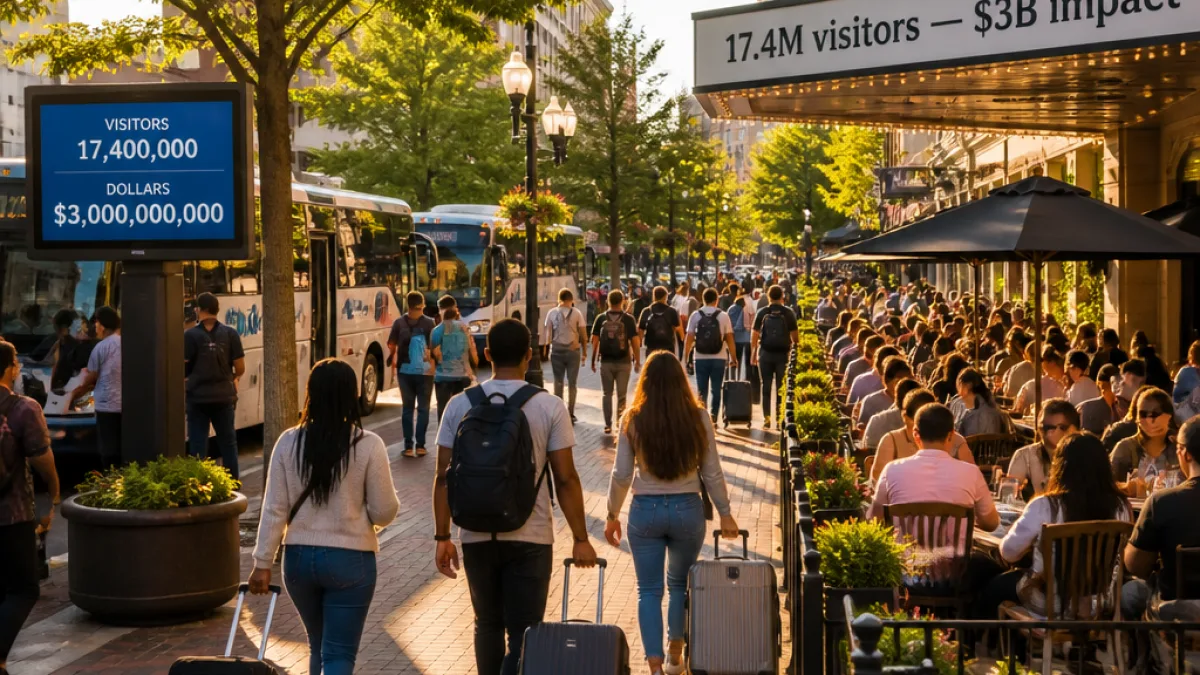
Visitor numbers and spending hit new highs
Columbia’s hospitality and tourism sectors reached unprecedented levels in 2025, as the region welcomed 17.4 million travelers who generated a historic $3 billion economic impact, according to an industry report released this month. The milestone included $1.9 billion in direct visitor expenditures, a measure that reflects money spent by travelers on lodging, food, entertainment and other local goods and services.
What the jump means for households and businesses
The report projects that the tourism surge translated into direct savings for local taxpayers, estimating an average of $523 in annual tax relief per household. While the mechanics behind that calculation were not detailed in the release, it is typical for regions to estimate tax savings by comparing visitor-generated revenue and the consequent reduction in reliance on local tax receipts for public services.
Local restaurants and food-service establishments stood out in the data. Visitors spent an estimated $594 million on dining — roughly 31% of total visitor spending — making food and beverage the largest single category of tourism-related expenditure. That sector also posted the fastest year-over-year growth among the categories tracked, rising 3.8% compared with 2024.
- Visitors in 2025: 17.4 million
- Total economic impact: $3 billion
- Direct visitor spending: $1.9 billion
- Dining spending: $594 million (31% of visitor spending)
- Estimated household tax savings: $523 annually
“record-breaking 17.4 million travelers”
How Columbia positioned itself to grow visitation
The report credits a coordinated marketing approach by the region’s destination-marketing organization and expanded private-sector investment for the rise in visitors. Columbia has promoted its mix of government, higher-education institutions, culinary offerings, outdoor recreation and historic sites as part of a broader effort to attract leisure travelers, conventions and culinary tourists.
Industry observers say targeted campaigns that highlight regional strengths — from riverfront recreation to dining and festivals — can help mid-sized metro areas compete with larger coastal destinations. The data for Columbia’s region suggests those efforts produced measurable results in 2025.
Sectoral impacts and local ripple effects
Beyond direct spending, the tourism boost carries secondary effects for employment, supply-chain demand and municipal revenues. Increased hotel occupancy sustains jobs in lodging and housekeeping; higher restaurant traffic supports kitchen and front-of-house staff as well as local food suppliers. Retail, entertainment and transportation services also benefit when visitor counts climb.
| Category | 2025 Amount |
|---|---|
| Total economic impact | $3,000,000,000 |
| Direct visitor spending | $1,900,000,000 |
| Dining | $594,000,000 |
Those gains, however, can present both opportunities and challenges. While additional revenue supports local businesses and public services, higher visitor volumes can strain infrastructure and public spaces if growth is not matched by investments in maintenance, transportation and workforce development.
What comes next
Officials and business leaders will likely examine the 2025 figures as they plan future investments and promotional work. Continued emphasis on culinary tourism — which already represents nearly a third of visitor spending — may spur further development in dining and related experiences. At the same time, sustaining growth will depend on a mix of marketing, private investment and strategic planning to ensure the benefits of tourism reach a broad cross-section of the community.
For Columbia residents, the immediate effects are visible: fuller restaurants, busier hotels and increased demand for cultural and outdoor attractions. The longer-term question for the region will be how to leverage the momentum from 2025 into steady, manageable growth that improves quality of life for local households while preserving the assets that attracted visitors in the first place.
















