
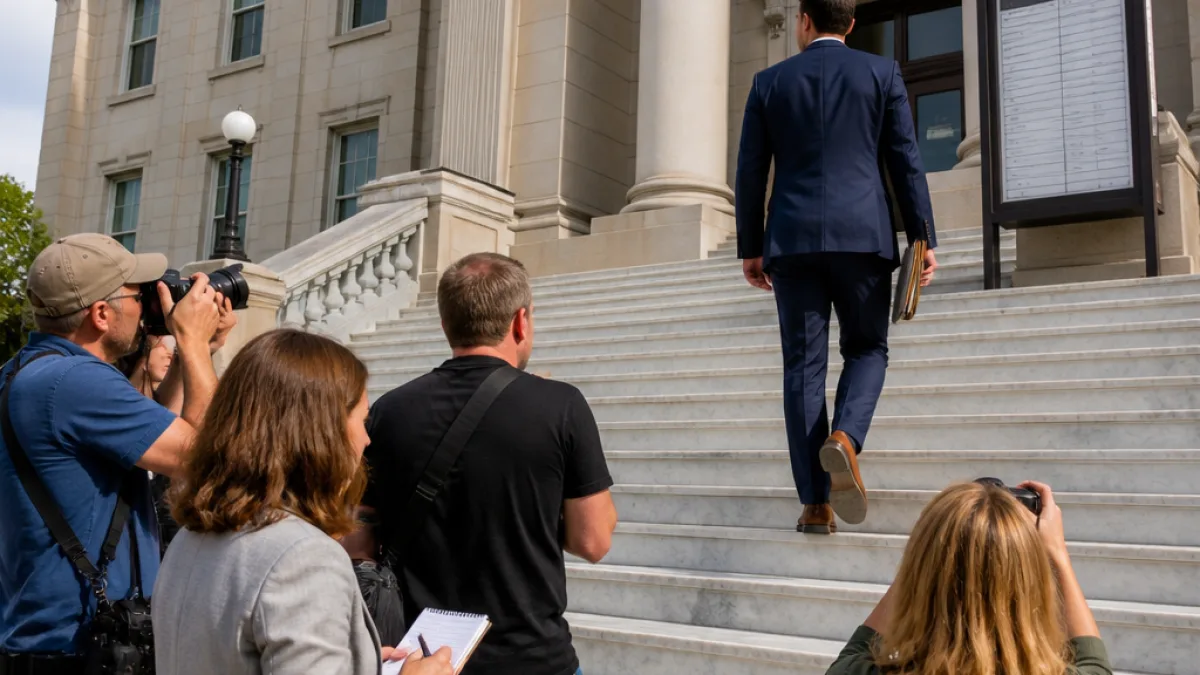
SIOUX FALLS — A judge in Minnehaha County has scheduled a December trial for state Sen. Tom Pischke, a Republican from Dell Rapids, who is facing two felony counts related to candidate nominating petitions, court filings show.
Charges and allegations
Pischke, 44, is charged with two felony counts of filing a forged or false instrument. Prosecutors allege he signed and submitted nominating petitions for county party precinct positions without the knowledge or consent of the named candidates. The allegations are limited to the contents of the criminal complaint filed in Minnehaha County; no trial testimony has been heard.
Where the case stands
The scheduling order issued by the court sets the matter for trial in December. Beyond the setting of that date, public filings available at the time do not detail additional pretrial motions, plea discussions or other procedural steps between now and the trial month.
| Defendant | Age | Party | Charges | Alleged conduct |
|---|---|---|---|---|
| Tom Pischke | 44 | Republican (Dell Rapids) | Two felony counts | Signing/submitting candidate nominating petitions without candidates’ knowledge |
Public and political implications
The case involves a sitting state legislator and election-related documents, which elevates public interest. Nominating petitions play a routine but important role in local party organization and ballot access; allegations that petitions were signed or filed without a candidate’s knowledge prompt questions about the integrity of those local processes. The charges could also carry political consequences for Pischke, his constituents and party officials, depending on the outcome of the criminal proceedings.
What is known and what remains unclear
What is public at this stage is the identity of the defendant, the formal charges and the court’s decision to set a December trial date. Many other details remain in the court record or may emerge during pretrial hearings, including:
- Whether the defense will file motions to dismiss or challenge the evidence before trial
- Any additional witnesses or victims identified by prosecutors
- The scheduling of jury selection, length of trial and possible plea negotiations
Those items are typically addressed in the weeks and months leading up to a felony trial and will be reflected in future court filings and hearings.
Context from the Capitol
The senator represents a district centered in Dell Rapids. He has served in the South Dakota Senate; public records show he has participated in legislative activity this year. The scheduled criminal trial will proceed on the court calendar separate from his legislative duties unless the legislature or party officials take action under their own rules.
How this affects local voters
For constituents, the case may prompt scrutiny of how local candidates for party precinct positions are nominated and certified. Voters and volunteers who participate in petition-gathering or filing should take away a reminder to document candidate consent and to keep records when assisting with paperwork for local party or ballot-access activities.
Next steps for readers who follow the case
Prosecutors, the defense team and the court will file additional documents and set hearings in advance of the December trial. Court dockets are public, and reporters often obtain updates from Minnehaha County court filings and courtroom proceedings. We will monitor filings and provide updates as more information becomes available.
As the case moves toward trial, it will be important for the public record to reflect facts established in court rather than allegations alone. The scheduling of a trial does not constitute a finding of guilt; formal resolution will follow through the judicial process.
Hannah Steele is a state correspondent for WE NEWS.
















