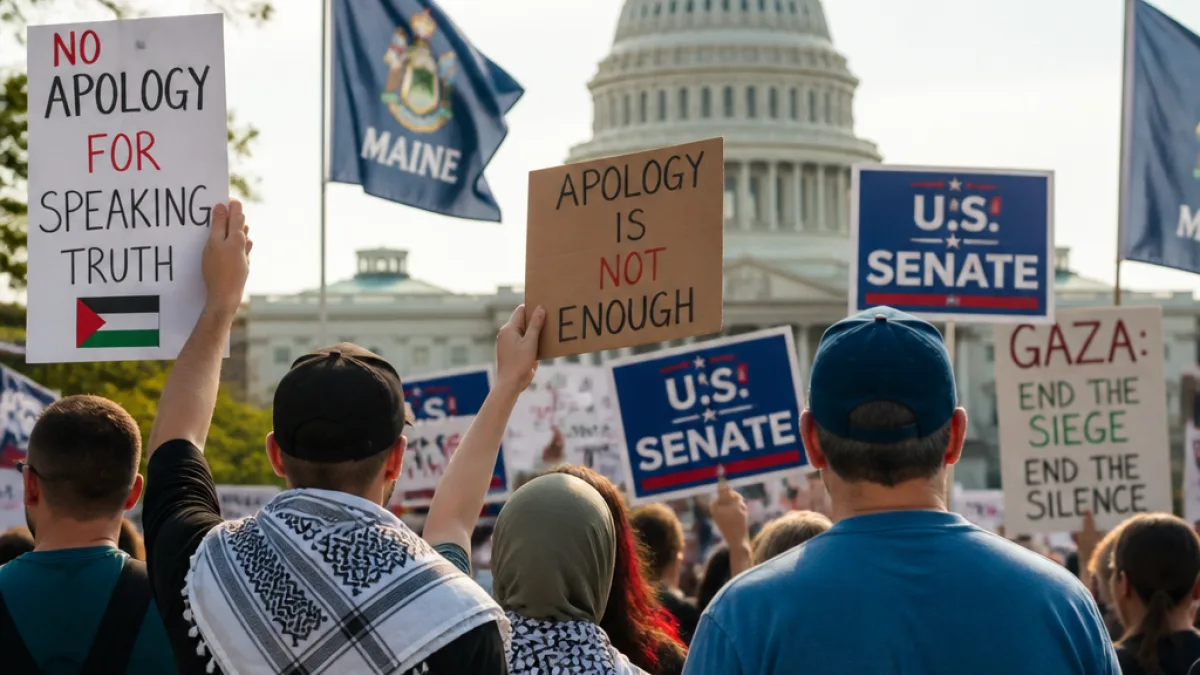
Troy Jackson, the Democratic nominee in Maine’s U.S. Senate race, apologized Tuesday after saying in a television interview that it was "unfortunate" that some Jewish Mainers do not describe the war in the Gaza Strip as a "genocide." The comment comes as Jackson challenges incumbent Sen. Susan Collins, a race national Democrats view as critical to reclaiming control of the U.S. Senate.
Comment draws scrutiny in high-stakes contest
Jackson, a logger from northern Maine and the former president of Maine’s state Senate, has repeatedly referred to the Gaza conflict as a "genocide" during his campaign and has said he opposes American military aid to Israel. His remarks on the views of Jewish Mainers prompted criticism and led him to issue an apology.
"It is ‘unfortunate’ that Jewish Mainers don’t call the war in the Gaza Strip a ‘genocide,'"
The quote above, made by Jackson in a televised interview, was highlighted by national outlets and has become a focal point in a contest that Democrats have identified as one of their best opportunities to flip a Republican-held seat.
Background and political stakes
Jackson entered the Senate contest against Collins with positions that diverge from mainstream Washington thinking on foreign policy. He has publicly labeled the Gaza conflict a "genocide" and taken a stance against U.S. military assistance to Israel. Those positions are likely to be used by opponents and outside groups to question his judgment and to draw contrasts with Collins, a three-term senator with a track record of supporting military aid to U.S. allies.
National Democrats see the race as pivotal for control of the Senate, elevating scrutiny of every statement from both campaigns. Jackson’s comments about the views of Jewish Mainers add a layer of complexity because they touch on religion, ethnic identity and deeply held opinions about an ongoing international crisis.
Who is Troy Jackson?
- Occupation: Logger
- Political experience: Former president of Maine’s state Senate
- Stance on Gaza conflict: Has repeatedly called it a "genocide" and opposes U.S. military aid to Israel
Those facts form the backdrop to an increasingly vigorous campaign in which narrative and messaging are likely to matter as much as policy specifics. Jackson’s working-class background and name recognition in Maine helped him secure the Democratic nomination, but the controversy underscores the balancing act candidates face when addressing sensitive international matters in close, domestic contests.
Local communities and national attention
Jackson’s remark drew attention from national media because it intersects with religious identity and the fraught politics around the Israel-Hamas war. For Jewish communities in Maine — and elsewhere — comments about whether the conflict should be labeled a genocide carry moral and political weight. The apology signals an awareness that the comment created offense, but the effect on voters, particularly in suburban and Jewish communities, remains to be seen.
Political strategists note that candidates in tight Senate races are frequently subjected to rapid message testing, and misstatements can be amplified by opponents and national groups looking to influence the outcome. Jackson’s campaign will likely need to manage the fallout while continuing to press its broader arguments against Collins’ record.
Quick facts
| Candidate | Party | Notable positions |
|---|---|---|
| Troy Jackson | Democrat | Called Gaza war a "genocide"; opposes U.S. military aid to Israel |
| Susan Collins | Republican | Incumbent senator; target of Jackson's campaign |
What comes next
The contest between Jackson and Collins will continue to draw scrutiny from national media and political organizations given its potential to influence control of the U.S. Senate. How much this particular episode shifts voter sentiment is uncertain; campaigns often absorb controversy, refocus on policy and move on to voter outreach, fundraising and advertising. For Jackson, navigating the response to remarks about Jewish Mainers will be an immediate priority as his campaign seeks to broaden appeal across Maine’s electorate.
As the race progresses, observers will track whether the apology calms concerns among Jewish voters and other constituencies or whether it becomes another campaign flashpoint exploited in paid messaging by outside groups and opposing campaigns.
Grace Yun is the State Correspondent at WE NEWS.