
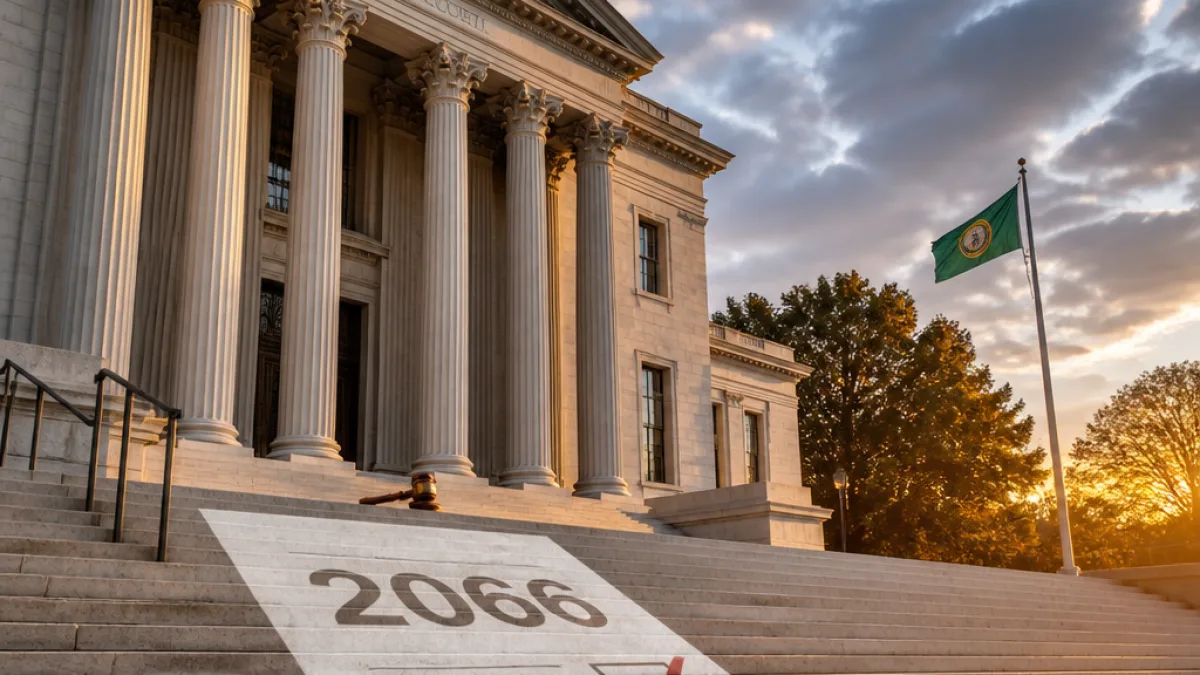
The Washington Supreme Court on Thursday struck down Initiative 2066, a ballot measure approved by voters two years ago that aimed to curb state and local efforts to discourage the use of natural gas and to roll back portions of energy-efficient building rules.
Court cites single-subject constitutional bar
In a majority opinion, Chief Justice Debra Stephens wrote that the initiative violated the state constitution’s requirement that laws contain a single subject. The court said that rule exists to promote clarity for voters and to block the practice known as logrolling — combining unrelated proposals to secure passage.
“The single-subject rule ensures transparency in the legislative process and prevents unconstitutional logrolling,”
The ruling removes from law the voter-approved restrictions that would have limited how state and local governments can regulate or influence use of natural gas in buildings and other settings.
What I-2066 would have changed
Backers of I-2066 framed it as a protection for consumer choice and an effort to keep energy costs lower by ensuring continued access to natural gas. The initiative contained several provisions that intersected with state energy policy.
- Prohibit government discouragement: The measure stated that state and local governments "shall not in any way prohibit, penalize, or discourage the use of gas."
- Alter building codes: It would have required changes to state building standards related to energy efficiency and fuel sources.
- Undo parts of a 2024 law: The initiative would have repealed a portion of state legislation that required Puget Sound Energy to evaluate pathways to "cost-effective electrification."
Opponents of the initiative argued that, if implemented, I-2066 would have undercut efforts to reduce carbon emissions and protect residents from pollution. Supporters said the measure was intended to keep energy prices down and protect consumer choice.
Reactions from stakeholders
Health and environmental groups hailed the decision. Mark Vossler, a board member of Washington Physicians for Social Responsibility, said the ruling preserves the ability of state and local governments to carry out policies aimed at reducing harmful pollution.
"If implemented, I-2066 would have undermined policies designed to safeguard Washington residents from harmful pollution,"
On the other side, Brian Heywood, founder of the group Let's Go Washington and a backer of the initiative, criticized the court’s ruling as unfair. Heywood said the measure’s intent was to keep energy costs more affordable for consumers.
"The decision was biased and one-sided,"
The Building Industry Association of Washington was among the initiative's backers; the organization has indicated it may pursue narrower efforts to roll back some energy-efficiency rules, though the group’s next steps were not detailed in the court’s opinion.
Practical implications and next steps
Because the decision rests on the single-subject constitutional provision, its immediate effect is to prevent I-2066 from changing state building codes or preventing governments from discouraging gas use. The ruling also leaves intact the 2024 law requiring Puget Sound Energy to study cost-effective electrification options.
Legal experts say the decision could shape how future initiatives are written and how campaigns approach ballot measures that bundle multiple policy changes. Supporters of I-2066 might pursue a revised ballot measure or targeted legislation that focuses on a single issue, while opponents may press forward with local and statewide policies aimed at reducing emissions.
Summary table: I-2066 provisions and court outcome
| Provision | What it would have done | Court outcome |
|---|---|---|
| Ban on discouraging gas | Prevent state/local governments from prohibiting, penalizing or discouraging gas use | Invalidated |
| Building-code rollback | Required changes to energy-efficiency building codes | Invalidated |
| Repeal part of 2024 law | Would have removed requirement for Puget Sound Energy to study electrification paths | Invalidated |
The decision is likely to draw follow-up activity from both sides of the debate. Environmental and public-health advocates are expected to continue pressing for electrification and emissions reductions, while industry groups and initiative backers may weigh narrower legislative or ballot options that comply with the single-subject constraint.
For now, Washington's existing path toward evaluating electrification and updating building codes remains intact, and the state and local governments retain authority to craft policies that influence energy choices in buildings.
Grace Yun is the WE NEWS state correspondent covering Washington state government and policy.
















