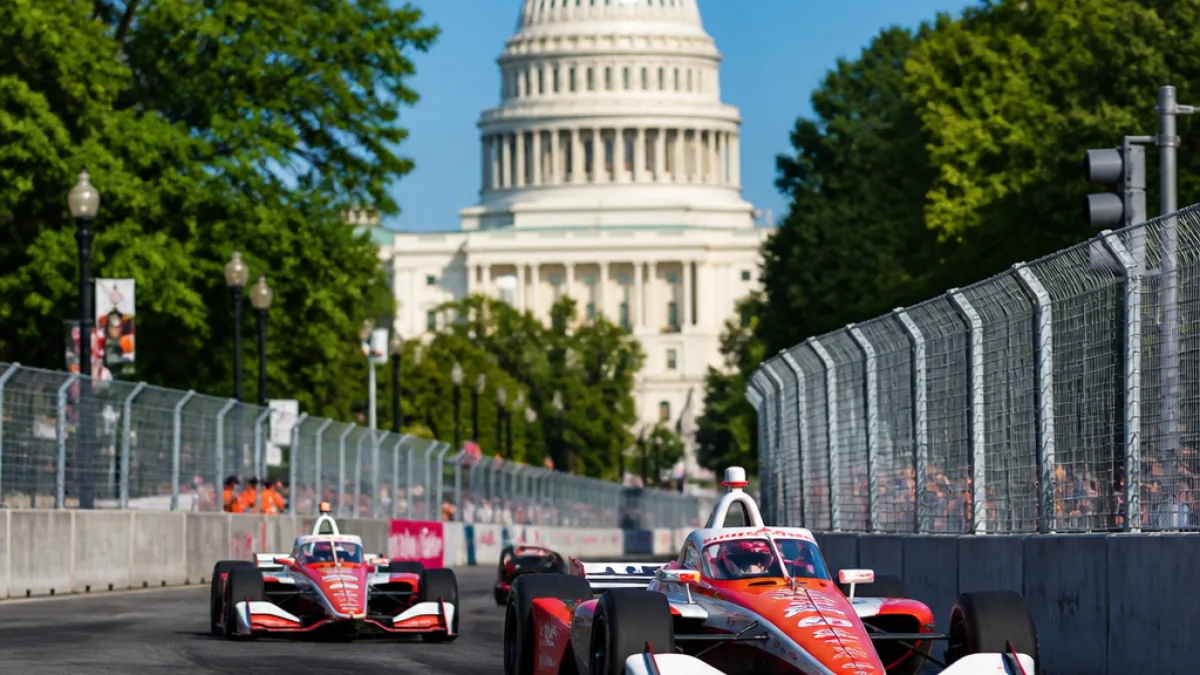
Jeff Gordon won both International Race of Champions (IROC) support races held on the temporary street circuit in Washington, D.C., claiming back-to-back victories on a weekend that featured classic cars and veteran drivers on display beneath the dome of the U.S. Capitol.
Gordon tops two short feature races
Driving in the field of eight veteran competitors, Gordon took the first 10-lap race, then repeated his performance in the second contest after the field was inverted. The weekend ran as part of the support card for the IndyCar Series, bringing a nostalgia-driven spectacle of early-2000s IROC machinery and well-known names from multiple disciplines to the nation’s capital.
The finishing order for the two races was as follows:
| Race | 1st | 2nd | 3rd | 4th | 5th | 6th | 7th | 8th |
|---|---|---|---|---|---|---|---|---|
| Race 1 | Jeff Gordon | Kurt Busch | Helio Castroneves | Bill Elliott | Rusty Wallace | Bobby Labonte | Tommy Kendall | Tony Kanaan |
| Race 2 (inverted) | Jeff Gordon | Kurt Busch | Tony Kanaan | Bobby Labonte | Tommy Kendall | Bill Elliott | Rusty Wallace | Helio Castroneves |
Event context and format
The IROC events brought together a compact grid of accomplished drivers competing in identically prepared race cars — a concept designed to emphasize driver skill over equipment. On this weekend in Washington, D.C., the series was staged as a support attraction for the headline IndyCar races, offering fans close-quarters wheel-to-wheel action on a street layout framed by familiar national landmarks.
Gordon, who serves as vice chairman at Hendrick Motorsports and is a four-time NASCAR Cup Series champion, led both races amid strong showings from Kurt Busch and other well-known competitors. In the first race, Helio Castroneves finished third behind Busch; in the second, where the starting order was inverted to create passing opportunities and strategic variance, Kanaan moved onto the podium in third.
Notable performances
- Kurt Busch finished second in both races, consistent across an unfamiliar and tightly contested format.
- Tony Kanaan turned a mid-field start in the inverted second race into a podium finish.
- Veteran drivers such as Bill Elliott, Rusty Wallace and Bobby Labonte featured prominently, underscoring the nostalgic and competitive appeal of the event.
The inversion for the second race—placing faster drivers toward the back for the restart—aimed to create more overtaking and provide fans with a different strategic dynamic. That format change intensified the challenge for frontrunners, making Gordon’s consecutive wins notable for their consistency across two contrasting race conditions.
What the results mean
While IROC races are not tied to a larger championship in the same way modern series are, the weekend offered useful measures of driver adaptability and crowd-pleasing moments for fans. Gordon’s sweep reinforced his reputation as an all-around talent in wheel-to-wheel competition, particularly in identically prepared machines where driver input is magnified.
For local and visiting spectators, the races added a motorsports flourish to a busy weekend of racing in Washington, D.C., combining nostalgia with live competition. As a support event to IndyCar, the IROC races also provided track activity and variety for fans attending the larger race card.
Looking ahead
With the IROC format built around close competition and familiar names, organizers are likely to continue using inversions and short-format races to maximize entertainment value on temporary street circuits. For attendees in Washington, D.C., the weekend delivered accessible, action-packed racing framed by one of the nation’s most recognizable skylines.
For motorsports followers, Gordon’s two victories on the streets of the capital were a reminder of the enduring draw of driver-focused competition and a showcase for a roster of experienced racers performing in equal machinery.