More than 90% of the excess heat trapped by greenhouse gases in recent decades has gone into the world’s oceans, and researchers at the University of North Carolina are turning to hands‑on coastal experiments to learn what that means for marine life.
Student research links physiology to coastal economies
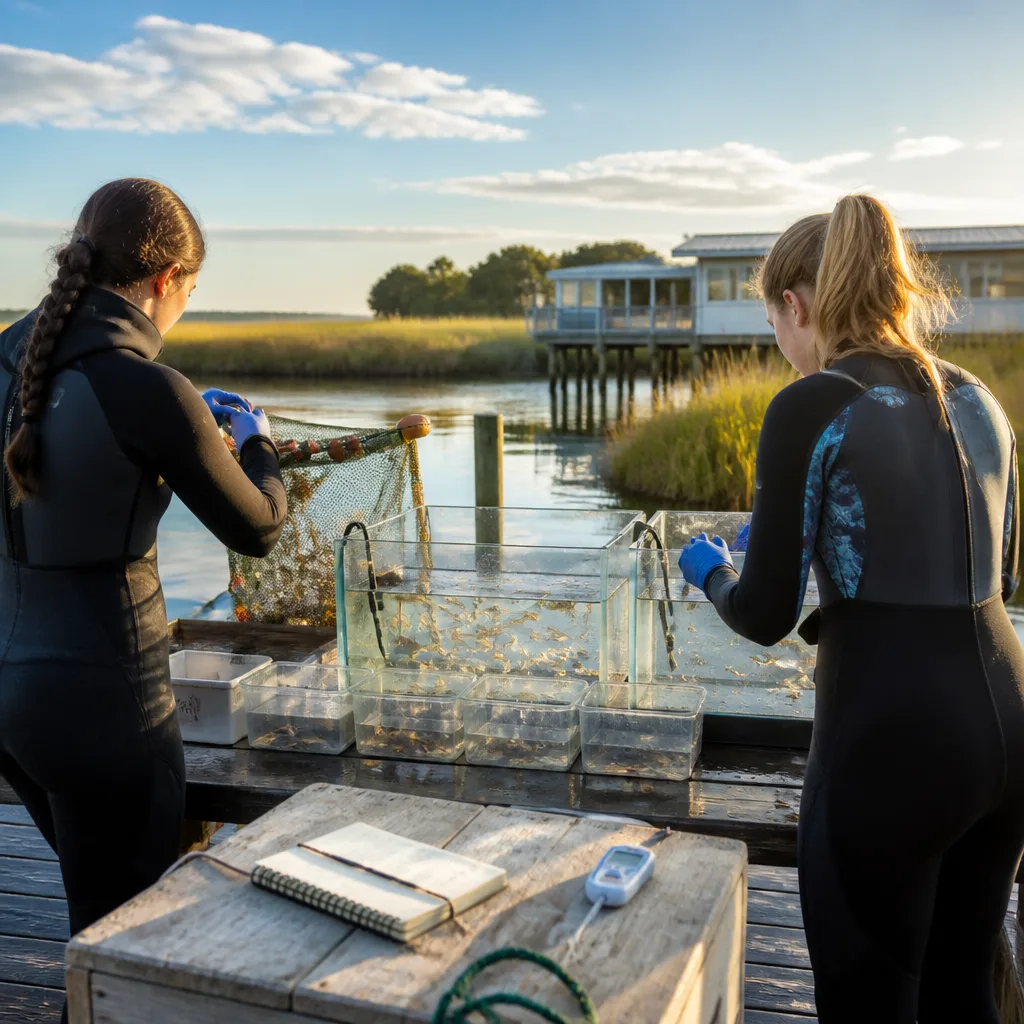
Senior Kate Blizzard spent the summer at the UNC Institute of Marine Sciences conducting experiments to determine the temperature thresholds at which a common East Coast species, the pigfish, begins to show signs of thermal stress. The work, done from a dock on Bogue Sound, involves catching fish with shrimp bait, transferring them to laboratory tanks and measuring how much heat the animals can tolerate before physiological responses indicate distress.
The project is embedded in a larger UNC effort to provide immersive coastal research experiences: the institute has helped train more than 500 Carolina students, and over 21,000 undergraduates at the university participate in research programs across disciplines. Those training pipelines feed the broader scientific community while generating targeted data about species that support regional fisheries.
Why thermal limits matter
Oceans have absorbed the bulk of the planet’s excess heat, making local increases in water temperature a pressing concern for organisms adapted to historical thermal regimes. For fish like pigfish, knowing the upper thermal limits informs predictions about survival, reproduction and distribution as coastal waters warm.
Changes in fish populations can ripple outward. North Carolina’s commercial fishing sector depends on relatively stable stocks. Shifts caused by warming — whether through reduced abundance, altered seasonal migrations or range shifts — could affect livelihoods, local economies and recreational industries that depend on coastal biodiversity.
- Field training: Students gain practical experience in fisheries sampling and physiological assays.
- Research output: Empirical data on species' thermal tolerance helps model future population trends.
- Stakeholder relevance: Results have implications for commercial fisheries, tourism and coastal ecosystem services.
From semester programs to hands-on summer research
Blizzard’s path to the summer study began with a semester in a residential coastal program, the Morehead City Field Site, part of the UNC Institute for the Environment’s suite of hands‑on learning opportunities. Those semester programs expose undergraduates to residence-based fieldwork and often lead to more focused projects during the summer months.
Faculty mentors at the institute emphasize bridging education and applied science: students not only learn sampling and lab techniques but also how to frame research questions that inform management and conservation decisions. Collecting thermal tolerance data is one example of how student projects can contribute directly to understanding climate-driven biological responses.
Broader ecological stakes
Fish such as pigfish play key roles in nearshore food webs. Rapid temperature changes can alter predator–prey relationships, reproductive timing and habitat use, with knock-on effects for ecosystem stability. Researchers caution that localized studies must be integrated with broader monitoring to capture migratory shifts and population dynamics across regions.
By quantifying when and how stress manifests in coastal species, campus‑based initiatives aim to provide managers and communities with actionable information. That guidance may affect seasonal closures, catch limits and other policies designed to sustain fisheries as ocean conditions continue to change.
| Metric | Figure |
|---|---|
| UNC undergraduates involved in research | 21,000+ |
| Students trained by UNC Institute of Marine Sciences | 500+ |
| Share of excess heat absorbed by oceans | More than 90% |
As coastal waters continue to warm, the combination of undergraduate training and focused fieldwork provides both workforce development and the empirical basis for managing marine resources in a changing climate. Projects like Blizzard’s make clear that student researchers are contributing to the science that will shape coastal adaptation strategies in the years ahead.