
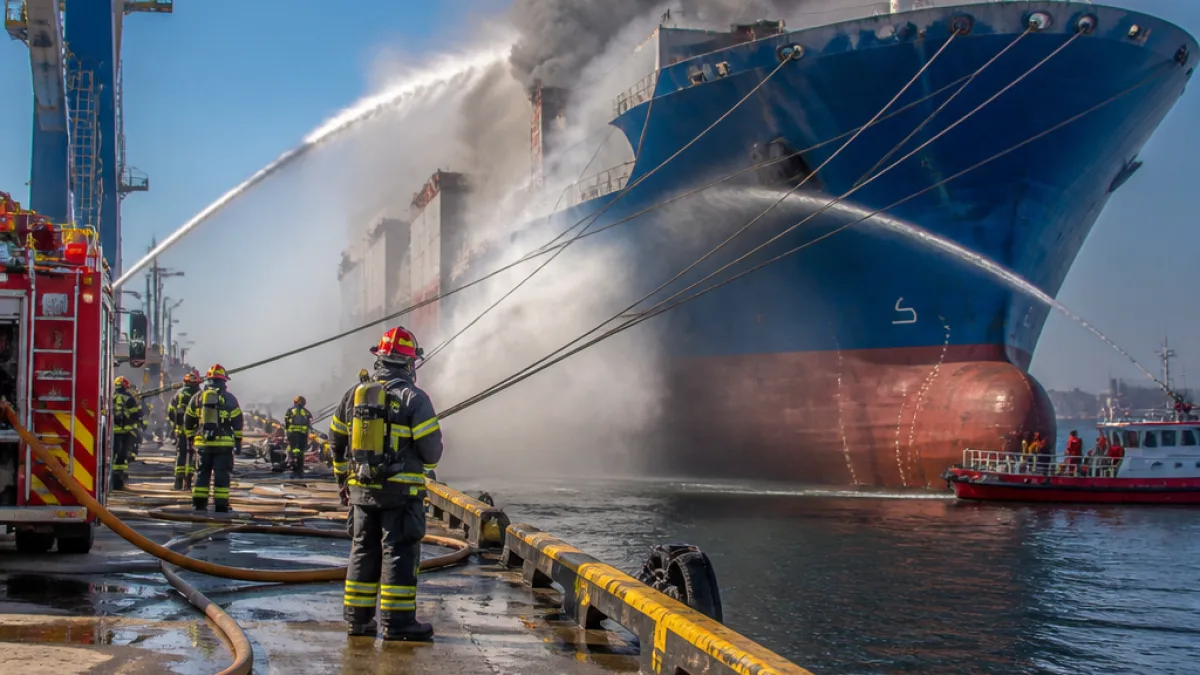
Shipboard fire prompts heavy response at Port of Wilmington
WILMINGTON — Fire crews responded Monday to a two-alarm fire aboard the Dole Columbia, a 672-foot vessel docked at the Port of Wilmington, after flames were reported in the ship's engine room just after noon.
Authorities said crews were dispatched at approximately 12:12 p.m. to the port after reports of smoke and fire on the vessel. Video from local news helicopters showed firefighting apparatus positioned alongside the ship while personnel worked to bring the blaze under control.
Officials reported that the vessel’s onboard CO2 fire-suppression system had been discharged during the incident. No injuries were immediately reported, and emergency personnel were continuing operations at the scene while investigators and port authorities gathered information.
Immediate response and safety steps
Fire departments mounted a coordinated response to the engine-room fire, elevating the call to a two-alarm status. Mutual-aid arrangements and maritime firefighting procedures are typical for incidents of this nature at the Port of Wilmington, which handles a range of commercial cargo and regularly hosts large vessels.
Port personnel and responding crews followed established protocols for shipboard fires, including the use of the ship’s fixed suppression systems. The discharge of the CO2 system on board indicates crews activated a major fixed suppression system designed to flood machinery spaces with inert gas to smother flames.
- Incident type: Engine-room fire aboard a commercial vessel
- Vessel: Dole Columbia (672-foot)
- Reported time: ~12:12 p.m.
- Response: Two-alarm fire response; CO2 system discharged
- Injuries: None reported at time of initial reports
Officials said the ship’s CO2 system was discharged during the fire, and no injuries were immediately reported.
Operational impacts and next steps
At this stage, the focus for fire and port authorities is ensuring the fire is fully extinguished, securing the vessel, and carrying out a safety assessment of the ship’s machinery spaces. Investigators typically examine the cause of an engine-room fire and evaluate damage to propulsion and electrical systems, but officials have not released findings or a definitive cause.
Port operations can be affected by an incident of this type depending on the severity of damage and the need to secure surrounding berths. Officials have not yet announced any closures or changes to cargo operations tied to the response.
Community and maritime safety context
Shipboard fires present unique hazards because machinery spaces contain fuel, lubricants and electrical systems that can feed a blaze. Fixed CO2 suppression systems are a primary method for tackling such fires on commercial vessels; they require careful coordination between ship officers and shore-based responders due to the risks associated with high concentrations of CO2 in enclosed spaces.
At the time of initial reporting, city and port officials were working with responding fire units. NBC10 and local coverage captured footage of the scene; updates were expected as responding agencies completed their assessments.
| Detail | Information |
|---|---|
| Vessel length | 672 feet |
| Reported time | 12:12 p.m. |
| Alarm level | Two-alarm |
| Suppression system used | CO2 |
| Injuries | None reported initially |
WE NEWS will follow this developing story and provide updates as port and fire officials release more information about the cause of the fire, the extent of any damage and whether the incident will affect Port of Wilmington operations in the coming days.

















