
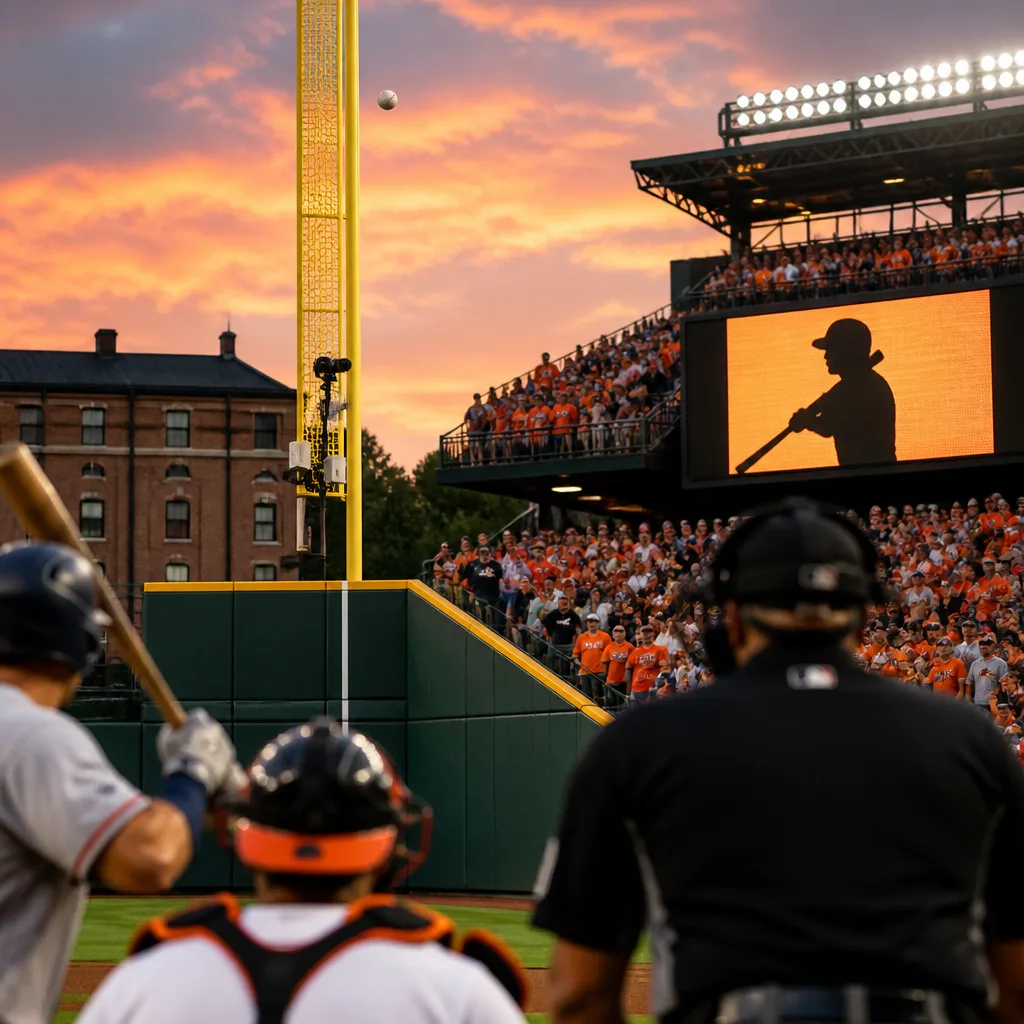
BALTIMORE — A deep swing by Pete Alonso that was ruled foul and sustained after replay review in Baltimore’s 5-3 loss to the New York Yankees has again prompted calls for expanded technological aid to decide boundary plays near the foul pole.
What happened
Alonso’s drive into left field on Wednesday appeared to many fans and observers to be a potential home run. He ran toward first base and discarded his bat, apparently convinced the hit cleared the fence. From the angle available to umpires and replay officials, however, the ball’s trajectory left room for doubt, and the ruling on the field — a foul ball — stood after a video review.
Technology debate returns
The incident has renewed a longstanding debate within baseball circles about whether the sport should deploy additional automated tools to settle plays that hinge on whether the ball cleared or struck a boundary at the edge of the field. Proponents argue that precise measurement systems or additional camera coverage could remove ambiguity on tight plays and reduce controversy. Opponents warn that too much automation could disrupt the pace and tradition of the game and place greater reliance on systems that may themselves be imperfect.
Major League Baseball has incrementally increased its use of replay and technology over the past decade, from a centralized replay center to pitch-tracking systems and Statcast analytics. But boundary calls near the foul pole — where sightlines, angles and the physics of batted balls create unique challenges — remain among the most contentious and difficult to adjudicate consistently.
- Game in question: Orioles vs. Yankees, Baltimore; final score 5-3.
- Player involved: Pete Alonso, batting for Baltimore.
- Ruling: Ball ruled foul on the field and upheld on review.
Options and limitations
Any move to add more technology would face logistical, technical and policy hurdles. Potential solutions floated by analysts and some team officials include:
- Installing additional high-speed cameras focused on the corners and foul poles to provide more definitive angles.
- Integrating micro-sensor or radar-based tracking that could determine the exact relationship between ball and fence in real time.
- Expanding the scope of centralized replay review to include new data feeds and automated overlays for boundary determinations.
But each option carries trade-offs. Adding hardware to ballparks nationwide would be costly and would require standardization so that measurements are uniform across all venues. Sensor systems must meet reliability thresholds, and their introduction would require collective bargaining with the players’ association and approval from league governance bodies. There is also the matter of how quickly and transparently such systems could deliver decisions during games without causing long delays.
Why this matters beyond one play
The Alonso incident is not merely about one contested result; it underscores a wider tension in professional sports between human officiating and technological intervention. Fans, teams and broadcasters increasingly expect clarity on high-stakes calls, particularly when outcomes affect standings, playoff races and player statistics. At the same time, baseball’s character and flow are factors that league officials weigh when considering new rules or equipment.
MLB has shown a readiness to adopt technology when benefits are clear and feasible; pitch clocks and expanded replay are recent examples. Whether plays at the corner poles will be the next frontier depends on technical feasibility, cost, stakeholder agreement and the league’s appetite to further reduce human adjudication in crucial moments.
| Item | Detail |
|---|---|
| Location | Baltimore |
| Game result | Yankees 5, Orioles 3 |
| Play | Deep fly by Pete Alonso ruled foul; review upheld |
As debate continues, teams and fans will watch how MLB balances the desire for definitive outcomes with the sport’s traditions and practical limits of current technology.















