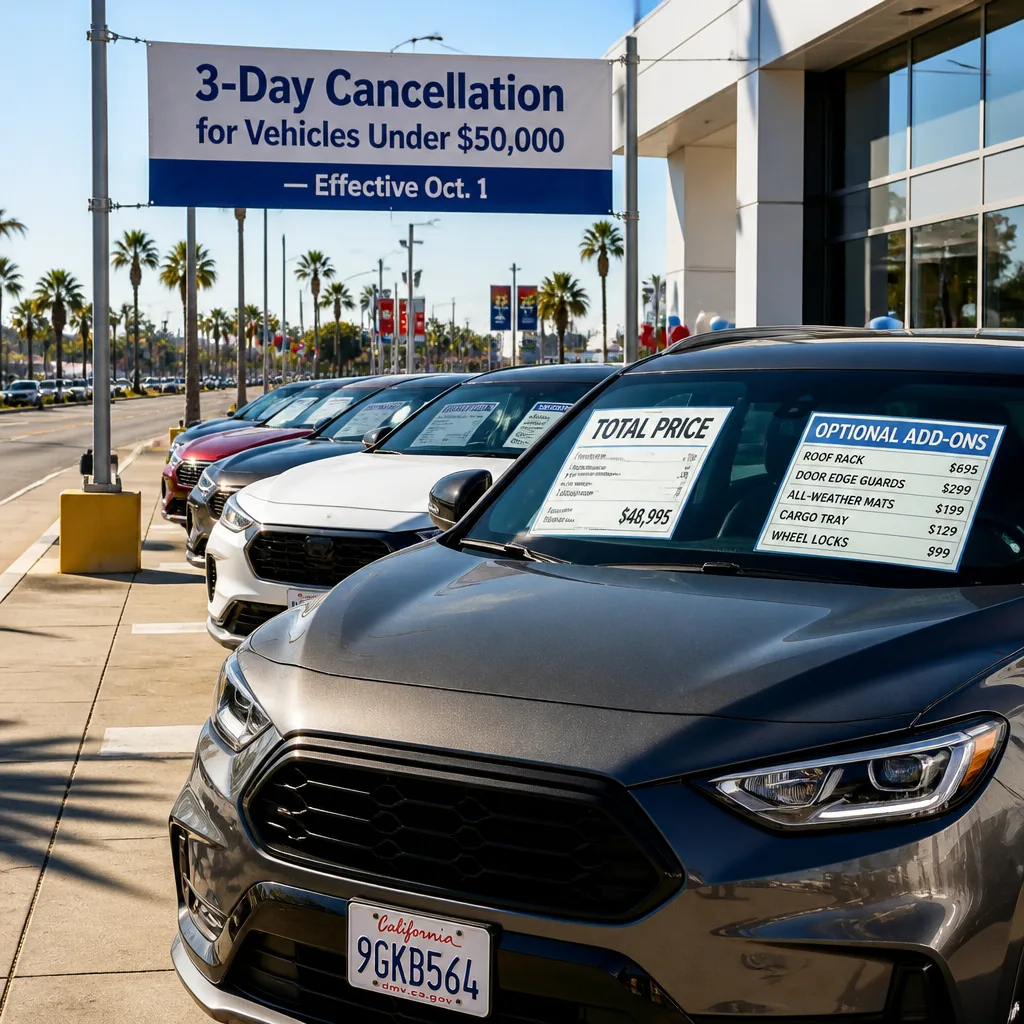
Beginning Oct. 1, California motorists and prospective lessees will face a different experience on dealership lots as a new consumer-protection law takes effect that aims to curb misleading sales tactics and hidden fees.
Key changes dealers must follow
The legislation, known as the California Combating Auto Retail Scams Act or CARS Act and enacted last year, imposes new transparency requirements on auto retailers operating in the state. Among its central rules, dealerships are required to advertise the total price of vehicles and clearly indicate which add-ons and features are optional rather than included.
The measure was authored by Sen. Bill Allen of Santa Monica and signed by Gov. Gavin Newsom. Proponents say the law will reduce the common practice of presenting consumers with an ostensibly low price and later adding surprise fees or mandatory extras during the sale process.
“This bill will codify best-in-class protections for California car buyers,” Sen. Bill Allen said in a press release when the legislation was adopted.
New consumer rights and scope
One of the CARS Act’s most notable features is a first-in-the-nation three-day right to cancel for purchasers and lessees when the vehicle’s value is under $50,000. That provision allows consumers a brief statutory window to return a vehicle if they change their minds, a protection advocates say addresses high-pressure sales tactics.
The law applies to both new and used vehicles with a gross vehicle weight of less than 100,000 pounds, covering the vast majority of passenger cars, SUVs and light trucks sold in California.
Consumer advocates welcomed the statute. Ted Mermin, director of the California Low-Income Consumer Coalition, characterized the bill as a meaningful step forward for buyers who have long endured opaque pricing and prolonged negotiations at dealerships.
“This bill is a significant step forward for California consumers and for an industry that has been allowed to get away with outrageous sales tactics for far too long,” Mermin said in an October statement.
What buyers can expect at the lot
Under the new rules, shoppers should find:
- Clear total price listings on advertised vehicles rather than teaser prices;
- Explicit labeling of which items or services are optional add-ons and which are included;
- A statutory three-day cancellation right for transactions under $50,000;
- Coverage that extends to most passenger vehicles, both new and used, under the 100,000-pound threshold.
Supporters argue these changes will shorten the time consumers spend in sales offices attempting to get final pricing and reduce the incidence of surprise charges tacked on at the end of a purchase or lease transaction.
| Provision | Detail |
|---|---|
| Effective date | Oct. 1 |
| Price advertising | Dealers must show the total price and flag optional add-ons |
| Right to cancel | 3 days for vehicles under $50,000 |
| Applies to | New and used vehicles under 100,000 lbs. |
Dealers and industry groups have raised concerns in other forums about regulatory complexity and potential impacts to financing and trade practices, but proponents of the law say its practical effect will be to make car buying more straightforward and less adversarial.
As the CARS Act comes into force, both shoppers and dealerships in California will be watching closely to see how enforcement and compliance play out in the months ahead. If the reforms reduce the frequency of surprise fees and abusive sales tactics as intended, consumer advocates hope the approach could become a model for other states seeking to strengthen auto-purchase protections.