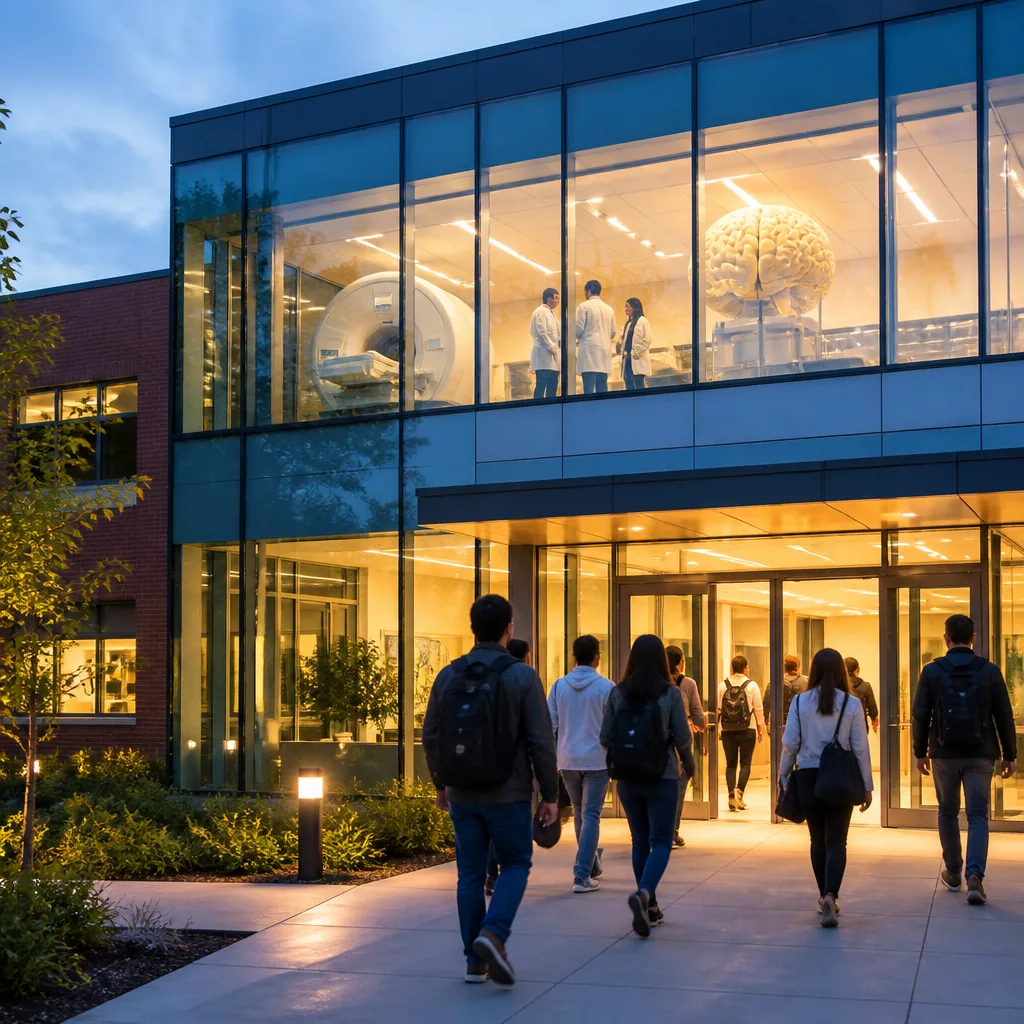
The University of Cambridge has announced the creation of the Cambridge Mind and Brain Institute, a multidisciplinary centre intended to study how cognitive and emotional health develop and change across the lifespan. The institute, set to open officially in April 2027, will combine laboratory resources, clinical engagement and academic training to investigate why brain health varies so widely between individuals.
Focus and facilities
Researchers at the institute will gain access to on-site neuroimaging and brain stimulation technologies, along with technical support, methodological advice and scientific computing. The university said these facilities will be available not only to institute staff but also to the broader research community, enabling collaborative projects across disciplines.
Training the next generation
This autumn Cambridge will welcome its first cohorts into a new master’s programme, the MPhil in NeuroAI and Intelligent Systems, alongside the established MPhil in Cognitive Neurosciences. Both programmes are described as providing foundational training in contemporary research topics and methods, preparing postgraduate students and early-career researchers to work with the institute’s resources.
Addressing complex risks to brain health
The university framed the institute as a response to a growing set of threats and stressors that may undermine brain and mind health. Among the factors it cited were changes associated with modern digital lifestyles, diet and physical inactivity, the burden of acute or chronic illness, climate change and conflict, and declines in social cohesion. Cambridge researchers say the mechanisms by which these influences affect cognition and emotional wellbeing — and why people respond differently — remain poorly understood, contributing to limited effectiveness of existing treatments.
"The Cambridge Mind and Brain Institute will unite world-class research, facilities, and the lived experiences of patients and partners. By unlocking the mysteries of brain and mind health, it aims to transform how we understand and support individuals experiencing cognitive and emotional difficulties at every stage of life,"
The comment came from Professor Deborah Prentice, Vice-Chancellor of the University of Cambridge, who emphasised bringing together scientific expertise and the lived experiences of patients, carers and clinicians.
Research partnerships and public engagement
The announcement highlighted a collaborative approach: institute teams will work alongside patients, carers, practitioners, policymakers and innovators. That engagement is intended to ground laboratory inquiry in real-world needs and to accelerate translation of discoveries into better support and interventions for people affected by cognitive or emotional disorders.
- Launch: April 2027 (official opening)
- New programme: MPhil in NeuroAI and Intelligent Systems (first cohort arriving this autumn)
- Existing programme: MPhil in Cognitive Neurosciences (continuing intake)
| Aspect | Detail |
|---|---|
| Primary aim | Understand and improve brain health across the lifespan |
| Key resources | Neuroimaging, brain stimulation, scientific computing, technical support |
| Stakeholders | Researchers, patients, carers, practitioners, policymakers, innovators |
Cambridge framed the institute’s mission as both scientific and societal: to identify why current treatments for many brain and mind conditions often fall short and to develop more effective, tailored approaches. By concentrating equipment, expertise and training in a single hub, the university aims to speed research progress and foster interdisciplinary work spanning neuroscience, artificial intelligence, clinical practice and policy analysis.
While the announcement did not provide a detailed research agenda or specific funding figures, it signals a long-term institutional commitment to brain and mental health research. The institute’s public launch and the arrival of postgraduate cohorts mark the first visible steps toward a broader programme that university leaders hope will influence clinical practice, public health strategies and the global research landscape on cognition and emotion.
As demand for better understanding of brain health grows — driven by ageing populations, lifestyle shifts and mounting mental health concerns — the Cambridge Mind and Brain Institute positions the university to be a leading node in efforts to map how biological, environmental and social factors converge to shape mind and brain outcomes across a lifetime.