
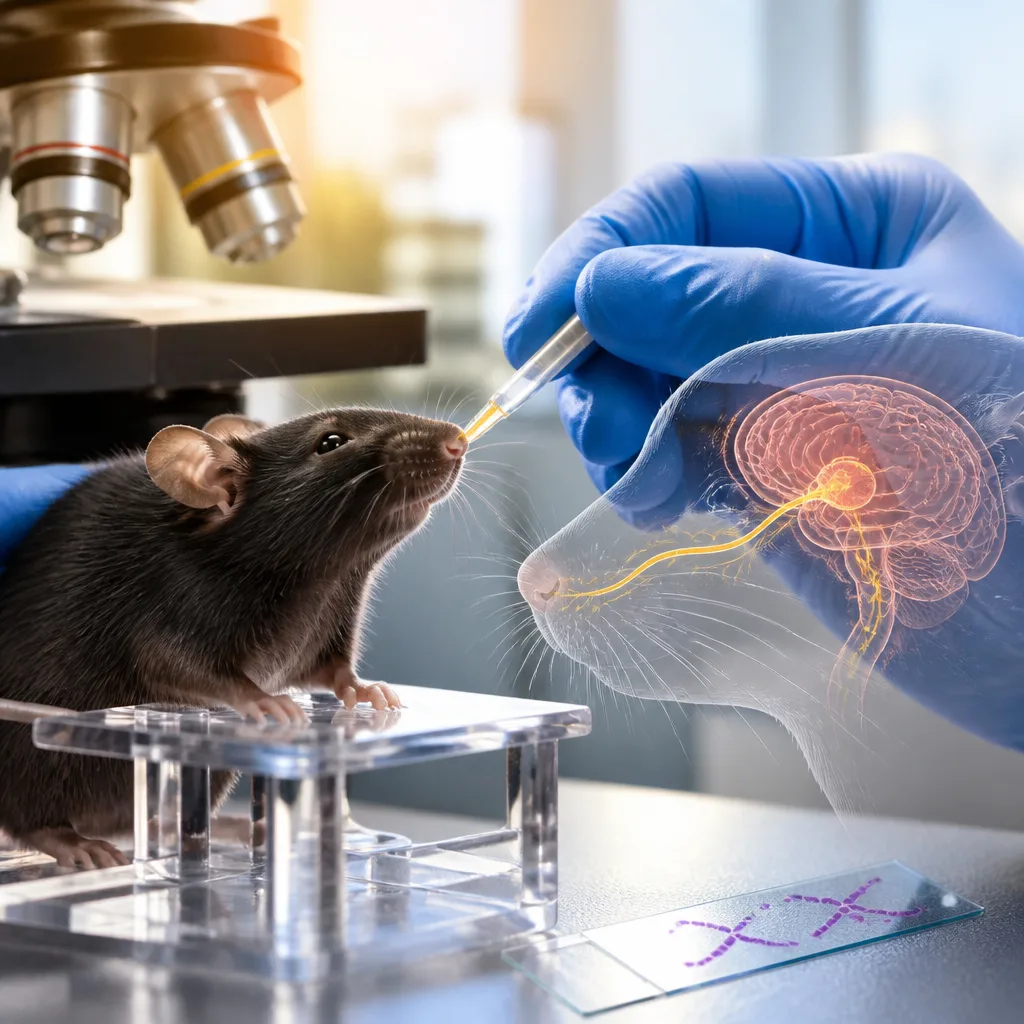
A laboratory experiment on mice that found the bacterium Chlamydia pneumoniae could move from the nose to the brain via the olfactory nerve is the origin of a recurring social media claim that nose‑picking increases the risk of Alzheimer’s disease. The study, published in Nature in 2022 by researchers at Griffith University in Australia, showed the bacterium introduced into the animals’ nasal cavities reached the rodents’ brains and produced early signs of brain change.
What the mouse study showed
In the 2022 experiment, scientists placed Chlamydia pneumoniae into the nasal passages of mice and traced its movement. The bacterium traveled along the olfactory nerve and was detected in brain tissue. According to reporting about the study, the animals developed what were described as early signs of brain pathology following infection. That sequence of events — nasal exposure, neural transport and brain findings in animals — is the factual backbone that has been condensed, distorted and amplified into the claim now circulating widely online.
Why that does not equal proof for people
Laboratory findings in mice often illuminate mechanisms that merit further study, but they do not automatically translate into human risk. Differences in anatomy, immune response and scale mean results in rodents require corroboration in clinical or epidemiological research before being used to assess human behavioral risks. The mouse study demonstrated a biological pathway and a possible link worthy of more investigation; it did not establish that ordinary human activities such as nose‑picking cause Alzheimer’s disease.
Experts who study neurodegenerative disease typically rely on a body of evidence that includes:
- epidemiological studies that track human populations over time;
- clinical research observing disease progression in patients; and
- mechanistic laboratory work that explains how disease processes could occur.
The 2022 Griffith University mouse experiment provides mechanistic evidence but stands alone in the chain required to prove causation in humans.
How the rumor spread and what to consider
Claims that a common habit like nose‑picking directly raises Alzheimer’s risk are attractive for social media because they are attention‑grabbing and easy to communicate. The trajectory from a peer‑reviewed mouse study to a sweeping human‑health warning demonstrates how scientific nuance can be lost in public conversation.
| Year | Key development |
|---|---|
| 2022 | Griffith University study in Nature found Chlamydia pneumoniae moved from mouse nasal cavity to brain via the olfactory nerve |
| 2024–2026 | Study findings circulated and were simplified online into a claim linking nose‑picking and Alzheimer’s risk |
When evaluating such claims, consider whether the evidence arises from human studies or from animal or laboratory work, and whether multiple research groups have replicated the findings. Single studies, particularly in animals, are starting points rather than conclusive proof for public‑health advice.
For readers concerned about Alzheimer’s disease, established risk factors and prevention strategies remain the priority for medical guidance. The mouse study highlights a potential biological route for pathogens to reach the brain and underscores the importance of continued research into infectious contributors to neurodegeneration. It does not, however, provide direct evidence that routine nose‑picking in people causes Alzheimer’s.
Clear communication from scientists and reporters is essential to prevent isolated laboratory results from becoming misleading public health claims. Translating mechanistic research into accurate public messages requires acknowledging what a study shows — and what it does not.















