
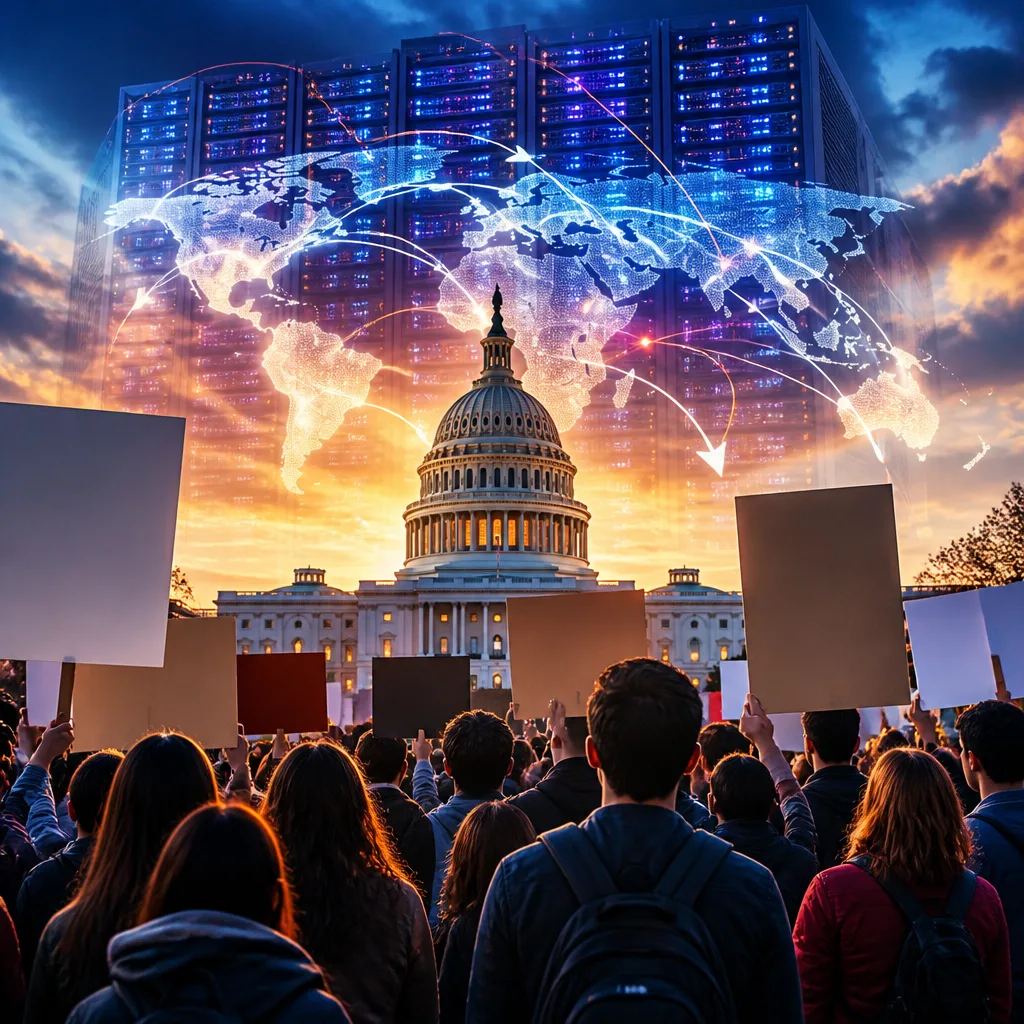
The 2020s are witnessing what analysts describe as a three-part transformation of Western politics: a new geopolitical alignment, rapid digitalization powered by artificial intelligence and the rise of a heterogeneous new-right movement that is challenging the postmodern and environmental consensus of the previous decade.
What is driving the shift
The trend crystallized in the United States during the closing days of the 2024 campaign, when Donald Trump left a rally in Lititz, Pennsylvania, on Nov. 3, 2024, as the nation approached Election Day. His victory that year has been described by observers as a turning point that reinforced broader political realignments across Western democracies.
Observers trace the new-right’s emergence to a mix of cultural and economic grievances. The movement rejects prevailing agreements on migration policy, mainstream climate initiatives and diversity, equity and inclusion programs. Supporters and analysts say the new right appeals to those dislocated by globalization and to voters who view changes in media and pandemic-era debates about speech as infringements on civil liberties.
- Policy focus: opposition to migration, skepticism of climate policy and resistance to DEI frameworks.
- Cultural claims: pushback against postmodern critiques of Western history and identity.
- Economic base: appeal to workers affected by globalization and trade shifts.
Historical context and consequences
The liberal order that emerged after the Cold War rested on institutions and norms such as democratic governance, separation of powers, the rule of law and human rights, along with economic prescriptions favoring market-oriented reforms and free trade. That framework, which shaped international relations and domestic policy for decades, is now being contested on multiple fronts.
Domestically, the new-right movement challenges aspects of what it sees as a postmodern critique of Western institutions — from Enlightenment-era universalism to established ideas of nationhood and identity. Internationally, the post-1990 consensus centered on territorial sovereignty and the freedom of states to form alliances faces strains as geopolitical competition intensifies.
| Element | Character |
|---|---|
| Geopolitical | Realignment among major powers and growing strategic rivalry. |
| Digital/AI | Rapid technological change reshaping media, labor and governance. |
| New-right | Cultural-nationalist, protectionist and anti-elite tendencies. |
Political scientists and commentators warn that the convergence of these forces could produce significant policy shifts, including more protectionist trade measures, stricter immigration rules and reduced emphasis on consensus climate policies. The movement’s emphasis on national sovereignty and identity could also influence foreign policy debates, particularly in alliances where consensus on values and strategy has been a defining feature.
Implications for U.S. politics
In the United States, the new-right’s rise is likely to shape legislative priorities, judicial appointments and regulatory approaches. Parties and candidates will confront pressure to address the movement’s concerns while balancing competing priorities such as economic stability, international commitments and domestic civil liberties.
How institutions respond will determine whether the current era leads to a sustained reordering of political norms or a temporary realignment. Policymakers, party leaders and voters will be watching closely as the interplay between technology, geopolitics and cultural politics unfolds over the coming years.
The trajectory set in the mid-2020s presents a test for the adaptability of democratic institutions and for the ability of political systems to reconcile global integration with growing demands for national control and cultural recognition.