
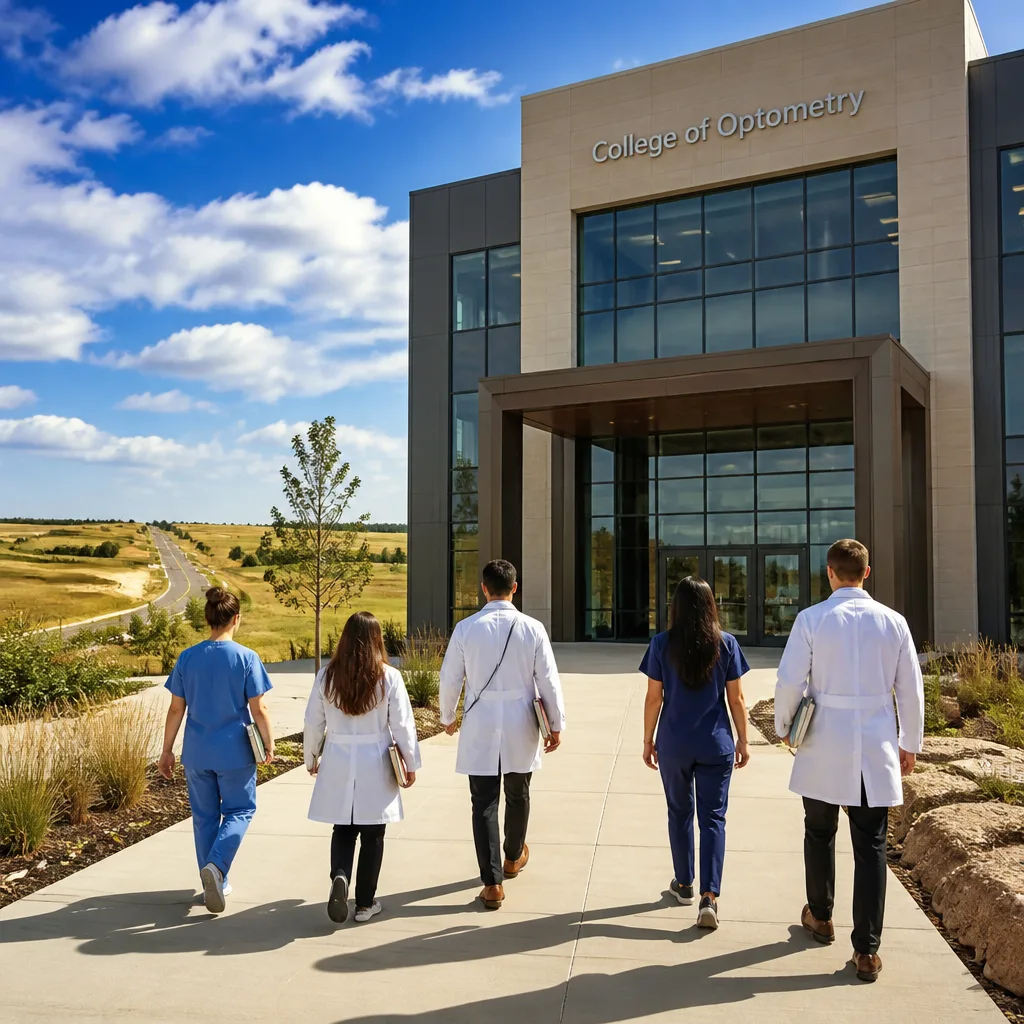
Northeastern State University is bolstering educational pathways in health professions with the explicit aim of strengthening care in rural Oklahoma, university officials and program advocates said in a recent commentary. The moves center on a newly completed optometry facility and the launch of a bachelor of science in nursing program this fall.
Targeting rural shortages through campus-based training
The university highlights the connection between training and retention: its Doctor of Optometry program consistently ranks among the top programs nationally and produces graduates who practice across the state. According to the university account, there is a practicing NSU-trained optometrist in every Oklahoma county and more than 80% of Oklahoma optometrists are alumni of the program.
“Our students receive a high-quality classroom education, while encountering opportunities to go out and provide care in local communities that otherwise would likely not receive quality vision healthcare.”
Those community-based clinical experiences are a centerpiece of the university’s strategy to improve access to vision care in underserved areas. The university opened a new College of Optometry building in Tahlequah described as a major investment in both education and public services: a $40 million facility encompassing 78,000 square feet that places a full-service eye clinic on the first floor for patient care and student training.
| Facility | Value / Size | Public-facing feature |
|---|---|---|
| College of Optometry | $40 million / 78,000 sq. ft. | First-floor clinic open to the public |
Expanding nursing education to build local pipelines
Alongside optometry, the institution is expanding nursing education. The university has long offered an RN-to-BSN pathway and a master’s degree option for registered nurses seeking advanced credentials. This fall, it will add a full BSN program aimed at students beginning their nursing education from the outset.
Officials frame the new BSN as part of a broader commitment to prepare clinicians who will remain and practice in the communities that trained them. The commentary argues that higher education should not only provide instruction but also encourage graduates to serve in the same rural areas where many of them were raised.
- Clinical training embedded in community settings is intended to expose students to populations with limited access to specialty care.
- New facilities and program offerings are designed to increase the volume and readiness of graduates entering rural practice.
- Alumni footprint — the school cites a widespread presence of graduates across Oklahoma counties — is presented as evidence of impact.
University leaders say that combining high-quality classroom instruction with hands-on clinical work in local communities strengthens both student learning and patient access. The optometry building’s clinical spaces — including laboratories, spectacle fabrication labs and vision therapy areas for children — aim to support a range of services while enhancing student preparedness.
Observers of rural health workforce issues say such strategies are central to long-term improvement in access to care. Training programs that embed clinical rotations and service in underserved regions are among the interventions recommended by health workforce experts to encourage graduates to practice in rural areas.
For Northeastern State University, the recent investments and curricular expansion represent a coordinated push to align institutional capacity with regional health needs. The university’s public-facing clinic and new undergraduate nursing pathway increase both the training throughput and the immediate availability of care for communities that have historically faced shortages of eye and primary health providers.
As the new academic year begins, the institution will test whether those investments translate into sustained increases in practitioners choosing to remain in rural areas, a key measure of success for workforce-focused education initiatives.














