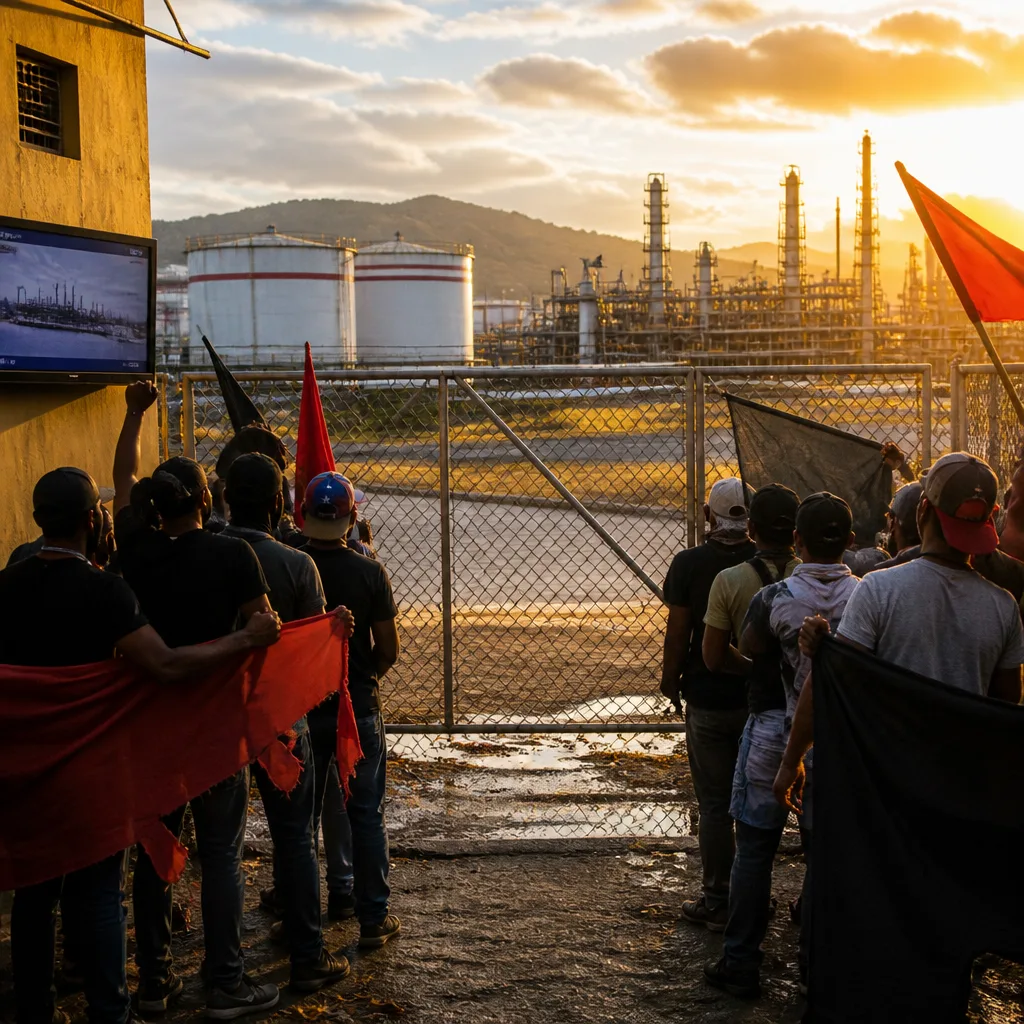
Venezuela’s acting president, Delcy Rodríguez, has come under sharp criticism from both Chavista hard‑liners and opposition figures after negotiating a deal that would give the United States majority access to some of the country’s oil resources, Bloomberg reported.
What was agreed
Details disclosed in the reporting indicate the arrangement could place the US in control of production from a field estimated at around 65 billion barrels of crude. Rodríguez, speaking on television, defended the pact, saying it would deliver “prosperity and jobs” to Venezuela. Bloomberg reported she said the nation would receive roughly US$19 in profit per barrel produced under the terms.
Why both sides are angry
- Hard‑liners inside the political movement founded by the late President Hugo Chávez object on grounds of resource nationalism: state control of oil is a central pillar of Chavismo and critics see the deal as a betrayal.
- Opposition forces are angered because the agreement was negotiated without their involvement and, according to the reporting, contains no paired commitments on elections or a negotiated democratic transition.
The cross‑ideological anger played out quickly on social media after details emerged in Washington late on Friday, with some users accusing Rodríguez of “giving away the country’s oil” and others demanding elections linked to any such economic opening.
“I think it can benefit Delcy to the extent that it reinforces Trump’s commitment to working with her and thus probably diminishes incentives to move quickly to a new vote,”
That assessment was attributed to Risa Grais‑Targow, Latin America director at Eurasia Group, in the Bloomberg report. Grais‑Targow also warned the pact risks political backlash because of sensitivities around sovereignty and the perception of contravening Chavista principles.
Political calculations and potential consequences
Bloomberg’s reporting suggests Rodríguez may be calculating that closer cooperation with the United States — under the Trump administration — could reduce external pressure for an early electoral timetable, thereby consolidating her hold on power. That is a classic case of transactional politics: a short‑term economic agreement used to shore up political advantage.
But the deal’s domestic political costs are evident. For Chavistas who view oil as a national patrimony and a symbol of sovereignty, ceding control to a foreign power is deeply unpopular. For opposition leaders, being excluded from the negotiation undercuts any claim that the agreement will produce a legitimate, inclusive pathway to normalised politics.
Internationally, granting extensive rights to a foreign government over a major oil resource carries reputational and strategic consequences. It may change how other states and investors view Venezuela’s policy trajectory and could reshape the leverage available to external actors pressing for democratic reforms.
What remains unclear
Bloomberg’s account states the agreement was negotiated without participation from prominent opposition figures — María Corina Machado was named as not involved — but many specifics of the contract, including governance mechanisms, oversight arrangements and timelines for production, were not detailed in the reporting. The lack of transparency on those elements is one reason both domestic critics and international observers have reacted sharply.
| Actor | Primary concern |
|---|---|
| Chavista hard‑liners | Perception of betraying resource nationalism and state control |
| Opposition | Excluded from talks; no linked electoral or transition commitments |
| United States | Access to substantial oil reserves; geopolitical leverage |
The Bloomberg report stops short of detailing how Venezuelan institutions will monitor and enforce the deal, and whether revenue flows or profit‑sharing arrangements will be supervised by independent auditors. Those omissions are likely to be focal points for future scrutiny.
For now, the agreement has intensified stakes in Venezuela’s fraught politics: Rodríguez hopes economic engagement with a powerful external partner will strengthen her position, while opponents see the deal as an additional reason to demand a clearer transition to elected government. Who benefits and who pays depends, in short, on the missing details yet to be disclosed.