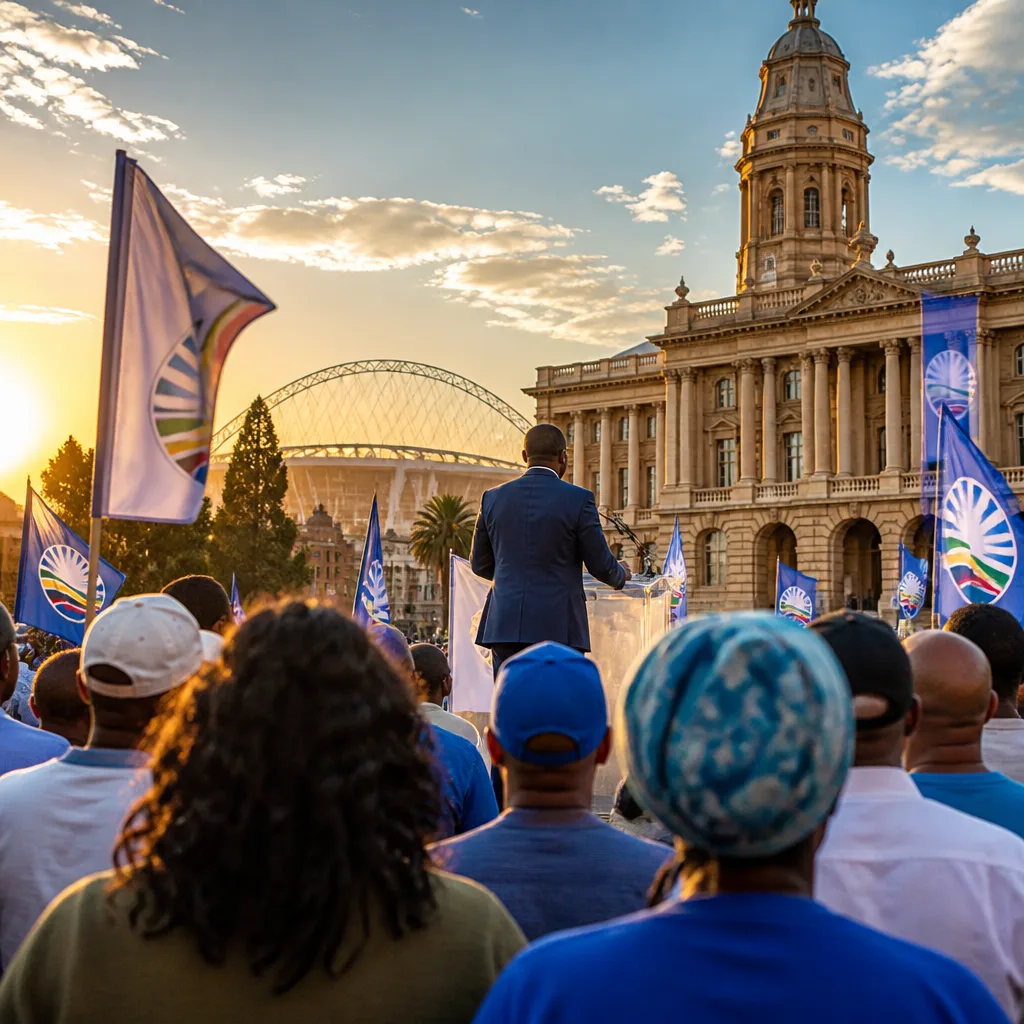
The Inkatha Freedom Party (IFP) has nominated Mkhuleko Hlengwa, currently Deputy Minister of Transport, as its mayoral candidate for the eThekwini metro ahead of the 2026 local government elections, party president Velenkosini Hlabisa announced on Monday.
Senior national figure to front IFP campaign in Durban
Hlengwa’s selection represents a deliberate move by the IFP to put a nationally recognised figure at the head of its campaign in South Africa’s key KwaZulu‑Natal city. According to the party briefing, Hlengwa has served in the National Assembly since 2012, was national chairperson of the IFP Youth Brigade and has chaired the Standing Committee on Public Accounts (SCOPA), one of Parliament’s main oversight committees. Following the 2024 general election he was appointed Deputy Minister of Transport. He is also an alumnus of the University of South Africa (Unisa) and serves as an IFP spokesperson.
Hlabisa said the party was taking a different approach in eThekwini by fielding both mayoral and deputy mayoral candidates, signalling the IFP’s intent to present a complete leadership ticket to voters rather than a single figurehead.
- Mayoral candidate (eThekwini): Mkhuleko Hlengwa (Deputy Minister of Transport)
- Deputy mayoral candidate (eThekwini): Sizwe "Mavava" Sikhakhane (businessman; former regional Youth Brigade chair)
- Mayoral candidate (uMhlathuze): Councillor Xolani Ngwezi (University of Zululand alumnus)
Who are the running mates?
Hlabisa named Sizwe "Mavava" Sikhakhane as Hlengwa’s deputy mayoral candidate in eThekwini. The party said Sikhakhane brings leadership and entrepreneurial experience. Sikhakhane previously served as chairperson of the IFP Youth Brigade in eThekwini from 2006 to 2010, is a businessman in the city and was recently elected chairperson of the IFP’s Durban Central Region.
For the coastal municipality of uMhlathuze, the IFP has put forward Councillor Xolani Ngwezi as its mayoral candidate. The party noted Ngwezi graduated this year with an Honours degree in Development Studies from the University of Zululand while continuing his studies at the institution. The briefing said he has experience in both local and national government.
Strategy and implications
The choice of a sitting deputy minister to lead an urban mayoral campaign is notable. Placing Hlengwa at the head of the ticket may aim to project administrative competence and to attract voters who are persuaded by national experience and parliamentary oversight credentials such as a SCOPA chairmanship. Fielding a named deputy mayoral candidate is relatively uncommon in some local campaigns and suggests the IFP intends to offer a clear governing team.
For the IFP, these nominations could serve several purposes: to consolidate support in KwaZulu‑Natal, to present an alternative governance narrative to incumbents in the metro, and to position the party as a credible executive option in coalition negotiations after the 2026 polls. The announcements also highlight the party’s internal talent pipeline—from Youth Brigade leadership to regional posts—and its effort to translate intra‑party roles into public office candidacies.
| Candidate | Position | Background highlights |
|---|---|---|
| Mkhuleko Hlengwa | IFP mayoral candidate — eThekwini | Deputy Minister of Transport; National Assembly member since 2012; former SCOPA chair; Unisa alumnus |
| Sizwe "Mavava" Sikhakhane | IFP deputy mayoral candidate — eThekwini | Former chair, IFP Youth Brigade (eThekwini, 2006–2010); businessman; Durban Central Region chair |
| Xolani Ngwezi | IFP mayoral candidate — uMhlathuze | Councillor; Honours in Development Studies (University of Zululand, 2026) |
The IFP’s public presentation framed these choices as geared towards restoring “effective, accountable and people‑centred governance” in eThekwini, Hlabisa said. How voters respond to a ticket fronted by a national office‑bearer — and whether other parties adjust their own candidate strategies in response — will be tested as the 2026 local government campaign unfolds.
These nominations also set the scene for the intense party competition expected in KwaZulu‑Natal, where local dynamics often have national reverberations. With less than two years until the polls, the IFP will need to convert this high‑profile line‑up into voter traction at ward and proportional representation levels if it is to alter the balance of power in the province’s major metros.