The Newcomb Institute at Tulane University has concluded that women in the United States continue to be underrepresented across elected bodies, even though public opinion has shifted away from the idea that men are better political leaders.
Representation gap persists
The institute’s 2024 report, titled Biased Beliefs May Be Impeding U.S. Women’s Progress in Political Leadership, draws on demographic analysis and psychological research to map the discrepancy between voter behaviour and office-holding. The authors note that while women register and turn out to vote at higher rates than men, they occupy a smaller share of elected seats at every level of government.
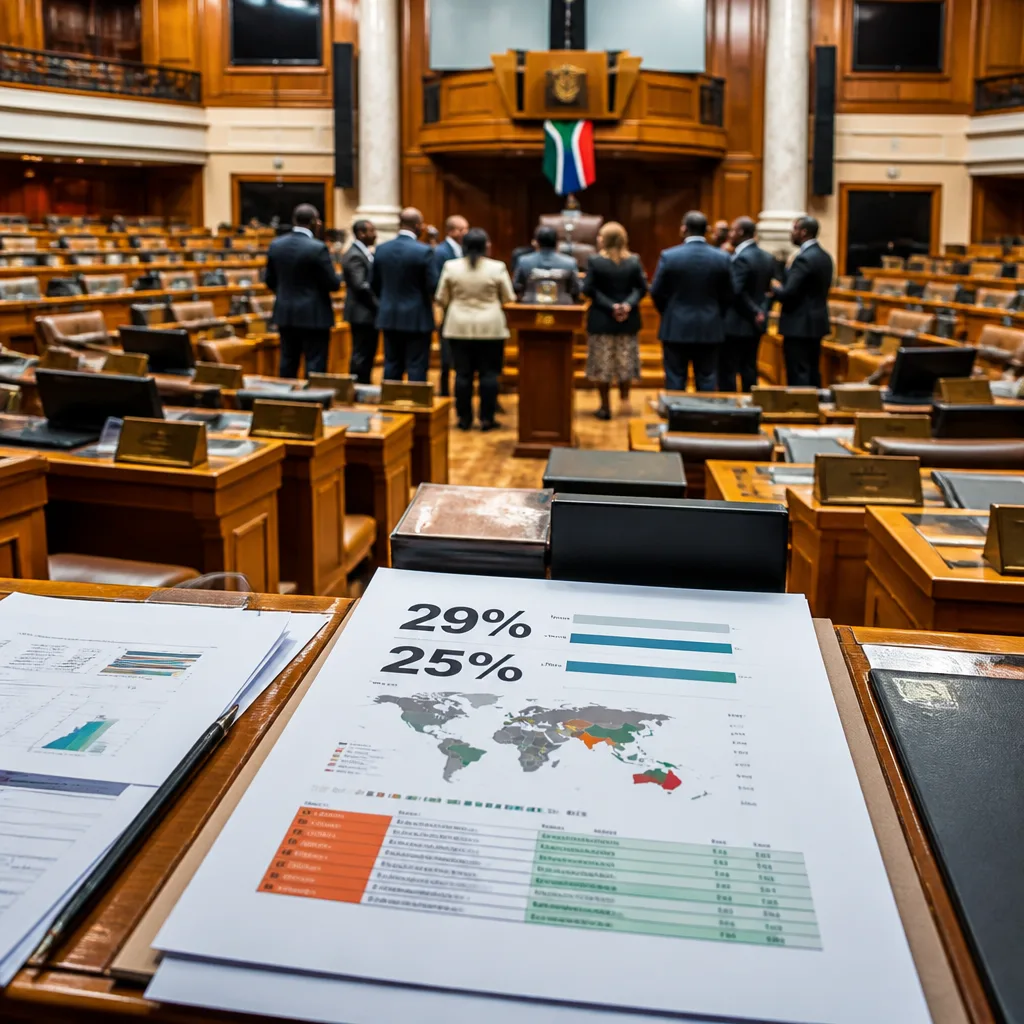
Key numerical findings cited in the study include that, since 2018, women have comprised about 29% of the U.S. House of Representatives and 25% of the Senate. The World Economic Forum ranking referenced in the report places the United States at 63rd globally on political gender parity.
Legislative impact of women lawmakers
The researchers emphasise that women legislators are not only more numerous than in previous eras but are also more productive in certain respects. According to the study, female elected officials tend to introduce and enact legislation at higher rates than their male colleagues and are more likely to pursue policies affecting families and gendered needs — areas such as childcare, health care, paid family leave and workplace sexual harassment. The report links these legislative differences to broader outcomes on health, reproductive rights and prevention programming.
Public attitudes have shifted, but neutrality remains large
To explore whether cultural beliefs help explain the underrepresentation, the Newcomb team worked with NORC, the University of Chicago survey research centre, to ask more than 3,000 U.S. adults a World Values Survey question: how much they agreed that “On the whole, men make better political leaders than women.” The 2024 responses showed only 12% agreement, while 48% disagreed and 40% were neutral.
- Agreement that men make better leaders (2024): 12% (U.S.)
- Disagreement (U.S.): 48%
- Neutral (U.S.): 40%
The study contrasts the U.S. pattern with international survey data from 80 countries, noting that roughly half of the global population agrees that men make better political leaders. In wealthier democracies the proportion who endorse that view is much lower: the Netherlands and New Zealand recorded about 6% agreement, and the United Kingdom about 9%.
| Country | % agreeing men are better leaders |
|---|---|
| United States | 12% |
| Netherlands | 6% |
| New Zealand | 6% |
| United Kingdom | 9% |
What the findings imply
The authors interpret the data as evidence that explicit belief in male superiority as political leaders has declined in the United States, but that other barriers continue to limit women’s representation. Those barriers are not fully documented in the study extract, but the report highlights the paradox that higher female turnout has not translated into proportional office-holding.
For policymakers and party organisers, the study suggests two separate priorities: closing tangible obstacles that keep women from running and winning, and addressing subtler biases that may persist even as voters reject overt statements of male superiority. The report’s emphasis on the distinct policy contributions of women legislators also frames the representation gap as a matter of governance: underrepresentation, it argues, affects which issues are prioritised and how laws are framed.
The Newcomb Institute study adds to a growing body of research showing that formal equality in voter participation does not automatically produce equal representation in legislatures — a finding likely to resonate in democracies wrestling with questions of parity, policy priorities and political recruitment.