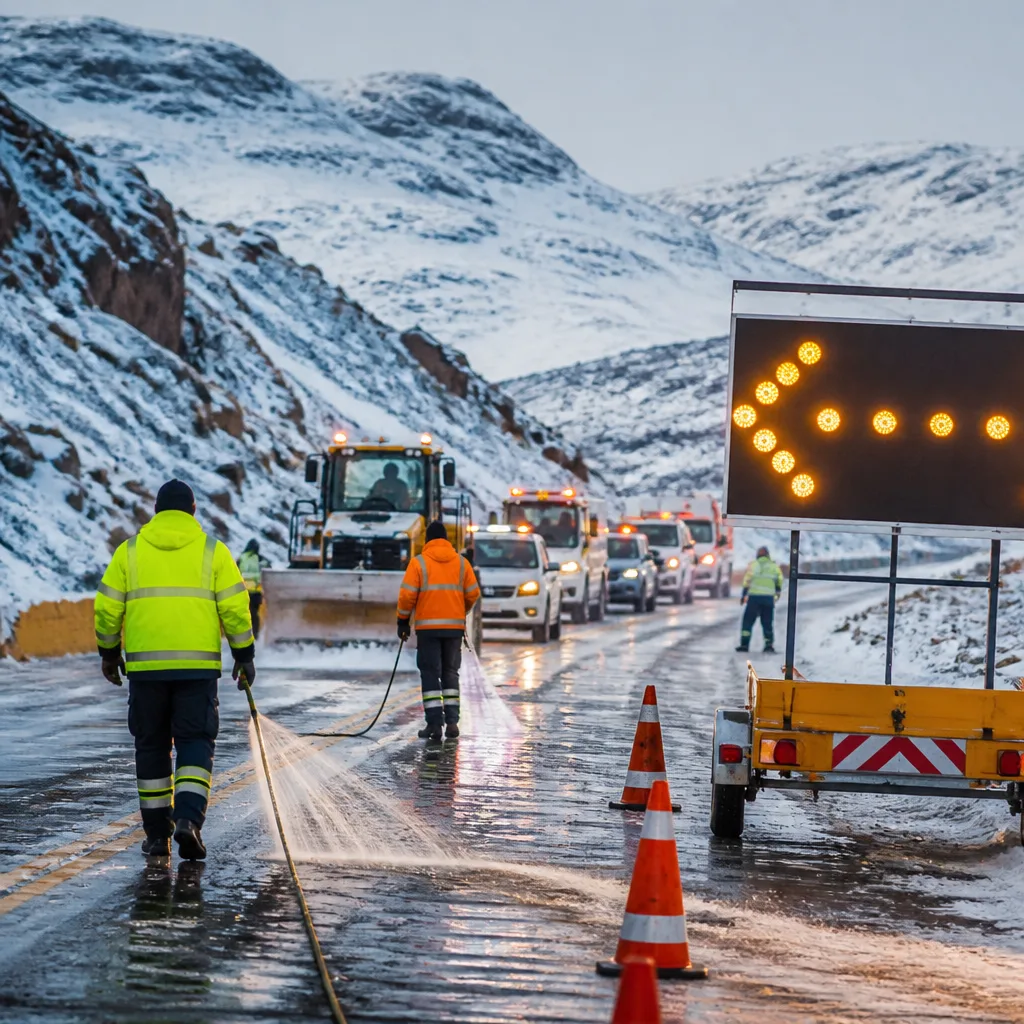
Snow, sleet and heavy rain have disrupted travel across several provinces, with major passes and national roads closed and emergency crews treating surfaces for black ice. Motorists are being urged to delay journeys where possible, reduce speed and follow official diversions.
What has happened
Severe winter conditions over the past 24–48 hours have led to widespread travel disruption. The worst-affected areas include parts of KwaZulu‑Natal, the Eastern Cape and the Free State, where snowfall and freezing conditions have rendered mountain passes treacherous.
The Road Traffic Management Corporation (RTMC) has issued a clear warning to road users.
"Motorists are urged to exercise extreme caution in these conditions,"the agency said, emphasising the risks of black ice and limited visibility.
Road closures and conditions
Traffic authorities and provincial road agencies have listed several routes as closed or extremely hazardous. The most significant restrictions reported are:
- KwaZulu‑Natal: The N3 is closed between Estcourt and Harrismith (Free State); sections are also closed at Midmar/Howick. Van Reenen Pass is reported as extremely hazardous because of black ice. The R617 between Kokstad and Underberg is closed after a truck became stranded near Kingscote; traffic is being diverted via the R56. Portions of the R74 (Oliviershoek Pass) are closed because of heavy snow.
- Eastern Cape: Multiple mountain passes and national routes have been closed completely, including the N6 (Penhoek Pass) between Komani (Queenstown) and Jamestown, the N9 (Lootsberg Pass) between Graaff‑Reinet and Middelburg, and the R58 (Barkly Pass) between Elliot and Barkly East. Several regional passes such as Boesmanshoek between Sterkstroom and Molteno are also closed.
- Free State: The stretch of the N3 approaching Van Reenen Pass and Harrismith is hazardous; emergency crews are spraying brine across lanes to reduce black ice formation. Sleet and rain have been reported between Warden and Mooi River and snow has been observed in areas such as Swinburne.
Authorities report that traffic on some routes is moving at very low speeds where conditions permit — around 20km/h in affected stretches — while other roads remain completely blocked.
| Province | Major affected routes |
|---|---|
| KwaZulu‑Natal | N3 (Estcourt–Harrismith), Midmar/Howick, Van Reenen Pass, R617, R74, R103 |
| Eastern Cape | N6 (Penhoek), N9 (Lootsberg), R58 (Barkly), Boesmanshoek Pass and other regional passes |
| Free State | N3 (Harrismith–Van Reenen), sleet and snow at Swinburne; brine being applied |
Safety advice and practical steps
Practical measures to reduce risk during this severe weather:
- Delay non‑essential travel until conditions improve and roads are officially reopened.
- If you must drive, allow extra time, reduce speed substantially and increase following distance.
- Be prepared for sudden stops and black ice, particularly on shaded sections and mountain passes.
- Carry warm clothing, a charged mobile phone, a high‑visibility jacket, water and a basic emergency kit.
- Follow updates from the RTMC, provincial traffic services and SANRAL before and during travel.
Emergency and road agencies are deploying crews to treat surfaces with brine and to clear obstructions where possible. Where traffic is diverted, drivers should obey signs and directions from traffic officers.
Implications and context
Snow and sleet at lower elevations are uncommon in many parts of the country and can quickly create hazardous driving conditions. The current episode has affected major freight and passenger corridors, increasing the risk of long delays and stranding. Road authorities’ use of brine is a standard anti‑icing measure intended to reduce the formation of black ice, but treated roads can still be slippery.
Motorists planning interprovincial travel should check with transport operators and consult official traffic updates. Those living near mountain passes should be alert to sudden weather changes and avoid travelling into high‑altitude areas until authorities confirm safe conditions.
We will continue to monitor updates from the RTMC and provincial traffic services and will publish further information on route reopenings and safety recommendations as it becomes available.