The South African Police Service (SAPS) has been brought before the Labour Court over its decision to invoke a disciplinary measure that could see Major General Feroz Khan suspended without pay and ultimately discharged while he is still receiving medical treatment, his union Popcru says.
Disciplinary action while hospitalised
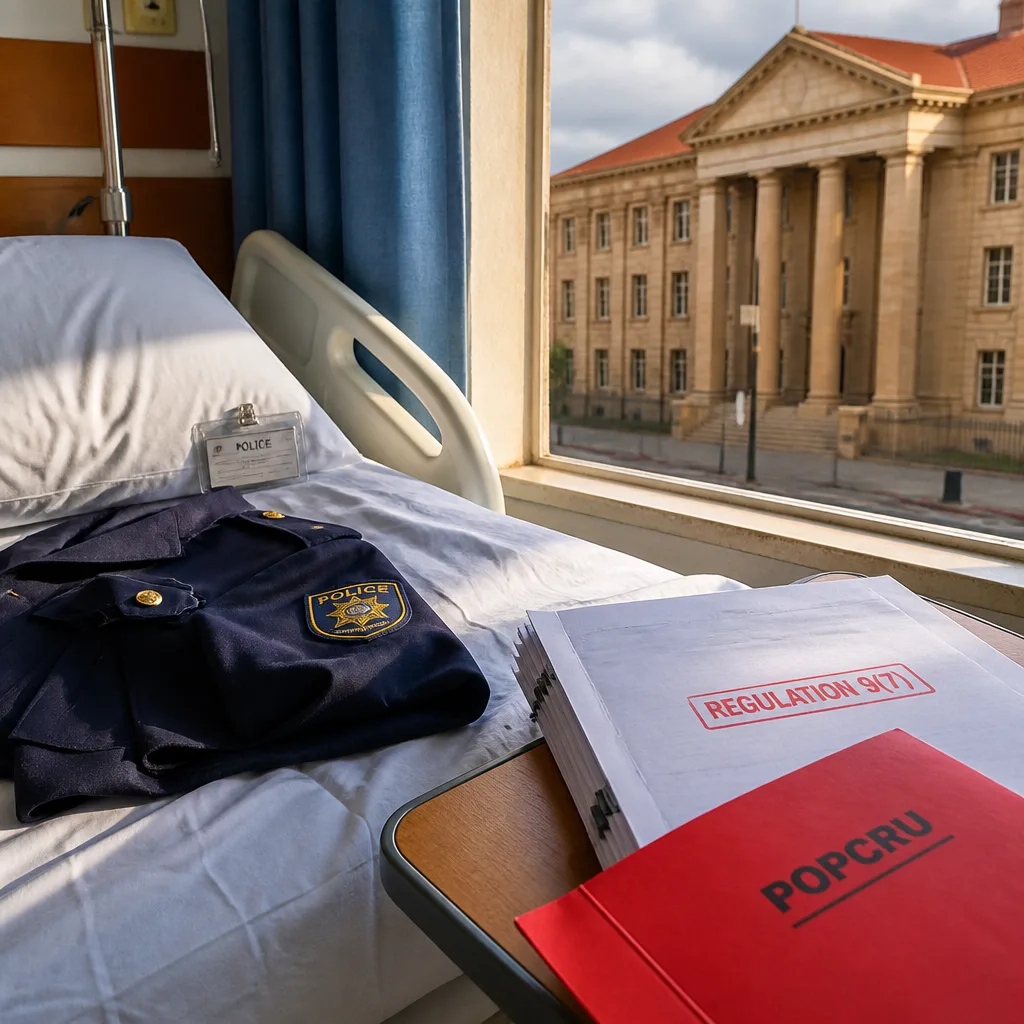
Popcru lodged a founding affidavit arguing the process — which began as an inquiry into allegations dating back to 2021 — has become a contest over whether Khan can lose his income and his post before he is medically fit to defend himself. On 17 August, the officer chairing Khan’s disciplinary inquiry invoked Regulation 9(7), the affidavit states, triggering a 10-working-day period that could result in his pay being stopped and him being deemed discharged from the SAPS.
The union describes the case as involving “coercive public power” applied to a member who is still under treatment for both physical and psychological trauma. Popcru says Khan remains under medical and psychiatric care and that the disciplinary timeline has had a direct effect on his ability to participate meaningfully in his own defence.
“The injuries were described as life-threatening,”
The founding affidavit outlines Khan’s injuries after he was shot on 28 June. Medical evidence cited says the bullet entered his lower back and lodged close to the spine; he also sustained injuries to his small bowel and suffered bleeding from a lumbar artery. He lost about 1.8 litres of blood and required significant emergency surgery. Khan remained at Netcare Milpark Hospital until 17 July.
Medical and psychological recovery
According to the affidavit, doctors initially indicated Khan was unlikely to return to duty before 3 August. Further assessments extended his certified incapacity to 31 August, with a possible return on 1 September. The document also details psychological assessments that diagnosed Khan with post-traumatic stress disorder and severe major depressive disorder.
Popcru highlighted the practical effects of these conditions on his legal preparations: consultations were reportedly interrupted after short periods — typically about 20 to 30 minutes — because of pain and discomfort. Once medication was required, his capacity to concentrate was further reduced, the affidavit says.
What the challenge alleges
The union’s founding affidavit contends that invoking Regulation 9(7) while Khan remains medically unfit constitutes an attempt to remove his income and employment before he can mount an effective defence. It accuses the SAPS of using disciplinary machinery in a coercive manner.
The case now before the Labour Court will test the balance between procedural discipline within the police service and protections for employees incapacitated by serious injury and psychological trauma. The outcome could set a precedent for how SAPS applies Regulation 9(7) in similar circumstances.
Timeline of key dates
| Date | Event |
|---|---|
| 28 June | Khan shot; sustained life-threatening injuries |
| Until 17 July | Admission to Netcare Milpark Hospital |
| 3 August | Initial expected earliest return to work (per doctors) |
| 17 August | Chair of disciplinary inquiry invoked Regulation 9(7) |
| 31 August | Medically certified incapacity extended to this date |
| 1 September | Possible return date noted in medical assessment |
Broader implications
The dispute highlights tensions between SAPS internal disciplinary procedures and labour rights, particularly where serious injury and mental-health diagnoses limit an employee’s ability to engage with processes. Labour lawyers and unions will be watching the court’s interpretation of Regulation 9(7) and whether additional safeguards are required when members are medically incapacitated.
- Popcru says the process threatens Khan’s income and employment while he is undergoing treatment.
- SAPS has applied Regulation 9(7) to start a 10-working-day process that may lead to unpaid suspension and discharge.
- The medical evidence details serious physical injuries and diagnoses of post-traumatic stress disorder and severe major depressive disorder.
The Labour Court hearing will determine whether the invocation of the regulation in these circumstances was lawful and fair. The matter raises questions about how the SAPS balances internal discipline with duty-of-care obligations towards members who are seriously ill or injured.